Perro de Presa Mallorquin
Ca de Bou, Perro Dogo Mallorquin, Majorica Mastiff, Bull Mastiff, Silverback Mastiff
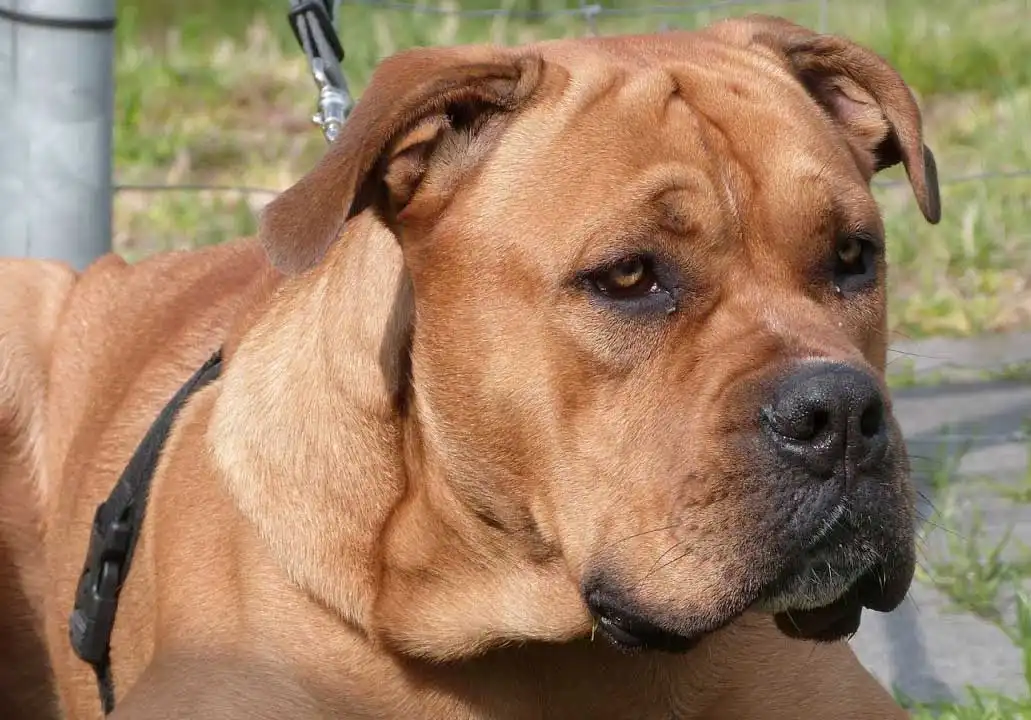
The Perro de Presa Mallorquin is a medium-sized molosser recognized for its sturdy build and broad, deep chest. Males, in particular, are distinguished by their remarkably powerful heads, with skull circumferences often exceeding the dog's height. In contrast, females have smaller, less robust heads. This ancient breed was initially bred for guarding and protection, with a history that includes bull baiting and dog fighting. They thrive under a strong human leader who understands canine hierarchy; if the owner does not establish dominance, the dog may become stubborn and overbearing. When raised and socialized properly from an early age, these dogs can be loyal and affectionate companions. Typically quiet, they exhibit courage and bravery when necessary. The Mallorquin is sociable and shows profound loyalty to its owner. This breed is independent, psychologically stable, and generally easygoing—unless provoked to defend its family!
Breed Origin
The Perro de Presa Mallorquin is a breed with a long and storied history, originating from a time when maritime trade in the Mediterranean not only facilitated the exchange of goods and cultures but also brought about the companionship of dogs. In the coastal towns and ports, there was a significant demand for guard dogs to protect against pirates and thieves arriving by sea. The mastiff, a prominent breed from the Iberian Peninsula, was commonly used for hunting and as a fighting dog in bull baiting and dog fights. This courageous breed accompanied King Jacob I during his conquests, arriving in the Balearic Islands around 1230. In the 17th century, when the British took control of Minorca and other areas, they introduced their own fighting and guard dogs, leading to the crossbreeding of British breeds with local ones, resulting in a new type of dog. While the exact lineage of the Perro de Presa Mallorquin is not well-documented, it is thought to have developed from these historical interactions. By the 18th century, dog and bull fighting had become extremely popular, and the breed was referred to as Ca de Bou (Bull Dog) or Perro de Presa Mallorquin. The breed was first officially recorded in the Spanish Stud Book in 1928, and it made its debut at a dog show in Barcelona in 1929. With its rich and valiant heritage, the future looks promising for the Perro de Presa Mallorquin, which can now anticipate a life filled with peace and tranquility.
Breed Appearance
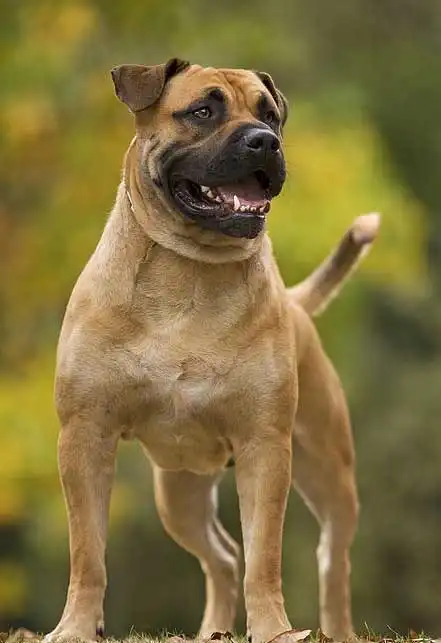
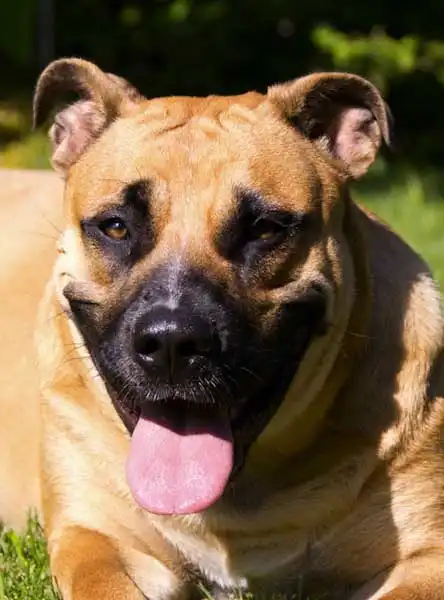
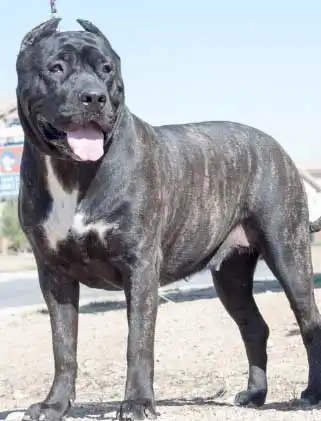
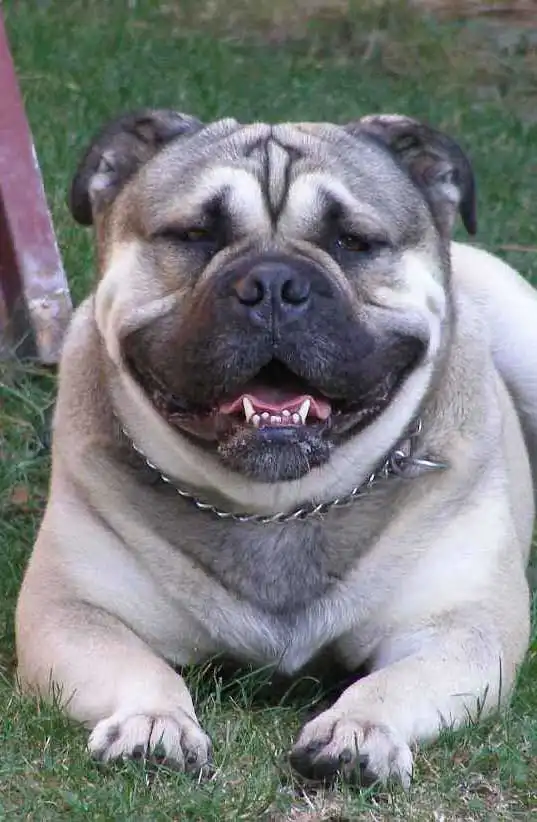
The Perro de Presa Mallorquin is a historic breed from Spain, recognized for its powerful and sturdy build. Males generally have a broader head than females, although both sexes possess a nearly square skull and a wide, moderately elongated muzzle. Their jaws are strong, with well-aligned incisors and spaced canines, typically exhibiting an undershot bite. The ears are small, standing upright but slightly folding at the tips. This breed features a black nose and large, slightly angled oval eyes. A robust, thick neck supports a long, muscular body, which includes a short, narrow loin, a deep chest, and a slightly tucked abdomen. The tail is thick and gently curved. The Mallorquin is equipped with solid, powerful legs and large, well-padded paws. Its coat is short and coarse, coming in brindle, fawn, and black, often highlighted with white markings on the front feet, chest, and muzzle. The coat is usually loose around the neck and chest, occasionally showing some wrinkles. Furthermore, the Perro de Presa Mallorquin may have a black mask, which adds to its imposing and captivating presence.
Care Routine
The Perro de Presa Mallorquin features a short coat that requires minimal grooming, as it does not need trimming or stripping. Baths are rare; typically, a gentle wipe with a soft, damp cloth is enough to remove most dirt and oil, resulting in a shiny coat. Regular brushing with a bristle brush can help control shedding. It's crucial to routinely inspect their eyes and ears for any signs of inflammation, as these areas are susceptible to infection and discomfort. Keeping their nails trimmed is vital for their overall care. It’s advantageous to get them accustomed to having their feet handled and their teeth brushed from an early age, as forming these habits is much easier when they are young. Furthermore, this breed requires regular exercise and early training due to their occasionally stubborn temperament.
Behavior & Temperament
The Perro de Presa Mallorquin is a laid-back breed recognized for its serene nature, yet it possesses a formidable protective instinct and steadfast loyalty to its family. This breed is naturally brave, self-assured, and valiant. Although they can be somewhat independent and occasionally stubborn, early training during their puppy stage can significantly influence their behavior in a positive way. It is crucial to instill obedience and good manners in the Mallorquin through gentle, positive reinforcement, as harsh training techniques may lead to aggressive tendencies. Caring for a Mallorquin can be demanding; they thrive under an owner who earns their respect—someone capable of providing guidance and setting appropriate boundaries. These dogs have a moderate energy level and require daily brisk walks to stay healthy and fit. They typically get along well with female dogs but may display aggression towards males, so it is wise to keep them leashed in public environments. With their striking brindle, fawn, and black coats accented by white markings on their feet, chest, or muzzle, the Mallorquin often sports a unique black mask that enhances their intriguing appearance. They are profoundly devoted to their families and are gentle and affectionate with the children they grow up alongside.

Play & Exercise
The Perro de Presa Mallorquin flourishes with regular walks, which are essential for their overall happiness and health. They love to join you for runs, jogs, or casual walks. It’s crucial that they walk beside you rather than in front, as this reinforces your position as the leader. Establishing yourself as the authority figure is vital; the dog should not assume this role. In their younger years, these dogs are especially playful, and when raised in a family setting, they can provide significant joy and entertainment. Although they may show a stubborn streak, gaining their respect as a dependable leader will facilitate smoother training. They are well-suited for both urban and rural environments, adapting well to city life, particularly in homes with secure yards. The Mallorquin possesses a natural instinct to guard their territory and will effectively deter any intruders. Keeping them active and engaged is essential for their well-being.
Things to Know
Cups Per Day
3.0 Cups
Daily Activity
60 Minutes
Average Lifespan
11 Years
Origin
1230
Type
Pure Breeds
Size
Large
Origin Country
Spain
Brush Frequency
Weekly
Coat Texture
Straight
Register
Your kids have been begging for a pet forever, and you've recently decided that it's time for your family to get a new addition -- a dog! While everyone is excited for the new arrival, you're wondering if you need to have a dog license. How much does it cost? Is it required? Where do you get one?
Member Clubs

PETINNATE
Other
Height & Weight
Weight
75 lbs (34 kg)Male: 80 lbs (36 kg) , Female: 70 lbs (32 kg)
Height
21 inches (53 sm)Male: 22 inches (56 sm) , Female: 21 inches (53 sm)
6 Months
23 lbs ( m 23 lbs, f 23 lbs )
10 inches ( m 10 inches, f 10 inches )
12 Months
39 lbs ( m 39 lbs, f 39 lbs )
15 inches ( m 15 inches, f 15 inches )
18 Months
67 lbs ( m 67 lbs, f 67 lbs )
19 inches ( m 19 inches, f 19 inches )
Eye Colors
Brown

Amber
Nose Colors
Black
Coat Colors
Black

Fawn
Brindle