Afghan Spaniel
The Afghan Spaniel is an intriguing blend of two distinct breeds known for their love of both hunting and play. The elegant and agile Afghan Hound complements the Cocker Spaniel, which is well-loved for its playful demeanor and eagerness to please. The Cocker Spaniel exists in two forms: the English and the American, both of which exhibit similarities in size, energy, appearance, and temperament. Prior to 1936, these two were considered a single breed; however, the formation of the English Cocker Spaniel Club in the United States marked a significant shift. Changes introduced by American breeders to the Cocker Spaniel led to a divergence that was not recognized by the English Cocker Spaniel Club, ultimately resulting in the official classification of the two as separate breeds.
Breed Origin
The Afghan Spaniel is still relatively unknown, largely due to its recent introduction, but exploring the histories of its parent breeds can provide insight into its characteristics. The Afghan Hound, a sighthound and one of the oldest dog breeds, has roots that extend back to Ancient Egypt, where artistic representations of these graceful dogs have been found. It is thought that Afghan Hounds were originally bred for hunting, specifically to flush out and capture gazelles and rabbits. They captured public interest in the early 1800s when they were brought down from the isolated mountains of Afghanistan, where they had thrived for centuries. Initially known as the Barukhzy Hound or Persian Greyhound, the breed was eventually renamed to reflect its geographic origins. The Afghan Hound made its first appearance in the United States in 1926, when it was officially recognized by the American Kennel Club (AKC), quickly becoming a favorite among the wealthy elite. In contrast, the Cocker Spaniel is part of a larger group known as Spaniels, which encompasses seven distinct varieties: the Welsh Springer Spaniel, Sussex Spaniel, Irish Water Spaniel, Field Spaniel, English Springer Spaniel, Cocker Spaniel, and Clumber Spaniel. These breeds were classified according to their hunting environments, whether in aquatic or terrestrial settings. The lineage of the Cocker Spaniel can be traced back to the 1300s, with its first description recorded by Gaston Phebus. Today, the Cocker Spaniel is one of the most cherished dog breeds in the United States and has been recognized by the AKC since 1878, with its name reflecting its remarkable ability to hunt woodcock.
Breed Appearance
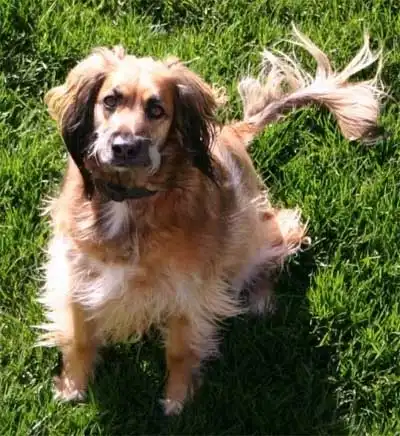
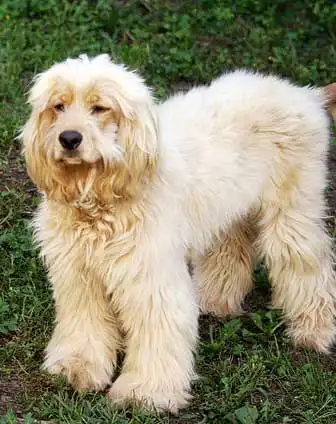
The Afghan Spaniel is a medium-sized dog known for its harmonious build, which includes sturdy legs, a prominent head and muzzle, a long neck, and unique, furry ears that hang down. This breed boasts a long, slender outer coat paired with a thick undercoat, offering excellent insulation in colder climates. Afghan Spaniels come in a range of colors, reflecting their lineage, with common shades such as cream, white, golden, black, light brown, and various combinations of these colors. Their inquisitive nature is highlighted by dark, oval eyes that seem to reflect a keen awareness of their environment. Depending on the prominence of certain traits, an Afghan Spaniel may appear similar to a lighter-boned Cocker Spaniel or a shorter Afghan Hound.

Care Routine
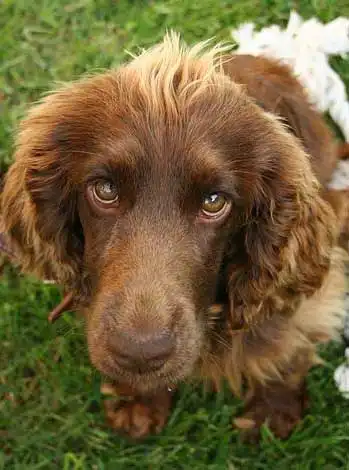
Both the Afghan Hound and Cocker Spaniel are known for their long, fine coats that demand considerable maintenance. To avoid tangles and promote healthy skin, it’s important to brush your Afghan Spaniel a minimum of three times a week. Another option is to arrange professional grooming appointments every few months to help maintain their coat. When needed, you can give your dog a bath using a gentle shampoo and conditioner designed for breeds with fine hair.
Behavior & Temperament
Due to the limited information on this breed, the best way to anticipate its behavior is by examining the temperaments of its parent breeds. The Cocker Spaniel is recognized for its loyalty and affection, making it a wonderful family pet that enjoys both snuggling and engaging in hunting activities. Generally, this breed is sociable with children and other animals, but its amiable disposition renders it ineffective as a guard dog. On the other hand, the Afghan Hound exhibits a more independent nature and tends to be wary of strangers, which can make it a more suitable option for a protective role. However, it’s crucial to note that this breed may exhibit destructive behaviors if left alone for long periods, so potential owners should assess their availability before making a decision. On a brighter note, Afghan Hounds flourish when they have the chance to chase squirrels in a securely fenced yard.


Play & Exercise
Having a dog that is a blend of Afghan Hound and Cocker Spaniel may appear to be an ideal match, yet both breeds are recognized for their occasional stubbornness, which can make training a challenge. Furthermore, they might display shyness in the presence of strangers. To help your dog flourish, it’s crucial to weave socialization and training into their everyday life. Taking your dog on longer walks around the neighborhood or in local parks not only fulfills their exercise needs but also creates chances for them to meet new people. Strive to spend at least 45 minutes each day on stimulating activities, whether through play or walks, to keep your dog engaged and happy.
Things to Know
Cups Per Day
2.5 Cups
Daily Activity
45 Minutes
Average Lifespan
14 Years
Origin
Unknown
Type
Crossbreeds
Size
Medium
Origin Country
United States
Brush Frequency
Weekly
Coat Texture
Straight
Register
Your kids have been begging for a pet forever, and you've recently decided that it's time for your family to get a new addition -- a dog! While everyone is excited for the new arrival, you're wondering if you need to have a dog license. How much does it cost? Is it required? Where do you get one?
Member Clubs

PETINNATE
Other
Height & Weight
Weight
38 lbs (17 kg)Male: 38 lbs (17 kg) , Female: 38 lbs (17 kg)
Height
22 inches (56 sm)Male: 22 inches (56 sm) , Female: 21 inches (53 sm)
6 Months
17 lbs ( m 17 lbs, f 17 lbs )
16 inches ( m 16 inches, f 16 inches )
12 Months
37 lbs ( m 37 lbs, f 37 lbs )
19 inches ( m 19 inches, f 19 inches )
18 Months
37 lbs ( m 37 lbs, f 37 lbs )
21 inches ( m 21 inches, f 21 inches )
Eye Colors
Brown

Nose Colors
Black
Brown
Coat Colors
Fawn
Cream
Silver
Red
Brown
Gray
Black