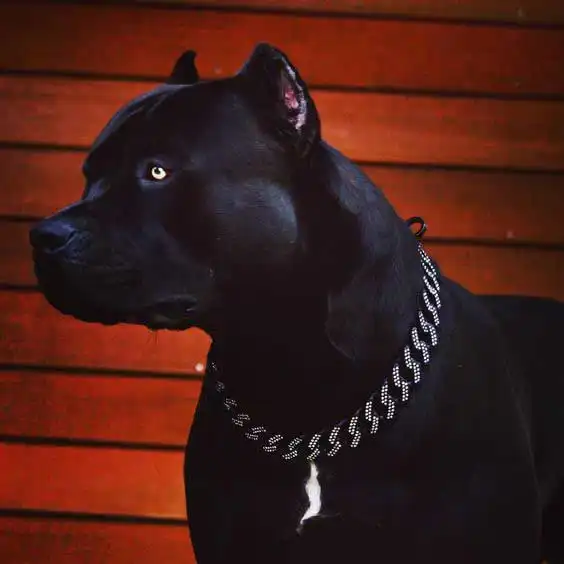
American Pit Corso
The American Pit Corso is a mixed breed that results from the combination of the American Pit Bull Terrier and the Italian Cane Corso. Typically, these dogs are quite substantial, averaging around fifty pounds in weight. The American Pit Bull Terrier was initially bred for farm work, but it gradually transformed into a devoted protector and friend. Nowadays, some individuals use the American Pit Corso for hunting wild boar. Conversely, the Cane Corso Italiano was specifically designed for pursuing large game, especially wild boar. Renowned for their balanced temperament, American Pit Corsos are also very trainable. They serve as wonderful companions, needing only minimal grooming and a moderate amount of exercise.

Breed Origin
The American Pit Corso hybrid has gained considerable popularity across the United States, thanks to the crossbreeding of the American Pit Bull Terrier and the Cane Corso. Both breeds exhibit similar physical traits and temperaments, which contribute to their effectiveness as guard dogs—one of the main reasons for their hybridization. Many individuals choose this mix as a watchdog for commercial properties. Unfortunately, media portrayals often label the Pit, Corso, and their hybrid as aggressive fighters, fostering a negative image of the breed. Nevertheless, with appropriate training and early socialization, the American Pit Corso can become a loving and fiercely protective family companion. The Cane Corso is thought to trace its roots back to Roman war dogs, while the American Pit Bull Terrier includes the American Staffordshire Terrier, Staffordshire Terrier, and Bull Terrier. Historically, the Bull and Terrier breeds were linked to the cruel sport of bull and bear baiting, which was outlawed in England in 1835. In contrast, the Cane Corso was primarily developed for agricultural tasks, such as herding cattle and protecting property. The first Cane Corsos were introduced to the United States in 1988, and the breed received recognition from the American Kennel Club (AKC) in 2010. Meanwhile, the AKC recognized the American Pit Bull Terrier in the 1930s, rebranding it as the American Staffordshire Terrier to dissociate the breed from its fighting past.
Breed Appearance
The American Pit Corso generally weighs between 75 and 115 pounds, with its adult size primarily determined by the size of its parents. This breed is characterized by a short, shiny coat that often resembles that of the Cane Corso, while its skull and muzzle bear similarities to those of the American Pit Bull. Notably, the American Pit Corso has a strong, muscular neck and a deep, powerful chest, contributing to its stocky build. Similar to the American Pit Bull, the Cane Corso also sports a short coat. Occasionally, a blue variant of the American Pit Corso may emerge, but in general, the coat is neither particularly thick nor waterproof.


Care Routine
The American Pit Corso features a short, shiny coat with a sturdy texture. This breed is not hypoallergenic and tends to shed more than one might expect from a dog with such a brief coat. Unlike many bulldog breeds, the American Pit Corso does not typically drool. Overall, this breed presents a tidy appearance and only requires weekly grooming with a stiff brush. It’s best to limit baths, as excessive washing can remove essential natural oils from the coat. For optimal dental health, aim to brush your dog’s teeth at least three times a week, although daily brushing is preferable to avoid problems like tooth decay and bad breath. Nail trimming should be done bi-monthly; if you hear your dog's nails clicking on the floor, it’s time for a trim. Establishing a grooming routine early in your puppy's life is essential for helping them adjust to the process.
Behavior & Temperament
The American Pit Corso is known for its strong prey drive and requires a confident owner to effectively manage its behavior. Unfortunately, many mixed-breed American Pit Corsos end up in shelters because their owners fail to provide adequate socialization during the crucial puppy stage. Without proper training and social exposure in their early years, these dogs may develop aggressive behaviors. Nevertheless, they are recognized for their steadfast loyalty to their families and their keen alertness. Given that both the American Pit Bull Terrier and the Cane Corso can exhibit aggressive tendencies, it is vital to initiate socialization and training as early as possible. Providing the American Pit Corso with a nurturing family environment and opportunities to interact with other dogs from a young age is critical for their healthy development.


Play & Exercise
The American Pit Corso thrives on engaging activities such as fetch, tug-of-war, running, and swimming. This breed is highly energetic and requires owners who can devote significant time to interact with him. He does best in a rural setting with a secure, fenced yard that provides ample space for play. Early training and socialization are vital for his growth and development. When walking him, it’s wise to keep him on a leash to avoid potential conflicts with unfamiliar dogs. Although he is not naturally aggressive, he may defend himself if faced with an unfriendly dog. Living in an apartment is typically not ideal for the American Pit Corso, and it’s essential to check local laws regarding American Pit Bull Terriers, as they may also pertain to this breed. This dog is not suitable for inexperienced owners; therefore, consistent and firm training is crucial for effective management.
Things to Know
Cups Per Day
0.0 Cups
Daily Activity
0 Minutes
Average Lifespan
11 Years
Origin
Unknown
Type
Crossbreeds
Size
Not Set
Origin Country
United States
Brush Frequency
Daily
Coat Texture
Straight
Register
Your kids have been begging for a pet forever, and you've recently decided that it's time for your family to get a new addition -- a dog! While everyone is excited for the new arrival, you're wondering if you need to have a dog license. How much does it cost? Is it required? Where do you get one?
Member Clubs

PETINNATE
Other
Height & Weight
Weight
95 lbs (43 kg)Male: 95 lbs (43 kg) , Female: 95 lbs (43 kg)
Height
29 inches (74 sm)Male: 29 inches (74 sm) , Female: 29 inches (74 sm)