Anglo-Francais de Petite Venerie
Petit Anglo-Français, Anglo-Francais de Moyen Venerie
The Anglo-Français de Petite Vénerie, much like various other French scent hounds, has a storied past that stretches back several centuries. This breed originated from the interbreeding of older Anglo-French hounds with the Poitevin, Beagle, Petite Gascon-Saintongeois, and Petite blue de Gascogne. The result is a dog that resembles English foxhounds in build while showcasing the unique head characteristics typical of French scent hounds. For centuries, these dogs have been primarily employed in hunting, often working in packs to flush out small game, and many of their behavioral traits are rooted in this historical function. Although they have long been recognized as hunting dogs in France, their appeal is now on the rise as show and companion animals in countries such as the United Kingdom, the United States, and Italy. Even when kept as individual pets, they maintain their pack-oriented instincts, displaying sociable, friendly, and non-aggressive behavior towards people, including strangers, and are particularly gentle with children. These dogs are known for their loyalty and affection, forming deep bonds with their families, especially with the owner who trains and socializes them. Like other scent hounds, they possess intelligence and a strong-willed nature, which can sometimes lead to stubbornness. This makes early training more effective when conducted by an experienced handler. They also have a tendency to bay, a behavior developed to alert their owners, which can create challenges in smaller living spaces like apartments. Furthermore, their hunting instincts may complicate living with small non-canine pets, as their prey drive can emerge unexpectedly. Despite these minor hurdles, the Anglo-Français de Petite Vénerie is a well-mannered breed that is gradually evolving from a traditional hunting dog into a beloved family companion.
Breed Origin
Like many other French scent hounds, this breed's ancestry dates back to the 16th century. However, due to a lack of reliable records, determining its precise origins is quite difficult. Historical accounts indicate a link between this breed and St. Hubert's Hounds (Bloodhounds), which were among the first intentional breeding efforts that took place between 750 and 900 A.D. Originally, these hunting dogs, primarily known for their scent-tracking abilities, were kept in packs by the French and English nobility. Over the years, they were crossbred, forming the foundation for early Anglo-French breeds. This breeding process included the reintroduction of older Anglo-French hounds alongside breeds like the Poitevin, Beagle, Petite Gascon-Saintongeois, and Petite blue de Gascogne, ultimately leading to the establishment of the Anglo-Français de Petite Vénerie as we know it today. Traditionally, this breed has been a popular hunting partner in France, but it has only recently started to gain recognition outside its homeland. It has been noted in Spain, where it fulfills a similar role as a hunting dog, and in the UK and the United States, where interest has shifted more towards them as companion animals, although they remain relatively rare in these areas. As they have become part of family life, more has been learned about their non-working temperaments, revealing characteristics that are common among many French scent hounds: they are sociable, affectionate, intelligent, generally non-aggressive, and ultimately loyal. Despite some translation issues, their name is gradually becoming clearer, indicating that they are not necessarily "petite" dogs, but rather are used for hunting small game.
Breed Appearance
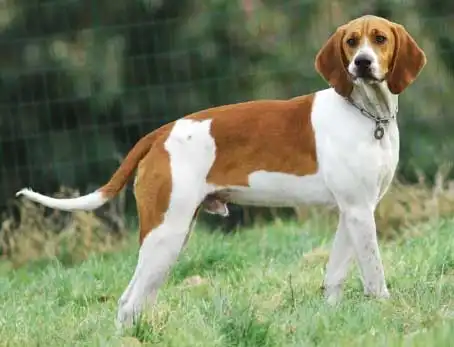
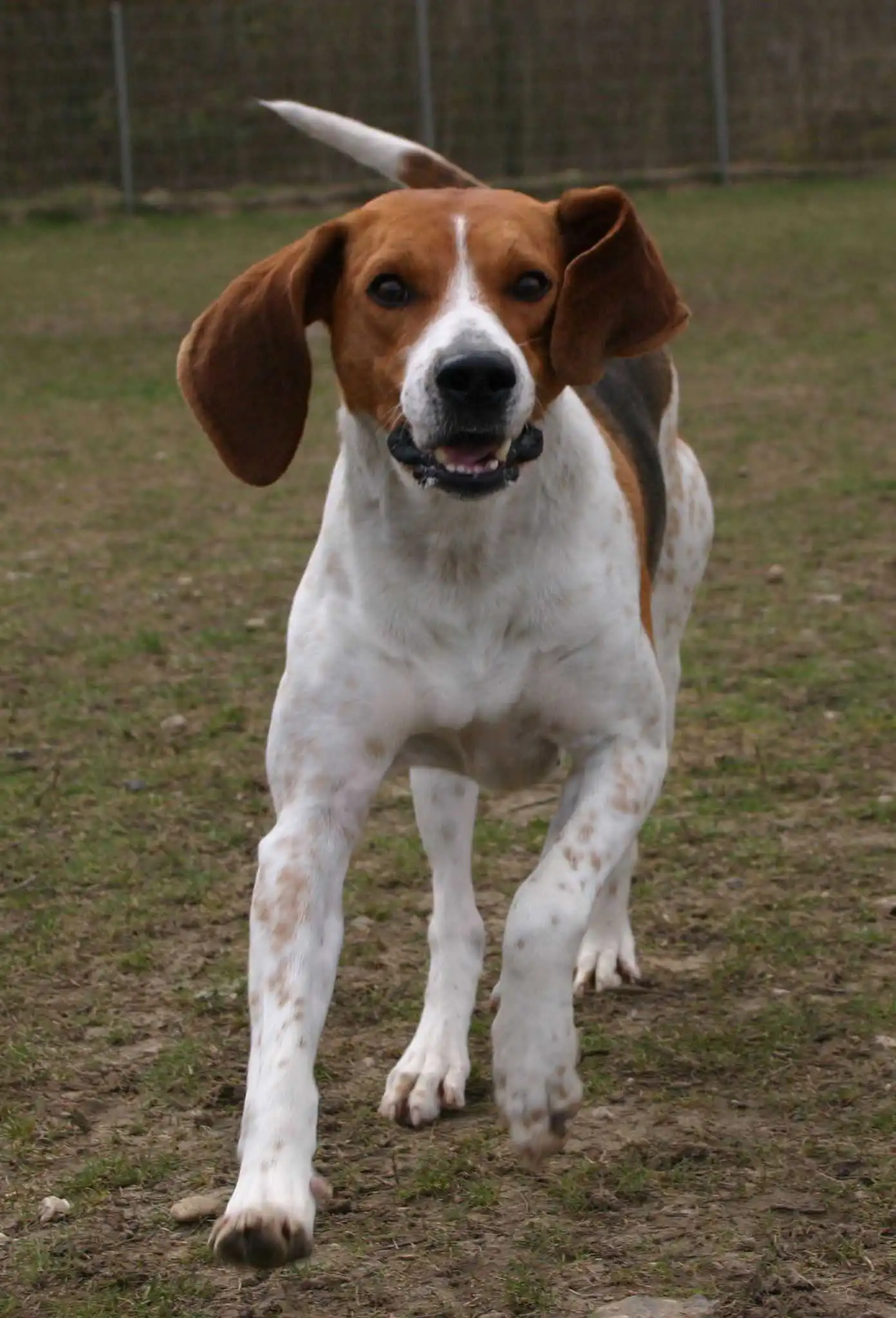
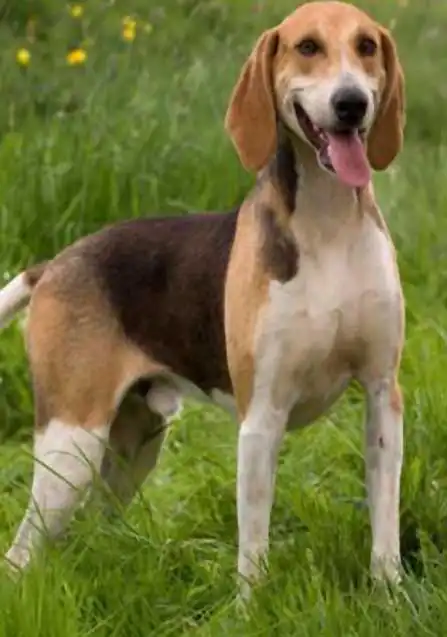
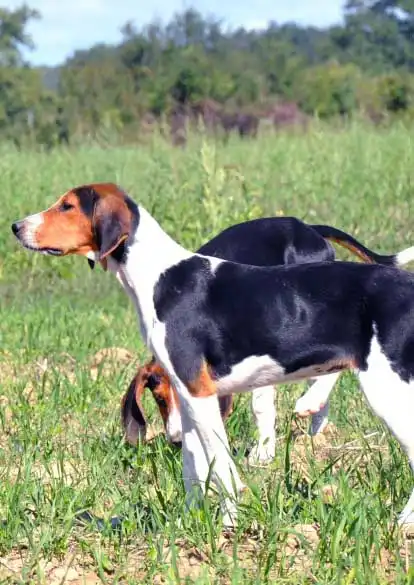
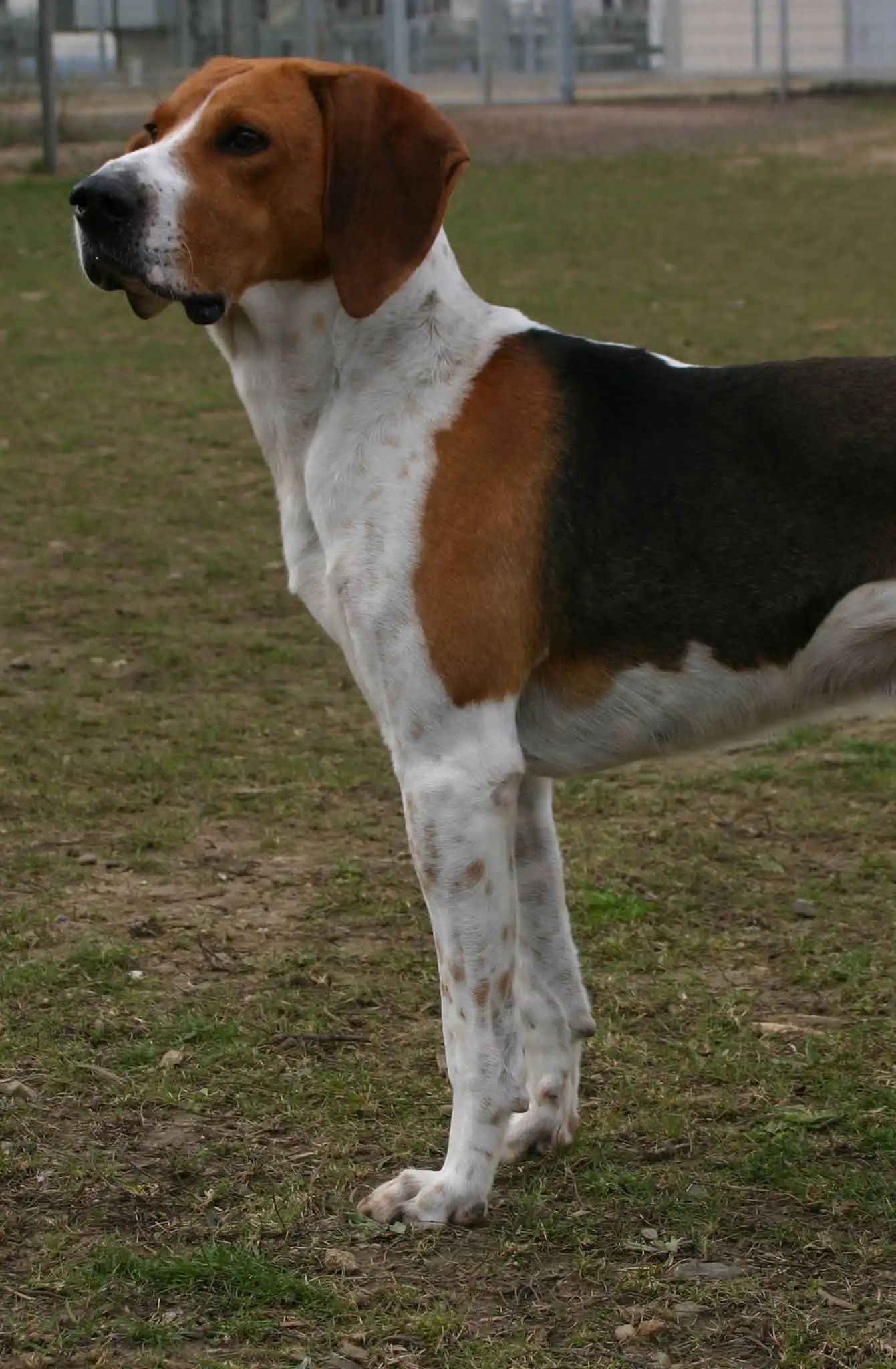
The Anglo-Français de Petite Vénerie is a medium-sized, athletic breed, standing between 16 and 22 inches tall at the shoulder and typically weighing around 40 pounds. Its head is elongated and narrower, featuring a subtly convex shape, a medium-length muzzle, and ears that hang down past the face, resembling those of other French foxhounds. Dogs with a black and white coat have a black nose, while those with an orange and white coat possess a brown nose. The neck slopes gently into a straight back, which transitions into a medium-length, slightly tapered tail. The chest is relatively deep, and the legs are strong yet not overly muscular. The coat is short, smooth, and dense, available in black and white with tan or brown markings, or in orange and white.
Care Routine
The Anglo-Français de Petite Vénerie is a breed that demands very little in terms of grooming, requiring only a few brushings each week and rarely needing a full professional grooming. Depending on the time of year, they may shed anywhere from moderate to heavy amounts of fur, so more frequent brushing is recommended for those who want to keep their living spaces clean. Their coats are adept at regulating oil, which means baths should be given only at the owner's discretion—typically after the dog has rolled in something undesirable—allowing them to stay relatively clean and odor-free. For working dogs, their nails tend to wear down naturally to a manageable length; however, for those kept as pets, it’s crucial to keep an eye on their nails and trim them as needed to prevent cracking or breaking. Furthermore, regular brushing of their teeth is vital for ensuring good oral health.
Behavior & Temperament
The Anglo-Français de Petite Véneries are recognized for their balanced temperament, a quality rooted in their pack-oriented heritage. These dogs are lively, friendly, and sociable, showing deep affection and loyalty to their owners while being welcoming to strangers. Although they are just starting to become popular as family pets, initial observations indicate that, similar to many French scent hounds, they are gentle and patient with children. Training is generally more effective with experienced handlers, as their independent nature and sharp sense of smell can sometimes lead them off course. Thus, it is crucial to begin thorough training and socialization early to help them understand boundaries. They have a high energy level and a tendency to bark, which can be challenging in smaller living environments. Furthermore, given their hunting instincts, it is not recommended to have them in homes with small animals. However, with their calm demeanor and overall amiable nature, they can adapt well as family dogs in various living arrangements and family dynamics.
Play & Exercise
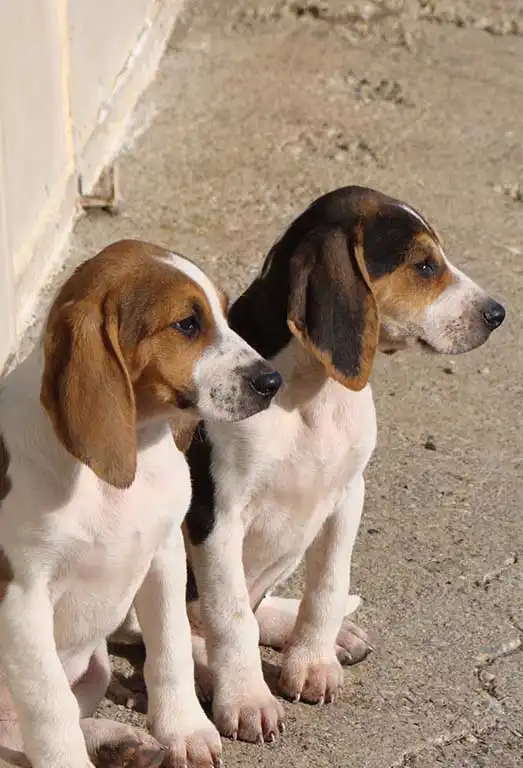
The Anglo-Français de Petite Vénerie is a breed known for its medium to high energy, which means they need plenty of exercise to stay happy and healthy. They flourish in large, securely fenced areas where they can run freely and partake in activities such as chasing balls and frisbees, without the danger of straying off in search of enticing scents. Typically, a daily routine that includes a few miles of walking or about 45 minutes of vigorous exercise is sufficient, especially when combined with both mental and physical challenges. Due to their lively disposition and physical characteristics, this breed is best suited for active families who can dedicate ample time to meet their exercise needs.
Things to Know
Cups Per Day
2.5 Cups
Daily Activity
45 Minutes
Average Lifespan
14 Years
Origin
Unknown
Type
Pure Breeds
Size
Medium
Origin Country
France
Brush Frequency
Daily
Coat Texture
Straight
Register
Your kids have been begging for a pet forever, and you've recently decided that it's time for your family to get a new addition -- a dog! While everyone is excited for the new arrival, you're wondering if you need to have a dog license. How much does it cost? Is it required? Where do you get one?
Member Clubs

PETINNATE
Scenthound

UKC
Scenthound
Height & Weight
Weight
40 lbs (18 kg)Male: 40 lbs (18 kg) , Female: 40 lbs (18 kg)
Height
19 inches (48 sm)Male: 19 inches (48 sm) , Female: 19 inches (48 sm)
6 Months
28 lbs ( m 28 lbs, f 28 lbs )
13 inches ( m 13 inches, f 13 inches )
12 Months
34 lbs ( m 34 lbs, f 34 lbs )
16 inches ( m 16 inches, f 16 inches )
18 Months
39 lbs ( m 39 lbs, f 39 lbs )
17 inches ( m 17 inches, f 17 inches )
Eye Colors
Brown

Nose Colors
Black
Brown
Coat Colors
Brown
Fawn
Black
White