Aussietare
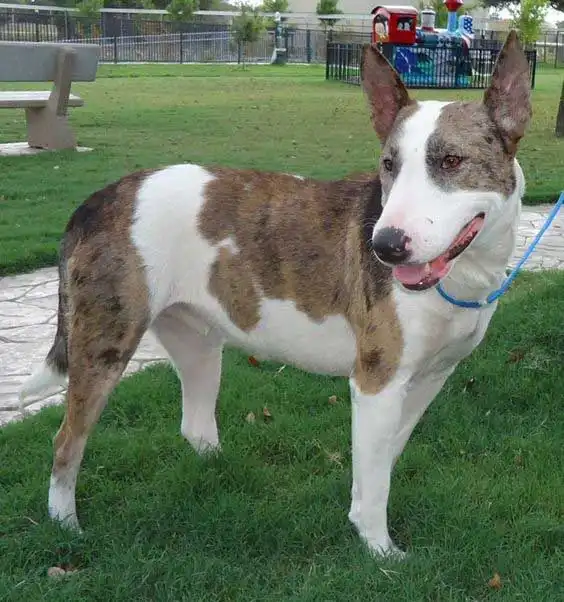
An Aussietare is a hybrid dog that results from crossing a purebred Australian Shepherd with a Bull Terrier. These dogs are intentionally bred to be energetic companions. They are known for their protective instincts, playful personalities, and occasional aggression—traits that stem from their Terrier and Bulldog lineage. Aussietares thrive on social engagement and dislike being left alone for long periods. Regular exercise is crucial for their health and happiness. This breed is particularly ideal for active couples or families with older children. Typically classified as a large breed, Aussietares weigh between 50 to 70 pounds and stand 20 to 23 inches tall, with an average lifespan ranging from 11 to 15 years. Their coats are medium to short in length and display a variety of colors common to both Australian Shepherds and Bull Terriers, often showcasing either subtle or bold markings reminiscent of the Australian Shepherd.
Breed Origin
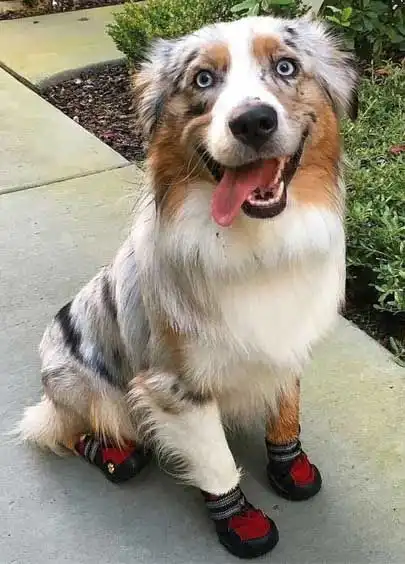
The term "Aussietare" is a clever blend of its two parent breeds: the Australian Shepherd, commonly called an "Aussie," and the Bull Terrier, also known as the English Bull Terrier, Bully, or Gladiator. Interestingly, despite its name, the Australian Shepherd did not originate in Australia; it was actually developed in the western United States during the early 1900s, likely from various Collie breeds, to aid in sheep herding. The breed gained significant popularity in the 1950s and is now employed in various capacities, including as service animals for people with disabilities, therapy dogs, drug detection canines, search and rescue assistants, and beloved family pets. In contrast, the Bull Terrier originated as a predominantly white mix of Bulldogs and various Terriers, initially referred to as "Bull-and-Terriers." Over time, it was crossed with Spanish Pointers to increase its size. This breed became popular in the early 1800s, primarily for sports and dog fighting in Europe. After dog fighting was banned, the Bull Terrier transitioned into a fashionable companion for the upper class, largely due to its striking white coat. The American Kennel Club (AKC) officially recognized Bull Terriers in 1885, and subsequent breeding with Staffordshire Bull Terriers introduced a broader spectrum of color variations. Today, the white Bull Terrier remains the most recognized and favored version of the breed. As a hybrid of these two breeds, the Aussietare is relatively new and unique, with its traits and appearance still in development. As a result, it is not as widely recognized and often gets overshadowed by more established Australian Shepherd mixes. However, breeders have noted that Aussietares generally inherit the protective and playful qualities of their parent breeds. It’s important to mention that Aussietares are not recognized by the AKC, so potential buyers should thoroughly research breeders before making a purchase.
Breed Appearance
Aussietares are robust, less fluffy counterparts to Shepherds, incorporating some characteristics of Terriers. This breed is generally categorized as large, with weights typically ranging from 45 to 65 pounds and heights between 20 to 23 inches. Their coats can be short to medium in length, featuring either straight or wavy textures, and are known for their smooth, dense feel. The variety in their coats, inherited from their parent breeds, results in a broad spectrum of colors and patterns. Usually, they have a lighter base color accented by darker markings, spots, or the unique light markings typical of Australian Shepherds, appearing in shades of white, gray, black, brown, and tan. Their feet are round, compact, and well-padded, while their tails range from short to medium length. Aussietares exhibit a sharp, intelligent expression, characterized by high-set, triangular ears that often droop, relatively flat foreheads, and small triangular eyes that contrast with their larger overall size.

Care Routine
The Aussietare is a breed that requires minimal maintenance. Its coat, which varies from short to medium length and is not hypoallergenic, typically does not necessitate regular grooming or styling. While occasional brushing can help control moderate shedding and keep the coat looking shiny, it is not strictly required. Owners should aim to bathe their Aussietares about once a month or as needed. As with all dog breeds, it is essential for Aussietare owners to brush their dog's teeth daily, trim their nails roughly once a month, and keep their eyes and ears clean. When properly cared for, Aussietares usually do not drool or produce any unpleasant smells.
Behavior & Temperament
Aussietares are known for their energetic and playful demeanor, eagerly interacting with both people, including children, and fellow dogs. These sociable and active pets flourish in the presence of others. They are especially affectionate and protective of their families, creating strong connections with both humans and other animals. However, like many high-energy breeds, they can become destructive and mischievous if left alone for long periods. Moreover, Aussietares possess a strong desire to explore, which requires careful supervision when they are outside. Although they don’t bark frequently, they may have a tendency to nip or bite during play, a behavior that is often more pronounced than in other breeds. They can also show aggression towards small animals, unfamiliar dogs, and strangers. Fortunately, both Australian Shepherds and Bull Terriers are very trainable, so with early guidance, Aussietares can learn to control these aggressive behaviors and other challenges effectively.

Play & Exercise
Things to Know
Cups Per Day
0.0 Cups
Daily Activity
0 Minutes
Average Lifespan
0 Years
Origin
Unknown
Type
Crossbreeds
Size
Not Set
Origin Country
United States, United Kingdom
Brush Frequency
Daily
Coat Texture
Straight
Register
Your kids have been begging for a pet forever, and you've recently decided that it's time for your family to get a new addition -- a dog! While everyone is excited for the new arrival, you're wondering if you need to have a dog license. How much does it cost? Is it required? Where do you get one?
Member Clubs

PETINNATE
Other