Australian Eskimo
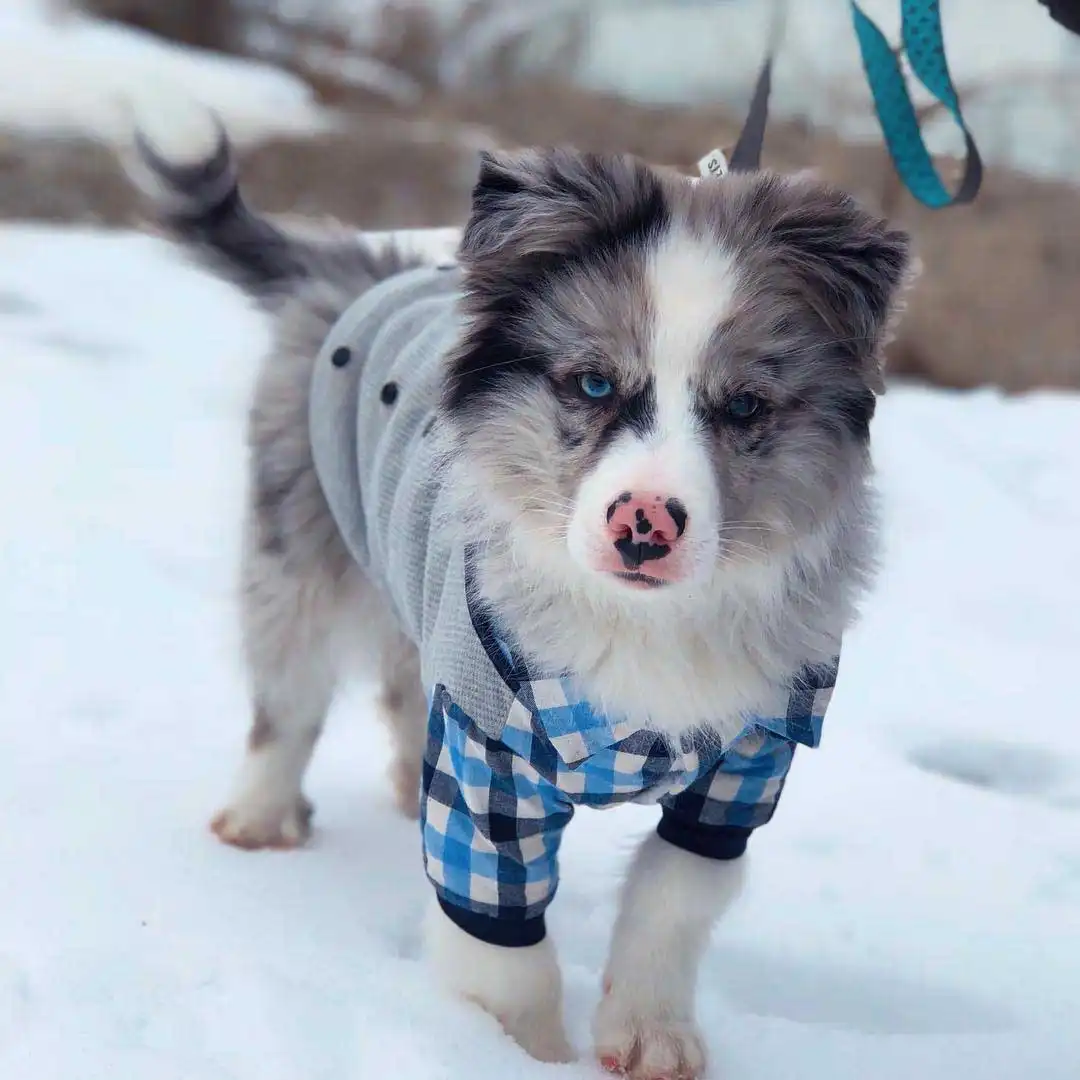
The Australian Eskimo is a mixed breed that merges characteristics of the American Eskimo and the Australian Shepherd. These dogs usually sport a mainly white coat with brown or black markings that may be speckled or spotted. Their fur tends to be wavy and coarse, requiring regular grooming to keep it looking neat, and they experience moderate shedding. Inheriting strong herding instincts from their Australian Shepherd ancestry, these dogs are primarily celebrated for their loving and playful personalities, making them wonderful companions. While they are generally not very vocal and rarely bark at unfamiliar faces, they are gentle with children and form strong bonds with their families. Training is achievable, but owners should be ready to dedicate time and patience to see the desired outcomes. Furthermore, they adapt well to different climates, thriving in both warm and cold conditions.
Breed Origin
The name of the breed originates from its parent breeds, the Australian Shepherd and the American Eskimo, although details about their history are somewhat limited. Notably, the Australian Shepherd, despite its name, was actually developed in the United States during the 1840s for herding livestock and remains a working dog to this day. Renowned for their intelligence and loyalty, these dogs can trace their ancestry back to Spanish Sheepdogs that Basque shepherds brought to America in the 19th century. Many Australian Shepherds are registered with the Australian Shepherd Club of America and are affectionately known as "Aussies" or "Little Blue Dogs." They were specifically bred for their working abilities and are prized for their excellent temperament. Conversely, the American Eskimo breed has its origins in Germany and is part of the Spitz family. It was originally called the American Spitz until 1917, when the name was changed to American Eskimo, likely to distance the breed from its German roots. These dogs became well-known for their performances in circuses, where they displayed their tricks and were often dubbed “the dog beautiful” due to their striking looks. Their popularity surged as they entertained audiences by dancing to music and interacting with clowns at the Barnum and Bailey Circus. Commonly referred to as "Eskies," they come in three sizes: Toy, Miniature, and Standard, and are celebrated for their vibrant personalities. The American Kennel Club officially recognized the breed in 1995. Initially bred for farm work, they are agile and possess strong herding instincts, with some also serving as guard dogs or in roles related to narcotics detection.
Breed Appearance
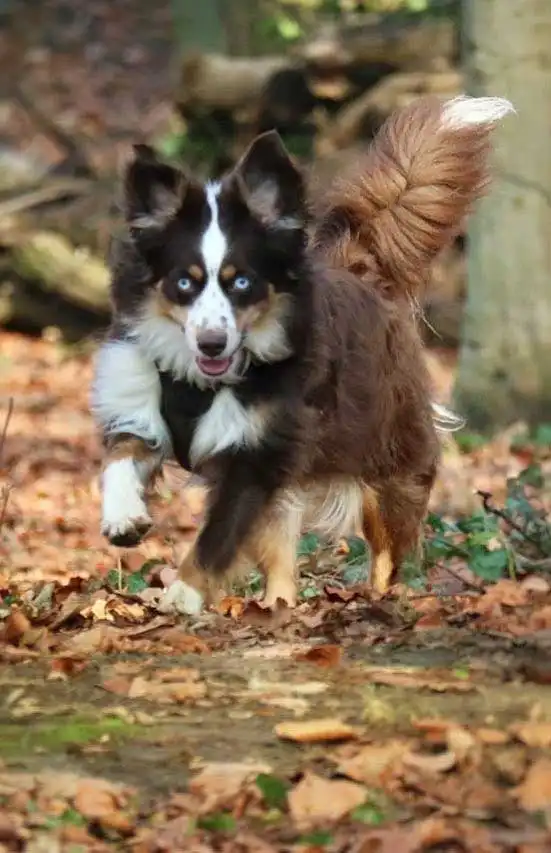
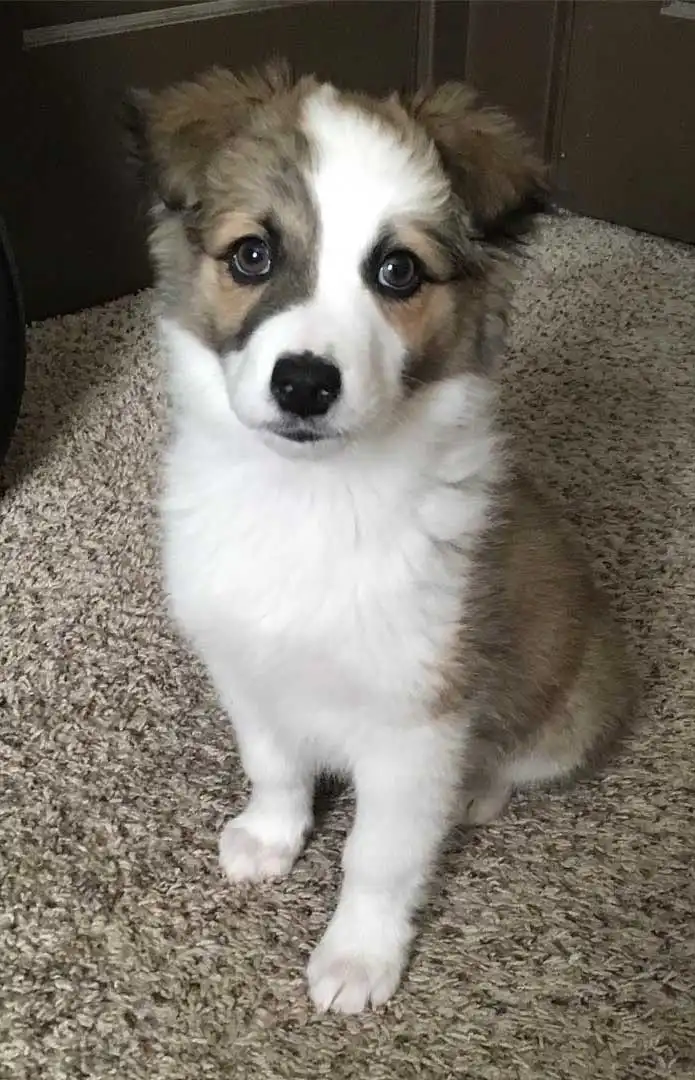
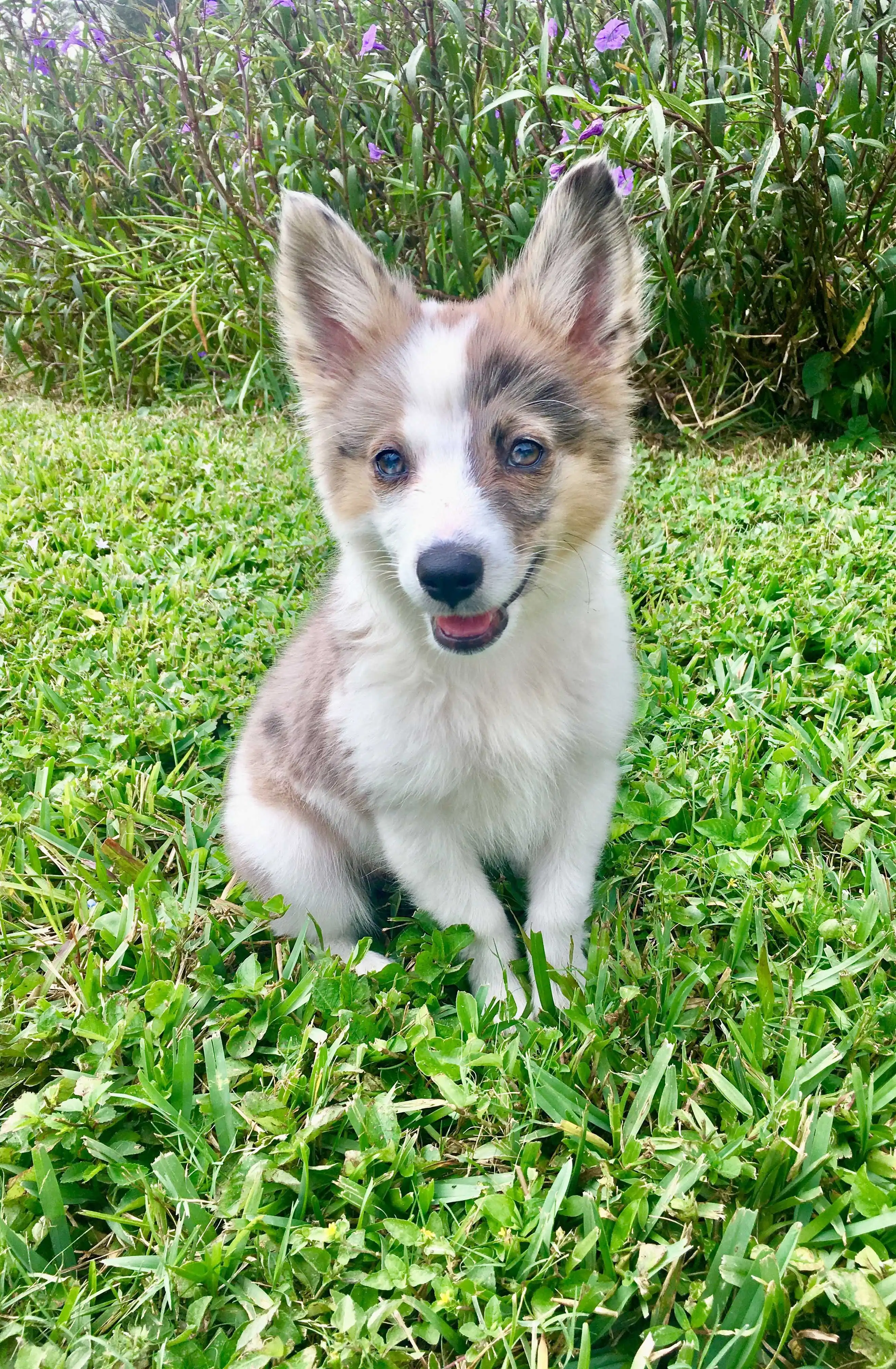
The Australian Eskimo is a robust breed, with males weighing up to 60 pounds and standing as tall as 40 inches. Their fur is generally coarse and wavy, often displaying a blend of speckled patterns. Your dog is likely to inherit various characteristics from its parent breeds. Australian Shepherds are particularly noted for their captivating almond-shaped eyes, which can be brown, amber, or occasionally blue. Their ears are moderately sized, triangular, and slightly rounded at the tips. They have strong white teeth and a muzzle that gradually narrows to a rounded tip. Their paws are oval-shaped, and their tails can either be straight or docked. The medium-length coat comes in a range of colors, including blue or red merle, as well as red or black tricolor, often accented with white and/or tan markings. On the other hand, American Eskimos are characterized by their fluffy, straight double coats, which are primarily white. Their eyes are black and slightly oval, paired with upright triangular ears. Many individuals in this breed exhibit medium to dark brown tear stains beneath their eyes, contributing to their alert and intelligent appearance. They have a broad muzzle and a strong jaw, with teeth that fit snugly together. Their paws are also oval, and they carry their tails arched over their backs.
Care Routine
Caring for Australian Eskimos is generally uncomplicated, but they do need regular grooming to keep their coats looking their best. It's recommended to brush them at least twice a week. In the summer, consider trimming their fur and ensuring their tick and flea treatments are up to date to minimize scratching, as these dogs can be prone to allergies. Neither of the parent breeds is hypoallergenic, and the Australian Eskimo inherits this characteristic. Furthermore, maintaining good dental hygiene is crucial for all dogs, so it's important to begin brushing your dog's teeth daily from an early age to create a habit. Regular ear cleaning and nail trimming should also be key components of your Australian Eskimo's care routine.
Behavior & Temperament
Australian Eskimos are lively and affectionate dogs, full of energy and playfulness, often displaying deep loyalty to their families. However, they are not typically regarded as the most effective watchdogs, as they usually do not bark at strangers. Inherited from their Australian Shepherd ancestry, they have a natural herding instinct, but they are primarily known for being joyful companions, making them wonderful family pets. As with any new dog entering a home, enrolling them in training classes can greatly enhance their socialization skills with other animals. While Australian Eskimos are generally considered moderately trainable, committed owners will discover that their efforts yield satisfying results. This breed, a cross between the Australian Shepherd and the American Eskimo, exhibits a blend of characteristics from both parent breeds. Australian Shepherds are recognized for their strong desire for human interaction and their eagerness to please, while American Eskimos are friendly with other dogs, sociable with cats, and often a great choice for first-time dog owners. They also tend to be very good with children.


Play & Exercise
The Australian Eskimo needs plenty of exercise and playtime to maintain its health and can adapt well to different weather conditions and environments. These dogs are lively and playful, making daily walks a necessity. While having a fenced yard is ideal, they can also thrive in an apartment setting if they receive consistent outdoor activity. Engaging with children can significantly help keep your dog entertained. Both parent breeds require considerable physical activity; notably, the American Eskimo needs sufficient mental and physical stimulation to prevent boredom and potential destructive behaviors. Australian Shepherds particularly enjoy interactive games such as frisbee and fetch, along with activities that stimulate their minds.
Things to Know
Cups Per Day
0.0 Cups
Daily Activity
0 Minutes
Average Lifespan
14 Years
Origin
1990s
Type
Crossbreeds
Size
Not Set
Origin Country
United States
Brush Frequency
Daily
Coat Texture
Straight
Register
Your kids have been begging for a pet forever, and you've recently decided that it's time for your family to get a new addition -- a dog! While everyone is excited for the new arrival, you're wondering if you need to have a dog license. How much does it cost? Is it required? Where do you get one?
Member Clubs

PETINNATE
Other
Height & Weight
Weight
46 lbs (21 kg)Male: 48 lbs (22 kg) , Female: 44 lbs (20 kg)
Height
21 inches (53 sm)Male: 21 inches (53 sm) , Female: 21 inches (53 sm)