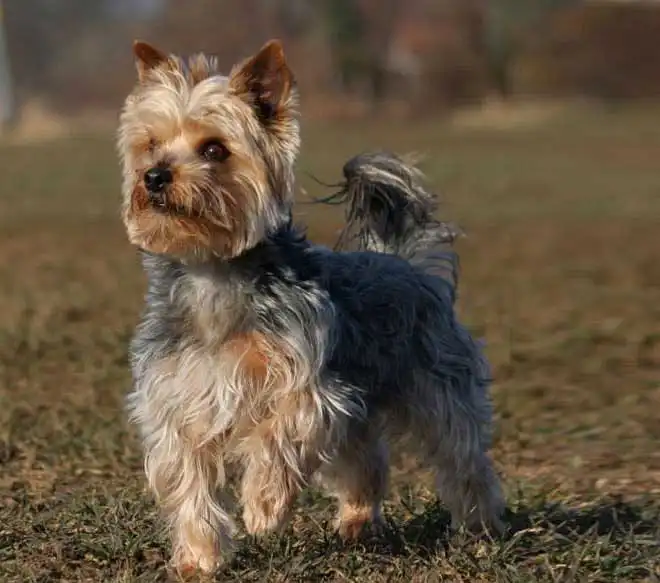
Australian Yorkshire Terrier
The Australian Yorkshire Terrier is a mixed breed that emerges from the combination of an Australian Terrier and a Yorkshire Terrier. Their coats typically showcase a variety of colors, including black and tan, blue, or red, and they can differ in length and texture, ranging from long to medium and from silky to straight, all designed to be water-resistant. These dogs require minimal grooming to keep their coats looking good and shed very little. While they are energetic and playful, they do not require a lot of exercise, making them suitable for people with more relaxed lifestyles. Training these terriers can be challenging due to their stubborn nature and propensity to get distracted easily; however, employing positive reinforcement and rewards can lead to successful training outcomes.
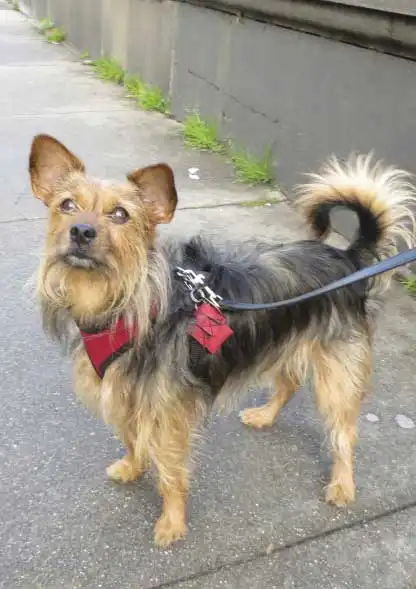
Breed Origin
Known colloquially as Yorkies, the Yorkshire Terrier breed originated in the 19th century, primarily to help control rat infestations in mines. Miners would take these small dogs into the mines and mill buildings to tackle the vermin problem. Additionally, hunters often carried these energetic dogs in their pockets, as the tenacious Yorkies would chase badgers and foxes into their dens. The breed's ancestry can be traced back to the Waterside Terrier, a small Scottish dog characterized by its long blue-gray coat, which was brought to Yorkshire, England, by weavers in the mid-1800s. The Waterside Terrier itself was developed from a combination of the old rough-coated Black-and-Tan English Terrier, common in the Manchester area, and the Paisley and Clydesdale Terriers, as documented by the American Kennel Club. Initially known as the Broken Haired Scotch Terrier and later the Toy Terrier, the breed was officially recognized as the Yorkshire Terrier in 1874. In a notable event in 2015, actor Johnny Depp and his then-wife Amber Heard faced criticism for failing to properly declare their two Yorkshire Terriers when entering Australia. Meanwhile, Australian Terriers also proved adept at catching rats and hunting snakes. They share a common lineage with the Cairn Terrier, Short-haired Skye Terrier, and Dandie Dinmont Terrier. These rough-coated terriers were brought from Great Britain to Australia in the early 19th century. The Australian Terrier became the first native breed to be recognized in Australia, making its debut as the Australian Rough-Coated Terrier at a show in Melbourne in 1868. It was officially renamed the Australian Terrier in 1897 and gained recognition from the American Kennel Club in 1960, followed by the United Kennel Club in 1970.
Breed Appearance
The Australian Yorkshire Terrier is a hybrid breed created by crossing the Australian Terrier with the Yorkshire Terrier, resulting in a dog that showcases characteristics from both lineage. These small dogs usually weigh around 16 pounds and reach a height of up to 11 inches. Newborn puppies typically display a black and tan or blue and tan coloration, which evolves into their adult fur, potentially featuring shades of blue, red, or gold complemented by tan highlights. They possess small, expressive dark eyes and black noses, with ears that are small and V-shaped. Often, their tails are docked, and their tiny paws are finished with black nails.


Care Routine
The Australian Yorkshire Terrier is generally regarded as a low-maintenance breed due to its minimal shedding. However, if your dog inherits longer hair from its lineage, it will need regular brushing and trimming to keep it in good condition. Consistent grooming not only ensures a healthy coat but also promotes skin health; baths should be reserved for when they are truly necessary. Small dog breeds often encounter dental issues, so it's advisable to use a toothbrush and toothpaste formulated for pets, incorporating dental care into your daily routine. Yorkshire Terriers, in particular, are susceptible to early tooth loss, making diligent oral hygiene crucial for their well-being. Furthermore, regular ear cleaning and nail trimming should be essential components of caring for your Australian Yorkshire Terrier.
Behavior & Temperament
Australian Yorkshire Terriers are affectionate, clever, and devoted pets. Although they are small, they exhibit a lively sense of adventure and an innate curiosity, which necessitates keeping them in a safe, enclosed space—just be cautious, as they often like to dig. Commonly described as "big dogs in small bodies," their vibrant personalities are prominent, but they struggle with being left alone for long durations. While they may initially be shy around unfamiliar faces, they typically interact better with older children. Their acute sense of hearing allows them to alert you to possible dangers, making them effective watchdogs. To foster their social skills, it’s best to start training them during their puppy stage.


Play & Exercise
All dogs need regular exercise to stay healthy and to effectively manage their surplus energy, which helps avoid any destructive tendencies, and the Australian Yorkshire Terrier is no exception. Typically, a daily exercise routine of 20 to 30 minutes is adequate for this breed, especially when you include frequent indoor playtime. These dogs are confident and flourish when faced with challenges. Originally bred for hunting, they love to chase balls in the yard and respond very well to positive reinforcement and reward-based activities. Additionally, they can comfortably live in an apartment, provided they receive daily walks.
Things to Know
Cups Per Day
0.0 Cups
Daily Activity
0 Minutes
Average Lifespan
14 Years
Origin
2000s
Type
Crossbreeds
Size
Not Set
Origin Country
Unknown
Brush Frequency
Daily
Coat Texture
Straight
Register
Your kids have been begging for a pet forever, and you've recently decided that it's time for your family to get a new addition -- a dog! While everyone is excited for the new arrival, you're wondering if you need to have a dog license. How much does it cost? Is it required? Where do you get one?
Member Clubs

PETINNATE
Other
Height & Weight
Weight
14 lbs (6 kg)Male: 15 lbs (7 kg) , Female: 13 lbs (6 kg)
Height
10 inches (25 sm)Male: 10 inches (25 sm) , Female: 10 inches (25 sm)