Basset Bordeaux
French Basset Mastiff
The Basset Bordeaux is a unique breed that merges the loving temperament of the Basset Hound with the sturdy traits of the Dogue de Bordeaux, originating from these two distinct French breeds. Although the exact beginnings of the Basset Bordeaux are somewhat ambiguous, it is thought to have been developed fairly recently, likely within the past twenty years. Originally intended for rabbit tracking and protection, this breed has evolved primarily into a loyal companion. In terms of looks, the Basset Bordeaux closely resembles its larger counterpart, the Dogue de Bordeaux, showcasing a sleek, glossy, and thick coat. Its height can vary widely, reflecting the characteristics of its parent breeds, and there is no established height standard for this breed at present. The Basset Bordeaux is recognized for its combination of traits inherited from both ancestors, often exhibiting a gentle, friendly, and loving personality. While it may bark from time to time, this breed is generally low-maintenance in grooming due to its short coat.
Breed Origin
The exact beginnings of the Basset Bordeaux are somewhat ambiguous, but it is generally accepted that this breed originated in France, the birthplace of its parent breeds. The Basset Bordeaux gained traction approximately two decades ago as a hybrid developed to mitigate hereditary health concerns. This breed is a combination of the Basset Hound and the Dogue de Bordeaux. Traditionally, the Basset Hound was bred for tracking small game like hares and rabbits, while the Dogue de Bordeaux was known for its prowess as a vigilant guardian. The ancestry of the Basset Hound dates back to before the French Revolution, with some experts attributing its development to the monks at the Abbey of St. Hubert in France. This breed was intentionally created with short, robust legs to maintain a slower pace while hunting. After the revolution, the Basset Hound became favored by commoners and hunters who valued its leisurely speed and keen sense of smell. In the late 19th century, it was crossbred with the Bloodhound to improve its length. The American Kennel Club granted official recognition to the Basset Hound in 1935. In contrast, the Dogue de Bordeaux was initially bred in the Middle Ages for its strength as both a watchdog and a cattle driver. This breed was vital in safeguarding estates during the French Revolution, which led to a significant decline in its population. Raymond Triquet is often credited with saving the Dogue de Bordeaux from near extinction. As of now, the Basset Bordeaux has not received official recognition from the AKC due to its hybrid status.
Breed Appearance
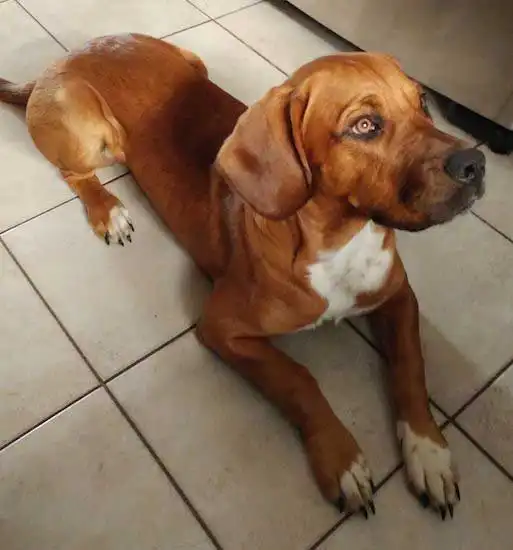
The Basset Bordeaux closely resembles its parent breed, the Dogue de Bordeaux. This breed is known for its strong, muscular physique, characterized by straight front legs and a compact body with a short back. It typically falls within the medium to large size range. The Basset Bordeaux features a prominent, heavy head, which, while less wrinkled than that of the Dogue de Bordeaux, still has some loose skin around the neck area. Its tail is thick at the base and narrows towards the end. The coat is short, dense, and smooth, with colors varying from light fawn to dark fawn, and may occasionally include black and white markings influenced by the Basset Hound's coloration. The breed's dark eyes are paired with a black nose, adding to its distinctive appearance.

Care Routine
The Basset Bordeaux is not considered hypoallergenic and tends to shed quite a lot. Its coat features a dense, short, and smooth texture. To effectively manage shedding, it is recommended to brush the coat daily with a rubber curry brush, which aids in removing loose hair. During heavy shedding periods, using a slicker brush can also be helpful. Bathing should be limited to every six to eight weeks, unless the dog gets particularly dirty. Regular ear cleaning is important to prevent moisture accumulation, which can result in yeast infections. Furthermore, the dog's teeth should be brushed weekly, and nails should be trimmed or filed every two to three weeks to prevent overgrowth or cracking. Since the Basset Bordeaux is prone to drooling, keeping the area around its mouth clean is essential to reduce odors and prevent bacterial growth.
Behavior & Temperament
The Basset Bordeaux showcases a temperament that combines characteristics from its parent breeds, the Basset Hound and the Dogue de Bordeaux. This breed is recognized for its friendly, calm, curious, and affectionate demeanor, making it a fantastic choice for novice dog owners due to its gentle disposition. The Basset Bordeaux is particularly good with children and tends to be friendly towards strangers. To enhance its comfort around unfamiliar faces, early socialization and training are recommended. While it may require some initial acclimatization to other pets, it generally coexists well with them. With relatively low energy levels, motivating a Basset Bordeaux can be a challenge. The Basset Hound is often perceived as stubborn in training, while the Dogue de Bordeaux is more laid-back. As a result, the Basset Bordeaux may require additional support to remain engaged during training sessions. Employing positive reinforcement methods and ensuring consistency in training practices will lead to the most effective outcomes. Once fully trained, the Basset Bordeaux becomes a truly delightful companion.
Play & Exercise
While your Basset Bordeaux may exhibit a relaxed, couch-loving personality, it’s essential to keep him active to promote a healthy lifestyle. This breed generally has a low energy level and would be quite happy to spend the day lounging next to you as you watch your favorite shows. Ideally, a Basset Bordeaux would flourish in an apartment with a yard or a house that offers outdoor space. By taking him for two walks each day and including some playtime, he’ll be more than ready to unwind for the remainder of the day. This breed adapts well to both urban and rural environments, especially in warmer climates, but it’s vital to shield him from extreme weather conditions.
Things to Know
Cups Per Day
3.0 Cups
Daily Activity
20 Minutes
Average Lifespan
10 Years
Origin
Unknown
Type
Crossbreeds
Size
Giant
Origin Country
France
Brush Frequency
Daily
Coat Texture
Straight
Register
Your kids have been begging for a pet forever, and you've recently decided that it's time for your family to get a new addition -- a dog! While everyone is excited for the new arrival, you're wondering if you need to have a dog license. How much does it cost? Is it required? Where do you get one?
Member Clubs

PETINNATE
Other
Height & Weight
Weight
105 lbs (48 kg)Male: 108 lbs (49 kg) , Female: 103 lbs (47 kg)
Height
22 inches (56 sm)Male: 22 inches (56 sm) , Female: 22 inches (56 sm)
Eye Colors
Brown

Nose Colors
Black
Coat Colors
Fawn

Black
White