Basset Heeler
Australian Battle Dog
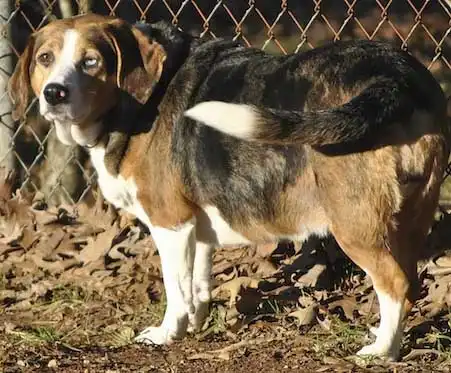
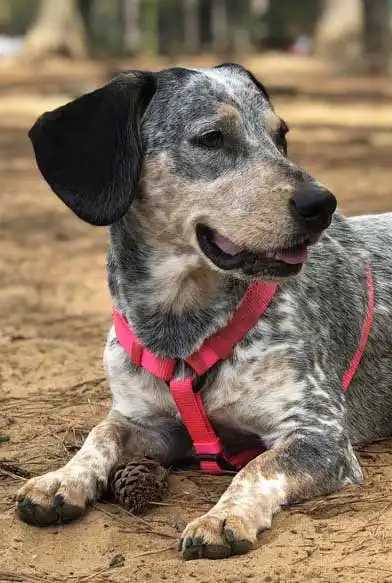
The Basset Heeler is a loyal and committed medium-sized hybrid breed, resulting from the combination of the Basset Hound and the Australian Cattle Dog, often known as the Blue Heeler. This breed is known to bark from time to time, but it is not typically seen as a disturbance. Although the precise origins of the Basset Heeler remain somewhat ambiguous, it is thought to have been developed to create a determined dog with a strong inclination towards guarding and protection. The Basset Hound was initially bred for hunting rabbits, while the Blue Heeler was intended to deter intruders. Nowadays, the Basset Heeler functions as both a devoted protector and a faithful companion. In terms of looks, it bears a close resemblance to the Blue Heeler, sporting a short, dense coat akin to that of its parent breeds. The coat is available in a variety of color patterns, such as blue, blue mottled, blue speckled, red mottled, and red speckled, and it requires minimal grooming, making maintenance straightforward.
Breed Origin
The exact beginnings of the Basset Heeler are somewhat ambiguous, but it is generally accepted that this breed originated in the United States during a period when mixed breeds were becoming increasingly popular. The Basset Heeler is a hybrid of the Basset Hound and the Blue Heeler. The Basset Hound was bred as a compact, robust dog suited for a leisurely hunting style, which facilitated the pursuit of game. Its lineage dates back to before the French Revolution, when the Friars of the French Abbey of St. Hubert took a significant interest in its breeding. After the revolution, the Basset Hound became popular among commoners and hunters who appreciated its skill in tracking small game, particularly valuing its exceptional sense of smell. The American Kennel Club granted official recognition to the Basset Hound in 1935. Conversely, the Blue Heeler earned a reputation for its ability to navigate difficult terrains over long distances while effectively herding cattle with minimal barking. It is thought that blue-merle Highland Collies were crossed with dingoes in the 1840s, which may explain the unique white blaze found on the Blue Heeler’s head. Brothers Jack and Harry Bagust worked to improve the Blue Heeler's working abilities, resulting in several name changes for the breed throughout the years. Initially called the Queensland Blue Heeler, it was later known as the Australian Heeler before ultimately being named the Australian Cattle Dog. The breed standard was made public in 1897, the same year Robert Kaleski began breeding and exhibiting Blue Heelers. The American Kennel Club recognized the Blue Heeler in 1980. However, due to its hybrid status, the Basset Heeler has not received official recognition from the AKC.
Breed Appearance
The Basset Heeler embodies characteristics from both its parent breeds: the Basset Hound and the Blue Heeler. Its ears are floppy, though not as long or droopy as those of the Basset Hound. The coat color primarily resembles that of the Blue Heeler, coming in a variety of combinations such as blue, blue mottled, blue speckled, red mottled, and red speckled. This breed has a short, dense, and thick coat that is water-resistant. With a strong and muscular build, the Basset Heeler presents a well-defined physique that radiates strength and intelligence. It features a broad skull that flattens between the eyes, muscular cheeks, and a medium-length yet powerful muzzle. The ears are small to medium-sized and spaced apart. Its neck and shoulders are robust, while the forelegs are straight and parallel. The feet are rounded and arched, equipped with small but sturdy toes.

Care Routine
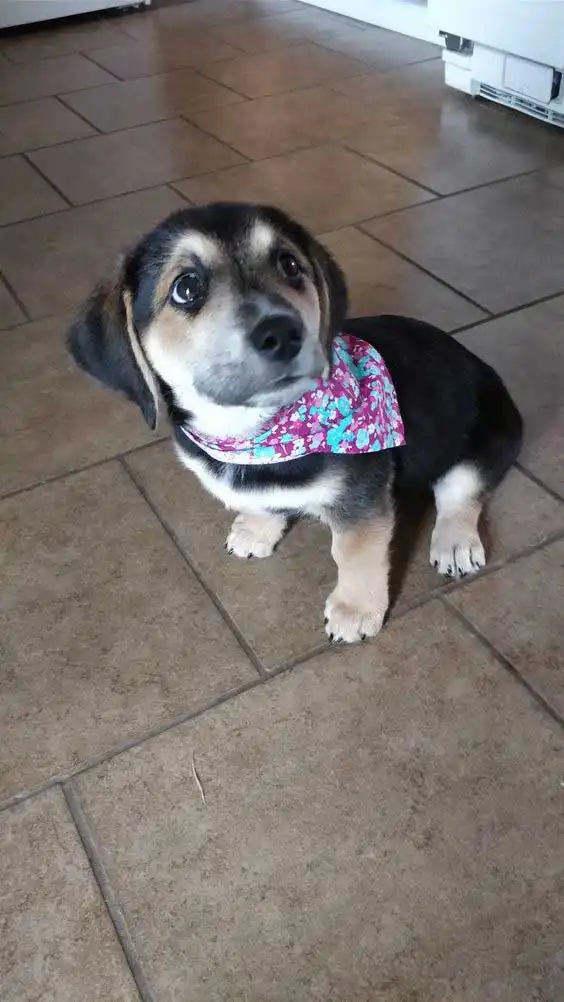
The Basset Heeler is not considered a hypoallergenic breed and typically sheds a moderate amount. This breed usually does not experience excessive drooling and is free from any significant odors. Its coat is short and dense, necessitating regular grooming. To maintain a clean and well-kept appearance, daily brushing with a pin brush or curry comb is recommended. Bathing should be limited to every 6 to 8 weeks to preserve the natural oils in the coat. It is also important to clean the ears weekly to prevent bacterial growth, while checking for mites and ticks during this routine. Additionally, nails should be trimmed every 2 to 3 weeks, or more often if they grow quickly or are prone to breaking. Weekly brushing of the teeth is also advisable.
Behavior & Temperament
The Basset Heeler is known for its lively and tenacious personality, making it an excellent companion for families. This breed possesses a blend of independence and protectiveness, which means it requires sufficient mental and physical stimulation to prevent boredom. When introducing a Basset Heeler to new people, caution is necessary, as it can be defensive of its family. Without proper early training, this breed may become wary and could display aggression towards strangers. Thus, careful socialization with others is vital. Furthermore, early training is essential to help the dog feel at ease around children, other pets, and fellow dogs. This breed may not be ideal for first-time owners, given that both of its parent breeds are known for their stubbornness in training. Utilizing positive reinforcement methods is highly recommended to aid the Basset Heeler's learning journey. With its energetic nature, regular exercise is crucial for this active breed.


Play & Exercise
The Basset Heeler is a lively breed that requires plenty of physical activity to stay happy and healthy. To ensure your Basset Heeler thrives, it's important to involve him in activities such as fetching, running, and taking several brisk walks throughout the day. These walks can be spread out, allowing for energetic bursts followed by restful intervals. Ideally, this breed flourishes in a large, securely fenced yard that keeps him from wandering off on his own escapades. Regardless of whether you reside in an urban or rural setting, providing at least 60 minutes of exercise daily will keep him satisfied. This dog is always enthusiastic about joining you on your adventures, ready for whatever comes next.
Things to Know
Cups Per Day
3.0 Cups
Daily Activity
60 Minutes
Average Lifespan
11 Years
Origin
Unknown
Type
Crossbreeds
Size
Medium
Origin Country
United States
Brush Frequency
Daily
Coat Texture
Straight
Register
Your kids have been begging for a pet forever, and you've recently decided that it's time for your family to get a new addition -- a dog! While everyone is excited for the new arrival, you're wondering if you need to have a dog license. How much does it cost? Is it required? Where do you get one?
Member Clubs

PETINNATE
Other
Height & Weight
Weight
37 lbs (17 kg)Male: 37 lbs (17 kg) , Female: 37 lbs (17 kg)
Height
17 inches (43 sm)Male: 17 inches (43 sm) , Female: 17 inches (43 sm)
Eye Colors
Brown

Nose Colors
Black
Coat Colors
Blue
Red