Berger Blanc Suisse
White Swiss Shepherd, Snowy Shepherd
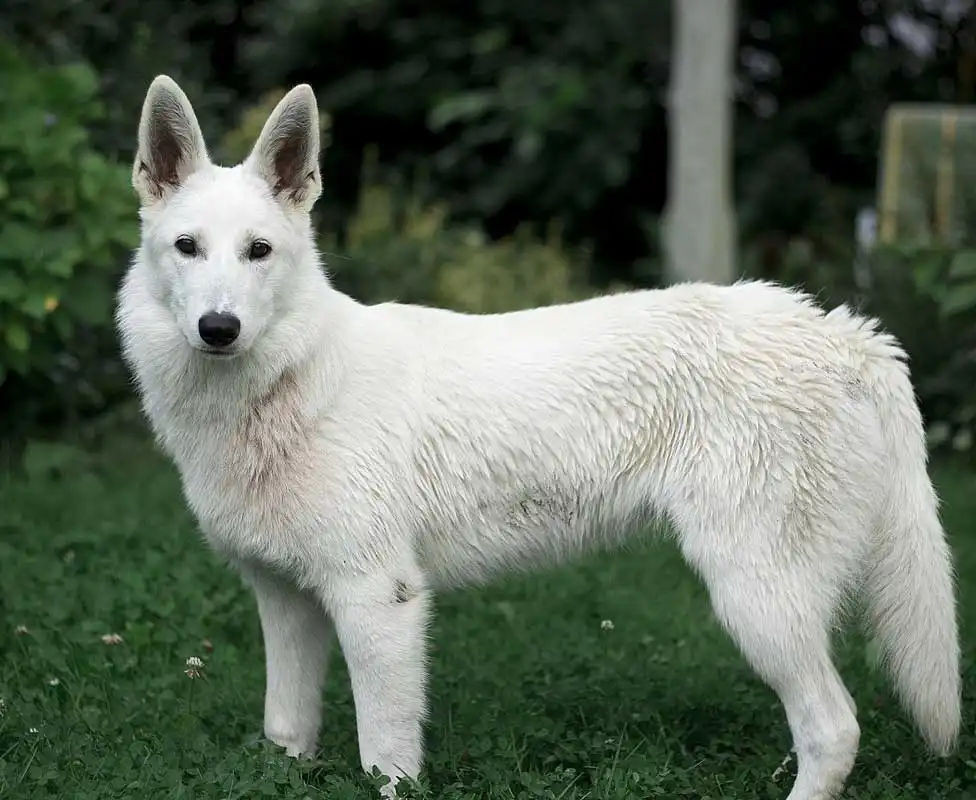
The Berger Blanc Suisse is a relatively recent dog breed that hails from Switzerland and has received official recognition from the Fédération Cynologique Internationale, the largest global body for kennel clubs. However, it has not yet been recognized by the United Kennel Club in England or the American Kennel Club in the United States. This breed is a new variant of the German Shepherd, characterized by a recessive gene that gives it a striking all-white coat, akin to that of the White Shepherd, which is acknowledged by the UKC. In contrast to the White Shepherd, the Berger Blanc Suisse was developed independently and is typically known for its more level back and a notably gentler disposition.
Breed Origin
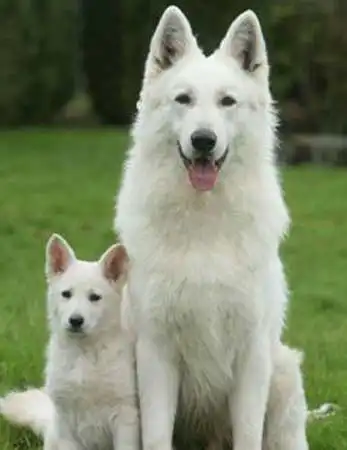
The Berger Blanc Suisse is a relatively new dog breed, officially recognized only by the Federation Cynologique Internationale. It has a close genetic connection to the White Shepherd, a breed that is entirely white and also descends from the original German Shepherd, which is acknowledged by the United Kennel Club. Both breeds originate from the German Shepherd, which possesses a recessive white gene inherited from a dog named Greif. In the past, white German Shepherds were preferred for their visibility against wolves during nighttime. However, by the 1930s, they lost popularity, resulting in kennel clubs excluding them from competitions and breeding initiatives. Nevertheless, some dedicated breeders continued to cultivate these white-coated dogs, aiming to establish them as a separate breed. In the 1970s, organizations focused on breeding White German Shepherds began to appear in the United States and Canada. While the American Kennel Club has not yet recognized the White Shepherd as a distinct breed, it was acknowledged by the United Kennel Club in 1999. The origins of the Berger Blanc Suisse date back to 1967 when Miss Agatha Burch introduced a White German Shepherd named Lobo White Burch to Switzerland. She subsequently imported a female named White Lilac of Blinkbonny from the UK. These two dogs, along with several others from the United States, Canada, and the UK, are regarded as the breed's ancestors. By 1991, the breed had matured sufficiently to have members listed in the Swiss studbook, and it received provisional acceptance from the FCI in 2002. Ultimately, it achieved official recognition on July 5, 2011, nearly nine years later.
Breed Appearance
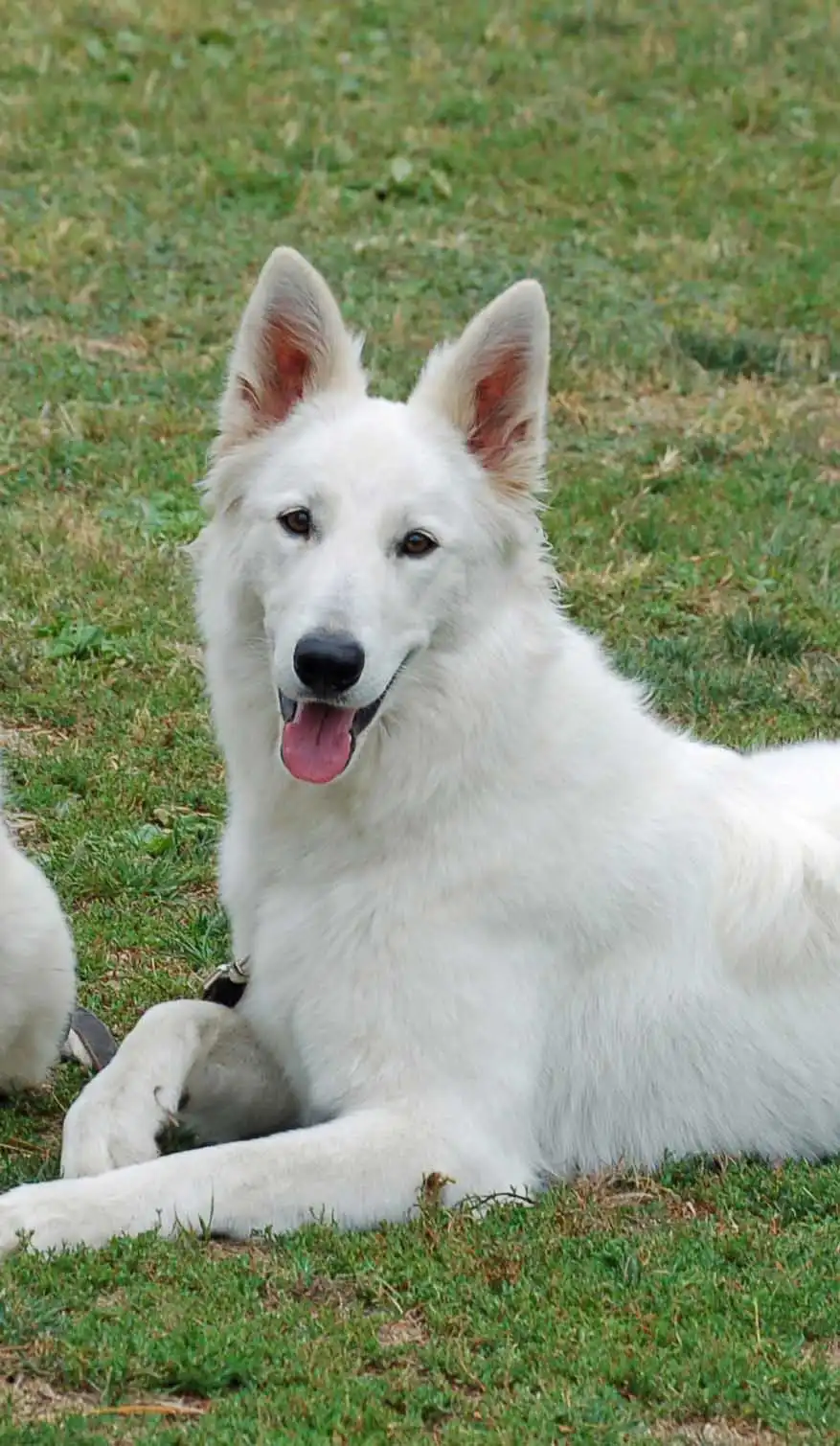
The Berger Blanc Suisse is a medium-sized working dog that closely resembles its ancestor, the German Shepherd, yet there are significant differences between the two breeds. This breed has a wider height range than the German Shepherd, with males typically measuring between 23 and 26 inches and females from 21 to 24 inches. The Berger Blanc Suisse is known for its strong, muscular physique, being slightly longer than it is tall, and features a bushy, saber-shaped tail along with a well-defined, wedge-shaped head. In contrast to modern German Shepherds, which often have a sloping back, the Berger Blanc Suisse was bred before this trait became popular. Its almond-shaped eyes are generally brown or dark brown, bordered by black rims, and while breed standards dictate that the nose must be black, the UKC standards for the White Shepherd allow for pink or cream-colored noses. Like both the German Shepherd and the White Shepherd, the Berger Blanc Suisse has medium to large triangular ears that stand erect and are set high on the head.
Care Routine
Caring for the grooming needs of the Berger Blanc Suisse is generally uncomplicated, although it can be time-consuming. Ideally, this breed should only be bathed a few times a year, as excessive washing may result in dry and irritated skin. Many owners of this striking all-white breed prefer using specialized “bluing” shampoos to keep the coat looking vibrant. The Berger Blanc Suisse has a thick, double-layered coat consisting of a dense undercoat and a protective outer layer of either long or medium-length fur. This coat sheds moderately throughout the year, which means it requires brushing several times a week. However, during seasonal changes, shedding increases significantly, making daily grooming necessary to keep it under control.
Behavior & Temperament
The Berger Blanc Suisse is typically a self-assured dog known for its keen observation and friendly demeanor. While this breed shares the strong drive and protective instincts common among shepherds, they tend to be more relaxed and gentle than both the modern German Shepherd and the White Shepherd, making them excellent family pets. They generally show great patience with children, but their size, strength, and energy can sometimes lead to unintentional bumps and scrapes during playtime. This breed is also highly intelligent and eager to please, which makes training relatively straightforward. However, it’s crucial to avoid using harsh training techniques, as these can foster stubbornness and resistance. Furthermore, the Berger Blanc Suisse's intelligence is accompanied by a notable curiosity; if they do not receive sufficient mental stimulation, they may resort to finding their own activities, which can lead to messes or even destructive behavior.


Play & Exercise
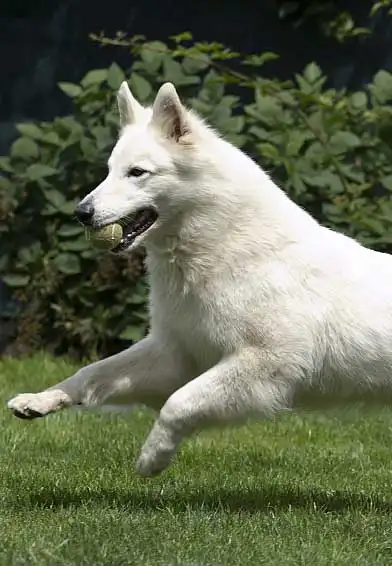
The Berger Blanc Suisse is a lively and athletic breed of dog. Although they may not possess the same level of drive as their German Shepherd ancestors, they still need at least one to one and a half hours of vigorous exercise each day. These dogs thrive on physical activity like walks and runs, but they are also highly intelligent and require mental engagement. Activities such as agility training, herding, and competitive obedience are great for them, though their gentler temperament makes them less suited for Schutzhund training. Additionally, swimming is an excellent exercise choice for this breed, as it can help reduce the likelihood of developing hip dysplasia, a common issue among many shepherd breeds.
Things to Know
Cups Per Day
2.5 Cups
Daily Activity
75 Minutes
Average Lifespan
13 Years
Origin
2011
Type
Pure Breeds
Size
Large
Origin Country
Switzerland
Brush Frequency
Daily
Coat Texture
Straight
Register
Your kids have been begging for a pet forever, and you've recently decided that it's time for your family to get a new addition -- a dog! While everyone is excited for the new arrival, you're wondering if you need to have a dog license. How much does it cost? Is it required? Where do you get one?
Member Clubs

PETINNATE
Other
Height & Weight
Weight
72 lbs (33 kg)Male: 77 lbs (35 kg) , Female: 66 lbs (30 kg)
Height
24 inches (61 sm)Male: 25 inches (64 sm) , Female: 23 inches (58 sm)
6 Months
46 lbs ( m 46 lbs, f 46 lbs )
19 inches ( m 19 inches, f 19 inches )
12 Months
59 lbs ( m 59 lbs, f 59 lbs )
21 inches ( m 21 inches, f 21 inches )
18 Months
66 lbs ( m 66 lbs, f 66 lbs )
22 inches ( m 22 inches, f 22 inches )
Eye Colors
Brown

Nose Colors
Black
Coat Colors
White