Berger des Pyrenees
PyShep
The Berger des Pyrénées holds the title of the smallest herding breed in France, typically reaching full maturity by the age of three. This breed showcases two distinct facial types: one with a smooth face and the other with a rough texture. Their coats also vary in length, with options for demi-long or long fur. Renowned for their energetic nature, these dogs thrive on interaction and stimulation from their owners. While they are highly intelligent, a lack of physical activity and mental engagement can lead to behavioral issues. As a result, the Berger des Pyrénées is not ideal for first-time dog owners; they need thorough training and plenty of exercise to truly thrive.
Breed Origin
The Berger des Pyrenees originates from the Pyrenees Mountains in southern France. This breed was developed by farmers and ranchers to work alongside the Great Pyrenees, a dog renowned for its protective role in safeguarding livestock from predators. The breed is steeped in intriguing myths, including stories of its lineage tracing back to Pyrenean foxes and bears, as well as assertions that it was the original canine companion of the Cro-Magnon people, who famously decorated the caves at Lascaux. Archaeological evidence has revealed small dog bones in Neolithic sub-fossil deposits that date back to around 6000 BC. During World War I, the Berger des Pyrenees was transported from its homeland to aid the war effort, where it was utilized to find injured soldiers, deliver messages, and act as a guard dog. Its significant contributions during the conflict greatly enhanced its popularity throughout Europe. In the 19th century, the breed crossed the Atlantic with shepherds in search of herding opportunities. Some believe that the Berger des Pyrenees may have played a role in the development of the Australian Shepherd, a prominent herding breed that arose in the United States. The breed gained popularity in the U.S. during the 1970s and 1980s, leading many American breeders to import Berger des Pyrenees from France to enhance their breeding programs.
Breed Appearance
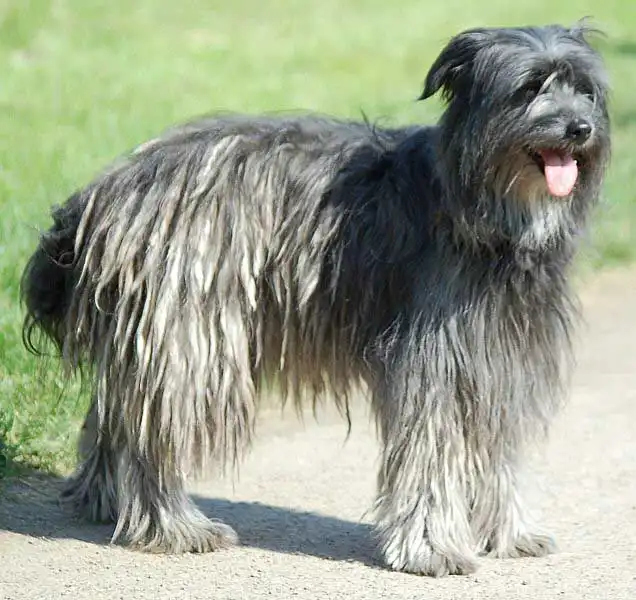
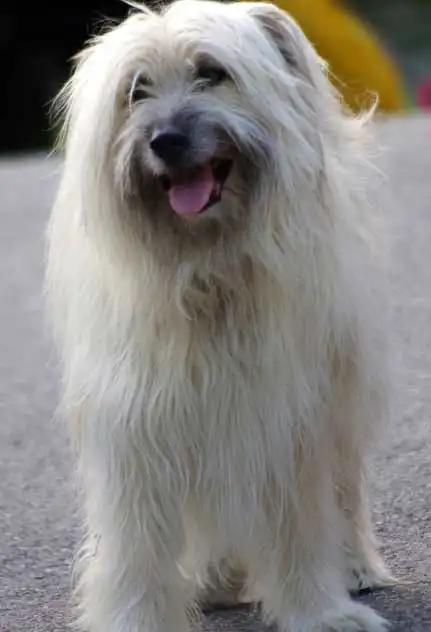
The Berger des Pyrénées is a lively breed celebrated for its spirited character. With an inquisitive expression that showcases both intelligence and a strong desire to please, this dog possesses a robust physique that strikes a balance between sturdiness and delicacy. Highly regarded for its herding skills, the Berger des Pyrénées thrives in a variety of canine sports, such as agility, dock diving, herding trials, obedience, and rally events. Although this breed tends to be cautious around unfamiliar faces, early socialization is crucial for its development. There are two primary coat types for the Berger des Pyrénées: demi-long and long-haired, along with two distinct varieties: rough-faced and smooth-faced. Notably, both coat types and varieties can be found within the same litter. The emphasis is placed on the quality of the coat rather than its length, with both demi-long and long-haired options exhibiting either a flat texture or a gentle wave. The demi-long variety features culottes on the hindquarters, while the long-haired type has a thicker coat with prominent feathering that may even develop into cords as the dog ages. The coat is coarse and has a light undercoat.

Care Routine
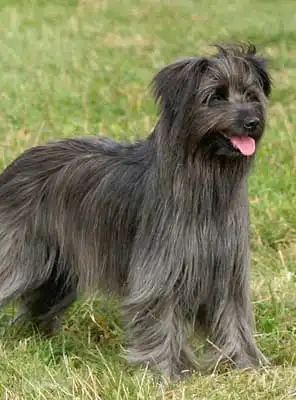
The Berger des Pyrénées exhibits two distinct facial types: the smooth-faced and the rough-faced. The rough-faced variant is characterized by a furrier appearance, though it is crucial that the hair does not obstruct the eyes. Both facial types are available in two coat lengths: demi-long and long-haired. Regardless of the type, all Berger des Pyrénées have a coarse coat that is resistant to matting and sheds minimally. As the long-haired variety matures, its coat may naturally form cords. Grooming requirements differ according to coat type; the smooth-faced and demi-long varieties need to be brushed thoroughly only a few times a month, although more frequent grooming can help remove loose hair and dirt. On the other hand, the rough-faced and long-haired varieties should be brushed at least once a week to avoid matting and ensure coat health. Corded coats that are well-maintained require extra care and cleaning.
Behavior & Temperament
The Berger des Pyrénées is celebrated for its exceptional endurance and demands significant physical activity. This breed is not only energetic but also highly intelligent, which means that leaving it unsupervised in the yard can result in mischief. Without adequate stimulation, it may become noisy and engage in destructive behaviors. To effectively harness its energy and intellect, the Berger des Pyrénées excels in activities that provide mental and physical challenges, such as participating in dog sports and training sessions. Moreover, this breed has a pronounced herding instinct, often trying to herd cars, bicycles, people, and other animals. When around children, supervision is essential, as the dog may nip at their legs and feet in its herding attempts. A sturdy fence is recommended to keep it from herding traffic on the road. As a herding breed, the Berger des Pyrénées also serves as an excellent guard dog, alerting its family to any unfamiliar individuals near their home or property.


Play & Exercise
Things to Know
Cups Per Day
0.0 Cups
Daily Activity
0 Minutes
Average Lifespan
16 Years
Origin
6000 BC
Type
Pure Breeds
Size
Medium
Origin Country
French Pyrenees Mountains
Brush Frequency
Weekly
Coat Texture
Corded
Register
Your kids have been begging for a pet forever, and you've recently decided that it's time for your family to get a new addition -- a dog! While everyone is excited for the new arrival, you're wondering if you need to have a dog license. How much does it cost? Is it required? Where do you get one?
Member Clubs

PETINNATE
Other
Height & Weight
Weight
44 lbs (20 kg)Male: 50 lbs (23 kg) , Female: 38 lbs (17 kg)
Height
18 inches (46 sm)Male: 18 inches (46 sm) , Female: 17 inches (43 sm)
Eye Colors
Brown

Nose Colors
Black
Coat Colors
Black
White
Brindle
Blue
Gray
Fawn