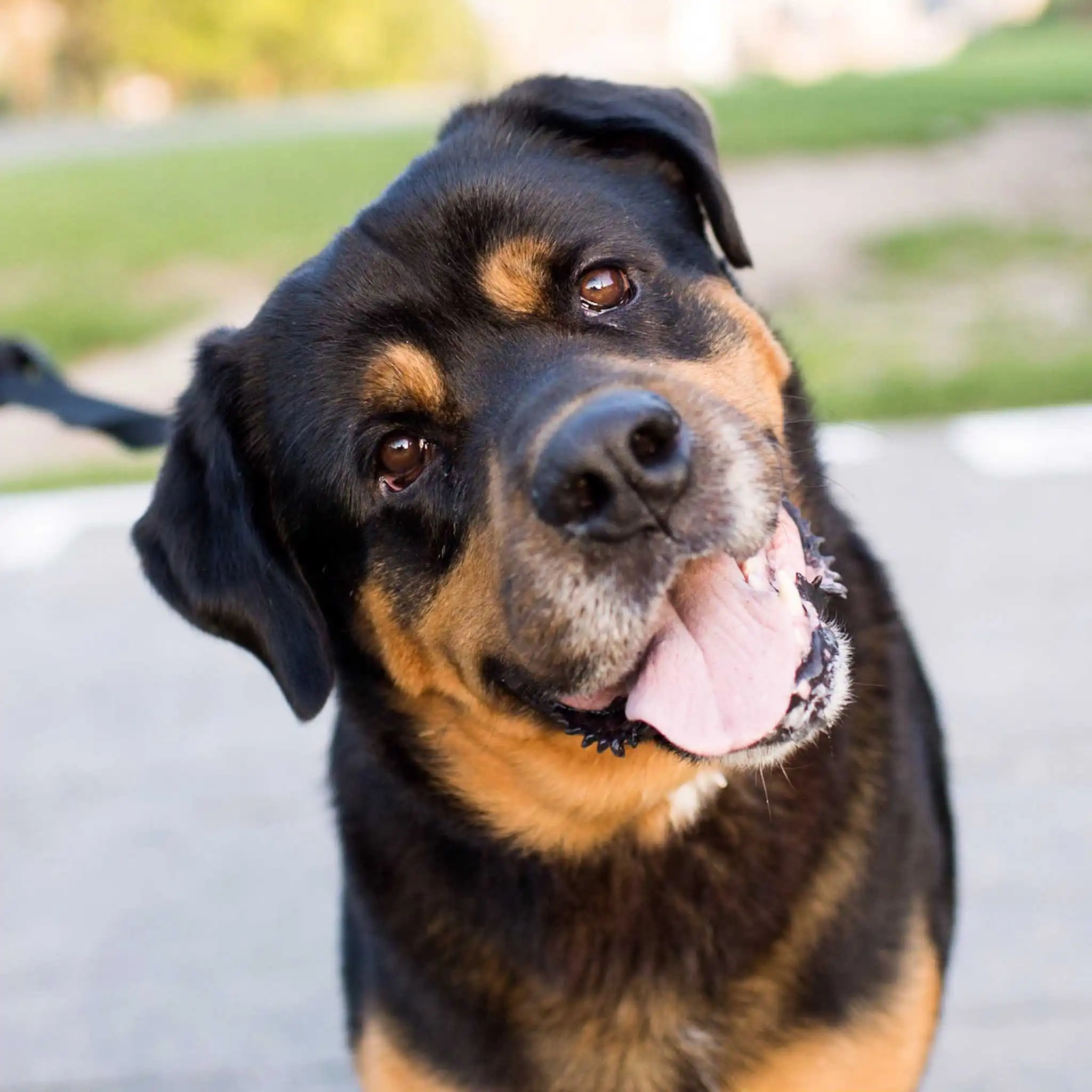
Bernese Rottie
Bernweiler
The Bernese Rottie, commonly known as the Bernweiler, is a large hybrid breed resulting from the combination of a Bernese Mountain Dog and a Rottweiler. These dogs are celebrated for their loyalty, playful demeanor, and affectionate temperament, making them fantastic family companions. However, they do need proper socialization to thrive. Like many breeds, they can be prone to specific health concerns, such as obesity, which underscores the importance of daily exercise ranging from 30 to 60 minutes. With a striking look that showcases traits from both parent breeds, they feature prominent heads and robust, athletic builds. Today, this designer breed is valued not only as a protective and working dog but also as a delightful companion.

Breed Origin
This designer breed was originally created as working dogs for herders in the Swiss Alps. Their large and sturdy build makes them exceptional guard dogs. Although their early history remains somewhat obscure, we do have information about their ancestral breeds. The Bernese Mountain Dog originates from Switzerland, where it was bred to function as a watchdog, a carting dog, and a companion on farms. One of its significant roles involved transporting small agricultural goods, like milk and cheese, for farmers who could not afford draft horses. This breed was on the brink of extinction until the 19th century, when a Swiss innkeeper and a college professor began to actively seek out these dogs. Their efforts in 1892 were crucial in stabilizing the breed's population. The exact origins of the Rottweiler are less clear, but it is thought that they descended from the drover dogs of the Romans, who utilized them for herding livestock. Over time, these dogs evolved from herding to serving as protectors for Roman soldiers and their animals. In 700 A.D., a local ruler commissioned the construction of a Christian church on the site of ancient Roman baths. During the excavation, red tiles from Roman villas were discovered, leading to the area being named Das Rote Wil, or The Red Tile, which eventually became known as Rottweil. As this region developed into a cultural hub, cattlemen and butchers moved in, necessitating the use of dogs to assist in their tasks. Until the 19th century, these dogs played a vital role in driving cattle to market, earning the title Rottweiler Metzgerhund, or Butcher’s dog. Although their population declined during the industrial revolution of the mid-1800s, they experienced a resurgence in the 20th century, particularly as police dogs. Rottweilers also served in the German army during World War I.
Breed Appearance
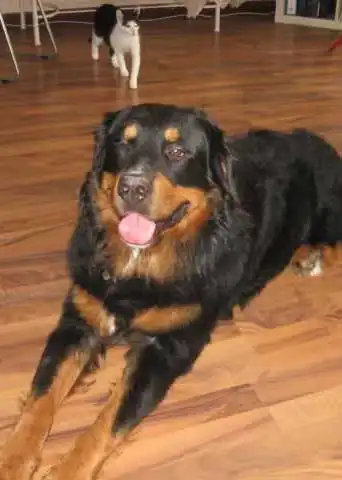
The Bernese Rottie is a relatively recent and lesser-known breed, making it difficult to predict their physical characteristics, as they often inherit features from both parent breeds. Bernese Mountain Dogs are known for their sturdy build, which includes a deep, broad chest and a unique furrow that runs down the center of their wide heads. Their ears are triangular and hang down, complementing their expressive dark eyes. Typically, they carry their long, bushy tails low, unless they are feeling particularly lively. In contrast, Rottweilers are recognized for their athletic build, featuring strong, muscular bodies and large, broad heads. They generally have a longer body than height, with straight backs. Similar to the Bernese, Rottweilers possess triangular, drooping ears and prominent black noses that match the color of their lips and the insides of their mouths. Their deep-set, almond-shaped eyes are dark brown, and their teeth meet in a scissors bite.

Care Routine
The grooming needs of a Bernese Rottie can differ depending on which parent breed they take after more closely. The Bernese Mountain Dog typically sheds year-round, with more significant shedding during seasonal changes. Therefore, it’s recommended to brush them weekly, increasing this to more frequent sessions in the fall and spring. Baths are generally needed every few months, unless they have a penchant for rolling in dirt. Rottweilers also benefit from weekly brushing, with an uptick to twice a year during peak shedding periods. Bathing should be done as required. Additionally, it’s crucial for all dogs, including the Bernese Rottie, to have their ears examined and cleaned at least once a month to prevent infections. While daily teeth brushing is ideal, a minimum of two to three times a week is advisable. Nail trimming should occur as needed, typically once or twice a month, unless the nails naturally wear down, in which case it can be done less often.
Behavior & Temperament
The Bernese Rottie is a clever and adaptable breed, ideal for a range of roles such as police work, carting, guarding, weight pulling, and herding. This dog is deeply protective of its family, always ready to alert you to potential dangers and confront intruders when necessary. As a hybrid, the Bernese Rottie combines unique traits from both of its parent breeds. Bernese Mountain Dogs are known for their loving disposition, thriving on companionship and cherishing quality time with their families. They are gentle and patient with children and typically get along well with other animals. While they usually greet newcomers politely, they may show signs of shyness, highlighting the need for proper socialization. These dogs are playful and enjoy participating in various activities, but they also value their downtime. Although generally calm, they can be slow to learn, making patience and positive reinforcement vital during training. Unfortunately, Rottweilers have developed a reputation for aggression, which misrepresents their true character; they only exhibit such behavior when not properly trained. Their loyalty and protective nature make them outstanding watchdogs. With adequate socialization, they can be both playful and loving. When encountering strangers, they tend to be cautious until they assess whether the individual is worthy of their trust and affection. This breed is best suited for experienced owners, as they can present training challenges. It’s essential to engage with them kindly while also maintaining a firm and confident approach.


Play & Exercise
The Bernese Mountain Dog is an active breed that requires regular physical exercise, but they also appreciate relaxing and taking naps. Their thick, long coat is suited for colder environments, which means it's crucial to restrict their activity levels in high temperatures. In a similar vein, Rottweilers can become bored and may engage in destructive behavior if they lack adequate exercise, and the Bernese Rottweiler could show similar tendencies.
Things to Know
Cups Per Day
0.0 Cups
Daily Activity
0 Minutes
Average Lifespan
8 Years
Origin
Unknown
Type
Crossbreeds
Size
Not Set
Origin Country
Unknown
Brush Frequency
Daily
Coat Texture
Straight
Register
Your kids have been begging for a pet forever, and you've recently decided that it's time for your family to get a new addition -- a dog! While everyone is excited for the new arrival, you're wondering if you need to have a dog license. How much does it cost? Is it required? Where do you get one?
Member Clubs

PETINNATE
Other
Height & Weight
Weight
103 lbs (47 kg)Male: 103 lbs (47 kg) , Female: 103 lbs (47 kg)
Height
26 inches (66 sm)Male: 26 inches (66 sm) , Female: 26 inches (66 sm)