
Bichomo
The Bichomo is a small dog breed that emerges from the combination of the Bichon Frise and the American Eskimo. Generally, they grow to be under a foot tall at maturity. Their energetic nature, combined with their compact size, makes them ideal for living in apartments or smaller homes, as long as they get enough exercise. A daily exercise regimen of 30 to 45 minutes is adequate for this breed. Furthermore, Bichomos are hypoallergenic, exhibiting minimal shedding, low drooling, and a slight odor. While their diminutive size and charming looks may not make them suitable for traditional guarding roles, this loyal hybrid is quite observant and can effectively function as a watchdog.
Breed Origin
The Bichomo's origins are not well-documented, as it is a relatively recent hybrid breed. In contrast, the Bichon Frise has a storied past that traces back to the 13th century, believed to be a descendant of both the Poodle and the Barbet Water Spaniel. This breed gained global fame when Spanish sailors traded them, eventually bringing them to France by the 16th century, where they became popular companions in royal courts. In the 19th century, Bichon Frises took on roles as circus performers and pets for organ grinders. Although their population declined after World War I, concerted efforts helped revive the breed. Conversely, the American Eskimo Dog has its own unique history. Initially known as the German Spitz, this breed is part of the Nordic Spitz family and was renamed upon its arrival in the United States. Due to the growing anti-German sentiment during World War I, the breed was rebranded as the American Eskimo Dog. This change occurred when Mr. and Mrs. F.M. Hall registered the breed with the United Kennel Club in 1913, using the name of their kennel, the American Eskimo. Today, while it is recognized as a distinct breed from the German Spitz, the two remain closely related. Both the Bichon Frise and the American Eskimo Dog are intelligent and capable, and their recent crossbreeding has led to the emergence of the Bichomo.
Breed Appearance
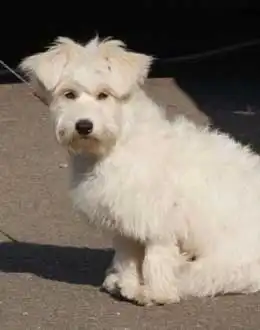
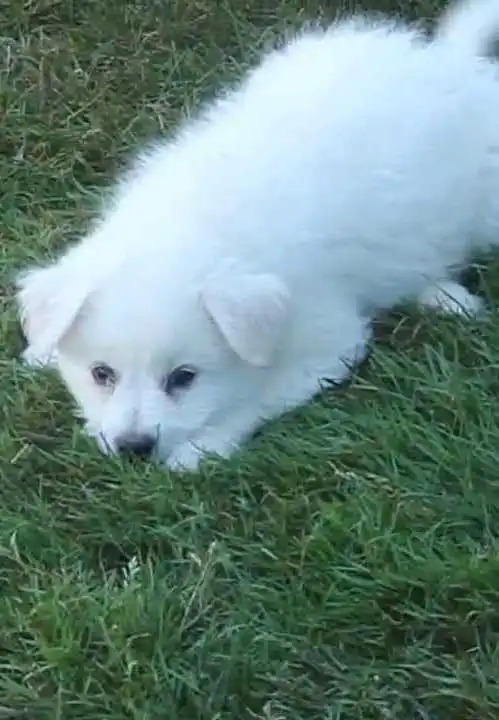
Bichimos are a delightful combination of their parent breeds, exhibiting a unique array of physical characteristics. They have compact, robust bodies and rounded heads featuring a noticeable stop that transitions into a medium-length muzzle. Their tails can either curve like a sickle or be tightly coiled. These endearing dogs are characterized by elongated bodies and short legs. Their black noses, equipped with open nostrils, and their round, expressive eyes reflect a friendly personality. The ears are silky and may either hang down beside their faces or fold over at the top. Their teeth come together in a scissors bite, and they have thick, soft coats of medium length that can be slightly wavy or curly, usually in shades of white or cream. For a clearer visual representation of this breed, one can refer to the appearances of the Bichon Frise and the American Eskimo.

Care Routine
Due to the drooping nature of this breed's ears, it's important to clean them on a weekly basis. While cleaning, keep an eye out for any strange smells or discharge. Although they don’t shed excessively, their coats still need consistent grooming. Aim to groom them thoroughly twice a week to ensure their fur remains clean and free of tangles and debris. Only bathe the Bichomo when absolutely necessary, as frequent baths can remove the natural oils that protect their coat. Like all dog breeds, regular dental care is essential; brushing their teeth at least once or twice a week is recommended, with daily brushing being the best practice. Trim your pet’s nails as needed, usually once or twice a month. If their nails naturally wear down, trimming may not be required as often, but if you can hear their nails clicking on the floor while they walk, it’s time for a trim.
Behavior & Temperament
This breed showcases a unique combination of the Bichon Frise and the American Eskimo, resulting in a personality that is both intelligent and relatively easy to train. To harness their cleverness effectively, it’s important to start socialization and training early. Building a strong bond and trust with your dog hinges on establishing clear communication. Consistency in training is essential; while it’s important to assert your position as the leader of the pack, it’s equally crucial to approach training with positivity and affection. Like many small breeds, they may face challenges with potty training at first, but with patience, they will adapt. They are quite observant and will alert you to any unusual happenings in their surroundings, making them decent watchdogs. However, their small size and gentle nature mean they are not particularly intimidating as guard dogs. The Bichomo is a friendly breed that thrives on human interaction and enjoys playing with children of all ages.


Play & Exercise
Things to Know
Cups Per Day
0.0 Cups
Daily Activity
0 Minutes
Average Lifespan
0 Years
Origin
Bred recently
Type
Crossbreeds
Size
Not Set
Origin Country
United States
Brush Frequency
Daily
Coat Texture
Straight
Register
Your kids have been begging for a pet forever, and you've recently decided that it's time for your family to get a new addition -- a dog! While everyone is excited for the new arrival, you're wondering if you need to have a dog license. How much does it cost? Is it required? Where do you get one?
Member Clubs

PETINNATE
Other