Biewer Terrier
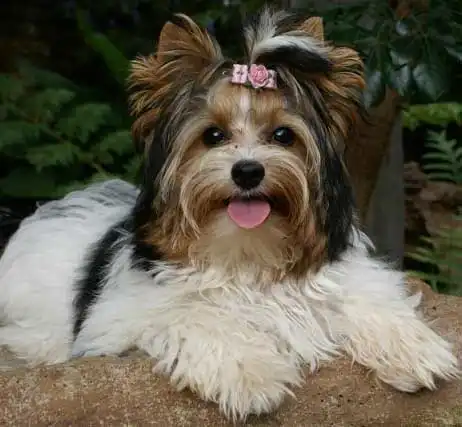
The Biewer Terrier, pronounced BEE-VARE, is a toy breed that shares a close lineage with the Yorkshire Terrier. Renowned for its cheerful disposition, lively spirit, and sharp intelligence, this breed can present challenges in housetraining due to its petite size, necessitating dedication and patience from its owner. The Biewer Terrier is quite vocal and brimming with energy. Although generally friendly, it tends to be cautious around unfamiliar faces, often displaying signs of anxiety when meeting new people or dogs. To keep this spirited pup safe during play, a securely fenced yard is crucial; however, it’s important never to leave the dog outside unsupervised, as it could be vulnerable to predatory birds.
Breed Origin
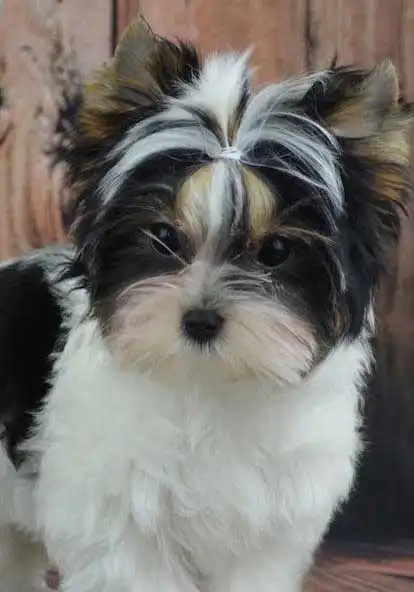
The beginnings of the Biewer Terrier have generated significant discussion, with many misleading documents being presented as facts to the Biewer Terrier Club of America. It is widely acknowledged that Werner and Gertrud Biewer had been breeding and showcasing Yorkshire Terriers for over twenty years when, on January 20, 1984, they welcomed an extraordinary litter that included a female puppy with blue, white, and gold coloring. At that time, parti-colored Yorkshire Terriers were nonexistent, making this puppy an exceptional case. Named Schneeflocken von Friedheck, this unique parti-colored Yorkshire Terrier heralded the inception of the Biewer Terrier breed. She was sold to a woman in Germany, and by 1986, the breed received official recognition from the Allgemeiner Club der Hundefreunde Deutschland (ACH). Schneeflocke von Friedheck became a pivotal breeding dog, producing many puppies that were registered with the ACH as Biewer Terriers. However, there was considerable debate surrounding the purity of all Biewer Terriers registered with the ACH. When the Biewer Terrier made its way to the United States, the Biewer Terrier Club of America began to investigate their pedigrees but found numerous discrepancies. Consequently, the Biewer Terrier became the first breed to be recognized as purebred based on scientific evidence rather than relying solely on pedigree documentation. In 2014, the breed was included in the American Kennel Club’s Foundation Stock Service, marking a significant milestone toward official AKC recognition. Today, the Biewer Terrier is acknowledged as a distinct breed, no longer just a parti-colored Yorkshire Terrier, complete with its own official breed standard.
Breed Appearance
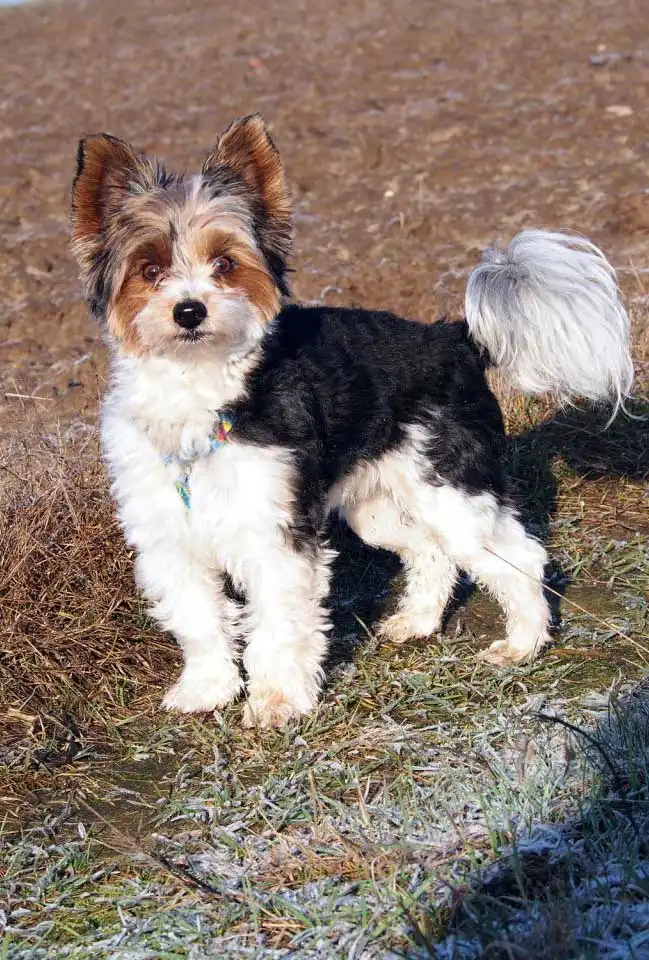
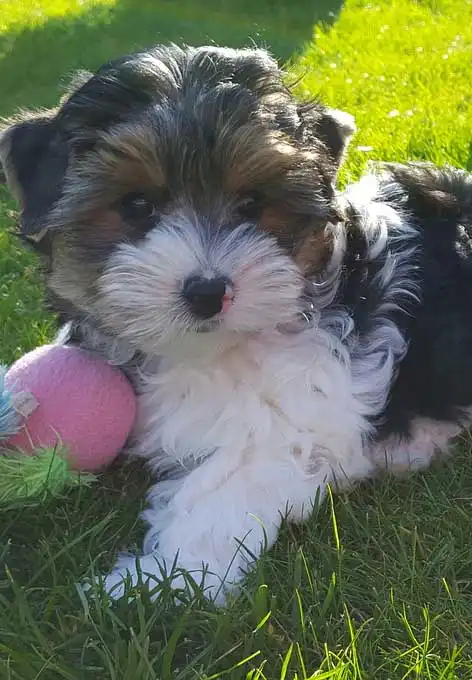
The Biewer Terrier is distinguished by its long, flowing coat that cascades gracefully from its body. This coat should be of consistent length and exhibit a silky feel, with a prominent part running along the center of its back. Physically, the Biewer Terrier has a square frame, though its body is slightly longer than its height. Its tail is set high and arches elegantly over its back. Additionally, this breed is known for its long, silky beard, often called a Fu Manchu, which should remain free from excessive discoloration. This delightful small dog displays a tri-color pattern, which comes in three unique combinations: black, tan, and white; blue, tan, and white; and chocolate, tan, and white, although the latter has not yet received official recognition. The tan color can range from a deep rust to a light cream, with the lighter shade being deemed undesirable in conformation competitions.

Care Routine
The Biewer Terrier is characterized by a single coat that requires significant maintenance. Its fur is similar to human hair, which means it needs to be groomed daily. It's crucial to avoid brushing the coat when it is completely dry, as this can cause damage. A pin brush is the best tool for grooming, but make sure it lacks small balls on the tips of the pins to prevent breakage. For removing tangles, a metal comb is recommended, while a fine-toothed flea comb is useful for keeping the face clean and smooth. To manage eye drainage, gently wipe the area with a damp washcloth and then comb through the hair with the flea comb. Tangles can easily develop in a Biewer Terrier's coat; to resolve this, dampen the tangles with warm water, apply a bit of conditioner or detangler, and carefully work through the knots with your fingers or a metal comb. Regular bathing, typically once a week, is vital for maintaining a clean and well-conditioned coat. Furthermore, male Biewer Terriers should have their undersides cleaned daily to avoid odors, staining, and potential infections from urine buildup.
Behavior & Temperament
The Biewer Terrier epitomizes the toy breed category, celebrated for its loving and attention-seeking nature. This breed is characterized by a playful and whimsical spirit, which captivates many owners who value its lively personality and enthusiasm for new experiences. Although the Biewer Terrier may initially show some hesitation around strangers, it usually becomes friendly quite quickly. Nonetheless, insufficient socialization can result in snapping at unfamiliar people, highlighting the importance of early social exposure. This breed is known for being quite vocal, often engaging in barking or yapping, and tends to possess a strong-willed and demanding temperament. When raised with other dogs, Biewer Terriers typically coexist harmoniously, but they may find it challenging to adjust to environments with larger dogs or cats. Housetraining a Biewer Terrier can prove to be a demanding task, necessitating patience and dedication from the owner. They generally interact well with older children, but extra caution is advised around toddlers, as their unsteady movements could inadvertently cause harm.

Play & Exercise
Things to Know
Cups Per Day
1.0 Cups
Daily Activity
30 Minutes
Average Lifespan
14 Years
Origin
1980
Type
Pure Breeds
Size
Small
Origin Country
Germany
Brush Frequency
Weekly
Coat Texture
Straight
Register
Your kids have been begging for a pet forever, and you've recently decided that it's time for your family to get a new addition -- a dog! While everyone is excited for the new arrival, you're wondering if you need to have a dog license. How much does it cost? Is it required? Where do you get one?
Member Clubs

PETINNATE
Companion Dog

AKC
Foundation Stock Service

UKC
Companion Dog
Height & Weight
Weight
6 lbs (3 kg)Male: 6 lbs (3 kg) , Female: 6 lbs (3 kg)
Height
9 inches (23 sm)Male: 9 inches (23 sm) , Female: 9 inches (23 sm)
6 Months
1 lbs ( m 1 lbs, f 1 lbs )
4 inches ( m 4 inches, f 4 inches )
12 Months
2 lbs ( m 2 lbs, f 2 lbs )
6 inches ( m 6 inches, f 6 inches )
18 Months
5 lbs ( m 5 lbs, f 5 lbs )
8 inches ( m 8 inches, f 8 inches )
Eye Colors
Brown

Nose Colors
Black
Brown
Coat Colors
Black
White
Brown
Blue
Cream