Bluetick Coonoodle
Bluetick Coonpoo
The Bluetick Coonoodle is a mixed breed that emerges from the combination of a Bluetick Coonhound and a Poodle. These dogs are bred to be intelligent and sizable companions. They are typically recognized for their calm nature, although they can display a lively spirit when their hunting instincts kick in. Known for their friendly and loyal disposition towards their families, Bluetick Coonoodles require a moderate amount of exercise and flourish with human companionship. Their lifespan ranges from 11 to 14 years, with weights between 45 and 85 pounds and heights of 15 to 30 inches. While they often take after Poodles in appearance, they do not have the typical shaggy coat and instead show more traits associated with hounds. True to their name, they frequently feature a mottled or speckled blue coat. As a relatively recent hybrid breed, their physical characteristics and temperament are still evolving, which is why they are not recognized by the American Kennel Club (AKC) as purebred dogs.
Breed Origin
The Bluetick Coonoodle gets its name from the unique coloring it inherits from the Bluetick Coonhound, along with the name of its other parent breed, the Poodle. The Bluetick Coonhound has origins in the southern United States, tracing back to the Grand Bleu de Gascogne, also known as the French Staghound, and the English Foxhound. Initially categorized as an English Coonhound, this breed was primarily used for tracking and hunting. In the mid-1940s, breeders in Louisiana and Tennessee began to selectively breed the Bluetick Coonhound to improve its size and cold-trailing skills. The breed was officially recognized by the United Kennel Club in 1946, followed by the American Kennel Club in 2009. Conversely, the Poodle, the other parent of the Bluetick Coonoodle, originated in Germany but was refined into the breed we know today in France. The name “Poodle” comes from the German word “pfudel,” which means “to splash” or “puddle,” highlighting its original role in hunting waterfowl. Over the years, Poodles became increasingly popular across Europe, particularly among wealthy French families, who began breeding smaller varieties. Known for their remarkable intelligence, Poodles have served in various capacities, including hunting, guiding, military roles, and circus performances. The American Kennel Club recognized Poodles in 1886, although they were relatively rare in the United States until after World War II. By the 1950s, Poodles had risen to become the most popular dog breed in the nation.
Breed Appearance
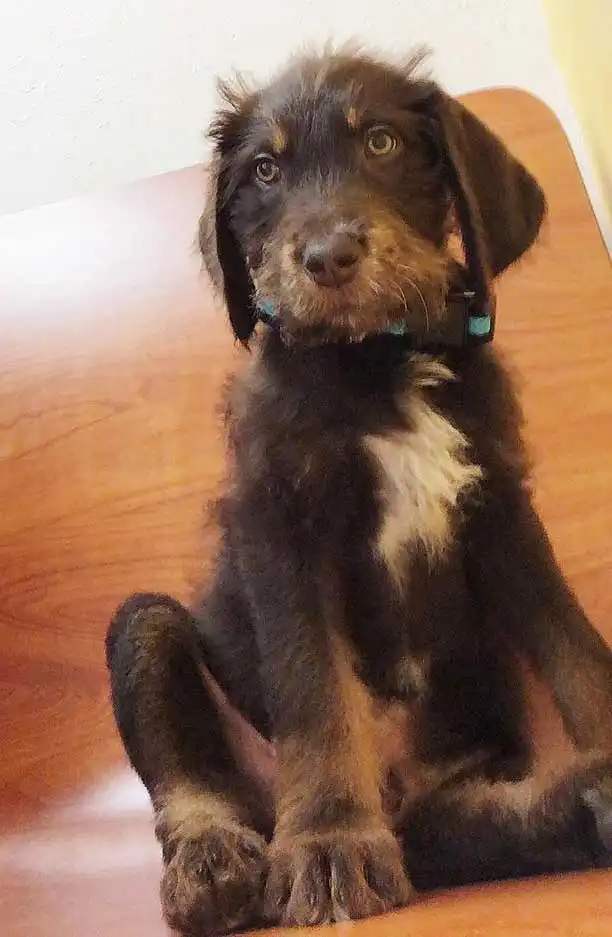
Bluetick Coonoodles typically bear a resemblance to poodles but do not have the shaggy fur associated with them, instead displaying notable hound-like traits. These dogs have a square, lanky, and athletic build. Generally classified as medium to large, they weigh between 45 and 85 pounds and stand 15 to 30 inches tall. Their coat reflects their Bluetick Coonhound heritage, often showcasing a blue mottled or speckled pattern, or a mix of black and white with tan highlights. Additionally, the coat may exhibit colors influenced by their Poodle ancestry, such as silver, gray, cream, apricot, and various shades of brown. Bluetick Coonoodles are known for their alertness and intelligence, featuring low-set floppy ears, a long snout ending in a black nose, and round, usually brown eyes. They possess a medium-length, tapered tail and sturdy, rounded paws with resilient pads, making them well-equipped for outdoor adventures.


Care Routine
Bluetick Coonoodles are moderate shedders that require regular grooming to maintain their coat. While they are not completely hypoallergenic, their Poodle-like fur tends to produce fewer allergens. To reduce shedding and avoid matting, it’s advisable for owners to brush their Bluetick Coonoodle periodically and give them a bath once a month. Special care should be taken to clean their floppy ears during each bath. As with all dog breeds, daily brushing of their teeth is crucial, and nails should be clipped once or twice a month. Although not essential, it is beneficial to trim the fur around the head, ears, tail, and feet. Additionally, keep in mind that this breed may occasionally slobber.
Behavior & Temperament
The Bluetick Coonoodle is generally a relaxed breed, as long as its hunting instincts are not triggered. Known for their friendly nature, intelligence, and loyalty, these dogs thrive on human interaction and are eager to please their families, often enjoying leisurely moments together. However, they can also display a more anxious side, a characteristic inherited from their Poodle ancestry. Additionally, Bluetick Coonoodles are quite vocal, often barking and baying, reflecting traits from both of their parent breeds. They may be wary of strangers and can show aggression towards small pets and children, so careful supervision is crucial when introducing them to new people or animals. Given their hunting heritage, these dogs possess a strong urge to explore and track scents, making it essential to monitor them when they are off-leash. Their intelligence allows for effective training and socialization, which can help address some of their more challenging behaviors. In conclusion, with proper socialization, a Bluetick Coonoodle can develop into a loving and obedient family companion.


Play & Exercise
The Bluetick Coonoodle, a hybrid of a high-energy breed and a medium-energy breed, showcases a well-balanced energy level. To ensure their happiness and well-being, they need at least one moderate to lengthy walk each day, complemented by engaging playtime and interaction with their owners. This breed is versatile, adapting seamlessly to various climates and thriving in urban, suburban, or rural settings, provided they have human companionship and sufficient exercise. It's essential to be aware that Bluetick Coonoodles have a natural inclination to wander and can become quite spirited when their hunting instincts kick in. Consequently, owners should keep a close eye on their pets in off-leash areas, especially around smaller animals. While they relish outdoor adventures, Bluetick Coonoodles also value quality time spent indoors with their families.
Things to Know
Cups Per Day
3.0 Cups
Daily Activity
60 Minutes
Average Lifespan
13 Years
Origin
Unknown
Type
Crossbreeds
Size
Large
Origin Country
United States
Brush Frequency
Weekly
Coat Texture
Wavy
Register
Your kids have been begging for a pet forever, and you've recently decided that it's time for your family to get a new addition -- a dog! While everyone is excited for the new arrival, you're wondering if you need to have a dog license. How much does it cost? Is it required? Where do you get one?
Member Clubs

PETINNATE
Other
Height & Weight
Weight
63 lbs (29 kg)Male: 70 lbs (32 kg) , Female: 55 lbs (25 kg)
Height
24 inches (61 sm)Male: 26 inches (66 sm) , Female: 22 inches (56 sm)
Eye Colors
Brown

Nose Colors
Black
Coat Colors
Blue
Black
White
Silver
Gray
Cream
Brown