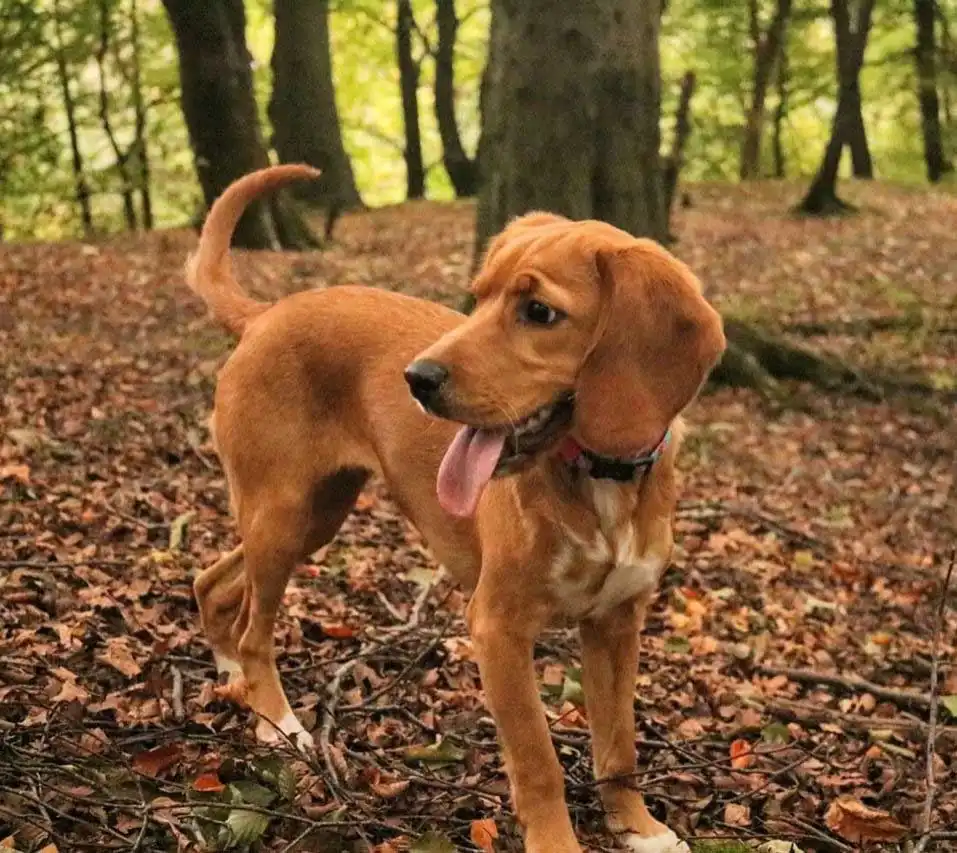
Bocker
The Bocker is a mixed breed that arises from the crossbreeding of a Beagle and a Cocker Spaniel. These dogs are usually small, robust, and muscular, boasting medium to long fur that comes in various colors. Although they can be utilized as hunting partners, they are predominantly cherished as family pets because of their loving and loyal disposition. Bockers are lively yet trainable, making them a suitable choice for novice dog owners. They possess a keen intelligence and typically get along well with children and other animals. Furthermore, while they are not known for aggression, they can serve as reliable guard dogs, displaying a protective instinct towards their families.

Breed Origin
To understand the history of the Bocker breed, one must first explore the origins of its parent breeds: the Beagle and the Cocker Spaniel. The Beagle is one of the oldest dog breeds, with its lineage tracing back to the 1300s in England, where it was originally used for rabbit hunting during the 14th century. The origin of the name "Beagle" is subject to debate; some believe it comes from a Celtic word meaning "small," while others argue it derives from a French phrase meaning "open throat," which reflects their distinctive howling. Although the exact beginnings of the breed are not thoroughly documented, it is generally accepted that Beagles evolved from pack hounds in Roman-era England. These dogs were primarily bred for hunting and were often described as "pocket-sized" due to their small stature, typically standing around nine inches tall. Beagles were introduced to the United States in 1642, but the American version of the breed developed into a larger dog that bore a closer resemblance to the Basset Hound. The American Kennel Club (AKC) recognized the Beagle in 1885, and it is now the fifth most popular dog breed in the country. In contrast, the Cocker Spaniel originated in the 1800s in the United States, specifically bred for flushing and retrieving birds. The name "cocker" comes from the woodcock, a bird for which they were particularly skilled at hunting. There are two main varieties of Cocker Spaniel: the American and the English. These were classified as a single breed until the AKC officially distinguished them in 1935, although the Cocker Spaniel had already been acknowledged as a breed since 1878. Currently, Cocker Spaniels rank as the 29th most popular dog breed in the U.S.
Breed Appearance
The Bocker is a compact dog known for its soft, fluffy fur, which can range from medium to long and comes in a wide array of colors. Common shades include black, merle, white, and brown, often displaying tricolor or bicolor patterns. Some Bockers may have a solid coat similar to that of a Cocker Spaniel, while others might show the distinctive spotted or tricolored designs typical of Beagles. They feature large, floppy ears, a square head with a moderately sized snout, and bright, expressive eyes that convey intelligence. Their legs are short but sturdy, ending in sizable paws, and they possess a tail of short to medium length that may curl over their back.


Care Routine
Considering that the Bocker has medium to long silky fur, it is important to groom them two to three times weekly using a stiff bristle brush and a metal comb. When dealing with mats or tangles, avoid pulling with the comb; instead, gently separate the fur with your fingers before brushing. Furthermore, due to their long ears, it’s wise to check them weekly for any dirt, wax accumulation, or signs of irritation. Clean the ears with a soft cloth or a cotton ball and a mild cleanser recommended by your veterinarian. Don’t forget to trim their toenails as needed and brush their teeth at least twice a week.
Behavior & Temperament
With their gentle and friendly dispositions inherited from both parent breeds, Bockers make excellent family pets, well-suited for homes with children and other animals. This breed is not only intelligent but also loyal, which simplifies the training process as long as consistency is upheld; otherwise, the Cocker Spaniel traits may result in some playful mischief. Early socialization is essential to help them engage positively with other dogs in public settings. Bockers flourish on affection and are more than happy to endure a child's attention for long stretches. However, it is always wise to supervise interactions between young children and dogs to ensure everyone's safety.


Play & Exercise
Things to Know
Cups Per Day
0.0 Cups
Daily Activity
0 Minutes
Average Lifespan
0 Years
Origin
Unknown
Type
Crossbreeds
Size
Not Set
Origin Country
United States
Brush Frequency
Daily
Coat Texture
Straight
Register
Your kids have been begging for a pet forever, and you've recently decided that it's time for your family to get a new addition -- a dog! While everyone is excited for the new arrival, you're wondering if you need to have a dog license. How much does it cost? Is it required? Where do you get one?
Member Clubs

PETINNATE
Other