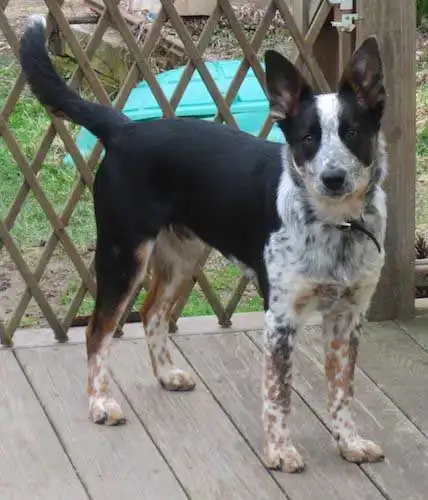
Border Heeler
Heeler Collie
The Border Heeler is a mixed breed that results from crossing a Border Collie with an Australian Cattle Dog, often referred to as the Blue Heeler. This combination brings together the high energy levels of both breeds, resulting in a dog that is both lively and active. They are known for their intelligence, alertness, loyalty, and protective nature. Given their energetic disposition, living in an apartment may not be the best fit for them. If they do not receive sufficient physical and mental stimulation, they may become bored, which can lead to problematic behaviors like excessive barking, digging, destructive actions, and even chasing vehicles. Both parent breeds were originally bred for herding and demanding work, which makes the Border Heeler well-suited for similar tasks. This hybrid is exceptionally smart and learns quickly, so it’s important to provide them with ongoing challenges to keep their minds engaged. While grooming is necessary for both breeds, the Australian Cattle Dog typically requires less upkeep compared to the Border Collie. The Australian Cattle Dog's origins trace back to the early 1800s when ranchers in Australia began breeding various Collie-type dogs with the native dingo to develop an effective herding dog. On the other hand, the history of the Border Collie goes back to the first century, when Romans brought larger shepherd breeds to England, which were later mixed with spitz-type dogs introduced by the Vikings.
Breed Origin
The Border Heeler boasts a captivating heritage that stems from its roots in herding and working dogs. Its lineage can be traced back to the Border Collie, which emerged during the Roman invasion of England in the first century, when larger shepherding breeds were brought in. These dogs worked alongside highland farmers from Scotland, England, and Wales, assisting in herding and various tasks. Additionally, the Vikings contributed to this lineage during their raids by introducing their own herding dogs, which were spitz-like breeds that interbred with the existing shepherding dogs in the UK. This crossbreeding ultimately led to the development of the Border Collie, a breed celebrated for its boundless energy and sharp focus, along with a dense coat that protects it from the chilly highland climates. In contrast, the Australian Cattle Dog originated in the early 1800s in Australia, where ranchers and farmers employed different collie-type breeds to handle livestock. In their efforts to develop a breed characterized by a strong work ethic and intense focus, they crossed these collies with the native dingo. The outcome was a dog that is not only energetic and alert but also intelligent and loyal, equipped with a coat that withstands both water and severe weather conditions. The fusion of these two vibrant and intelligent breeds in the Border Heeler results in an exceptionally dedicated, responsive, and protective companion, making it an ideal choice for families and friendly towards other animals, including cats.
Breed Appearance
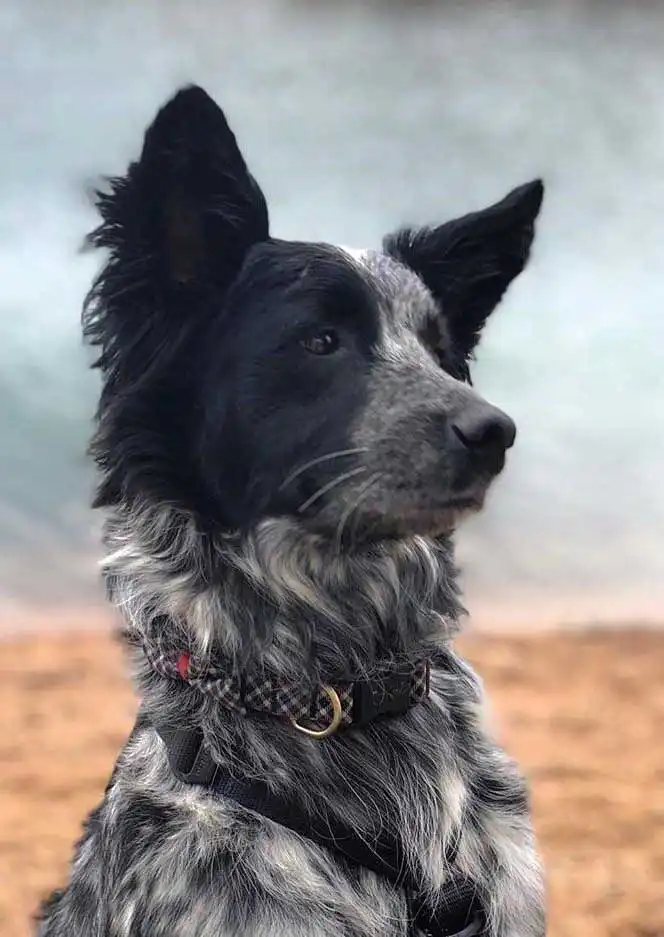
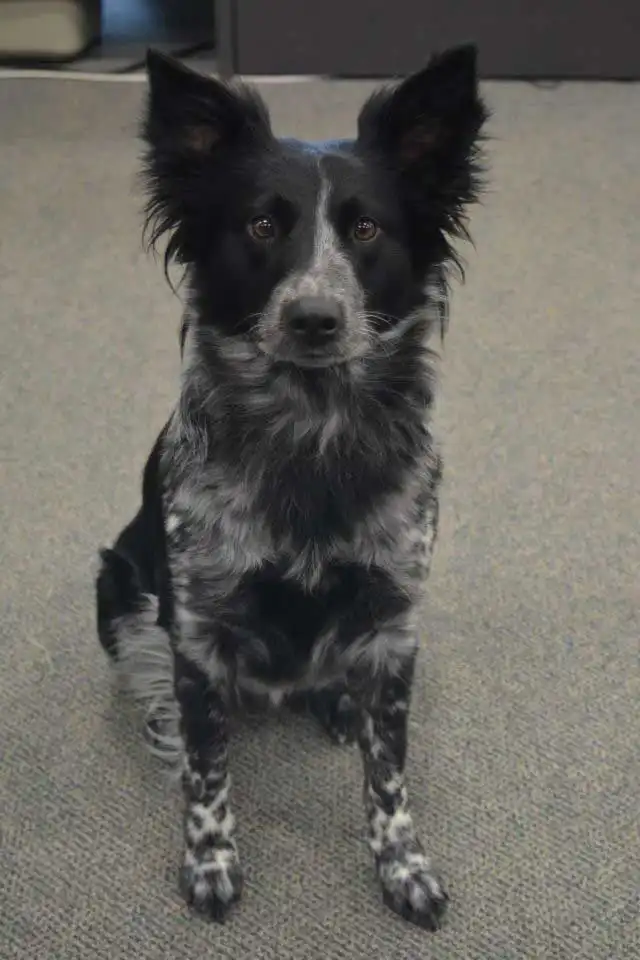
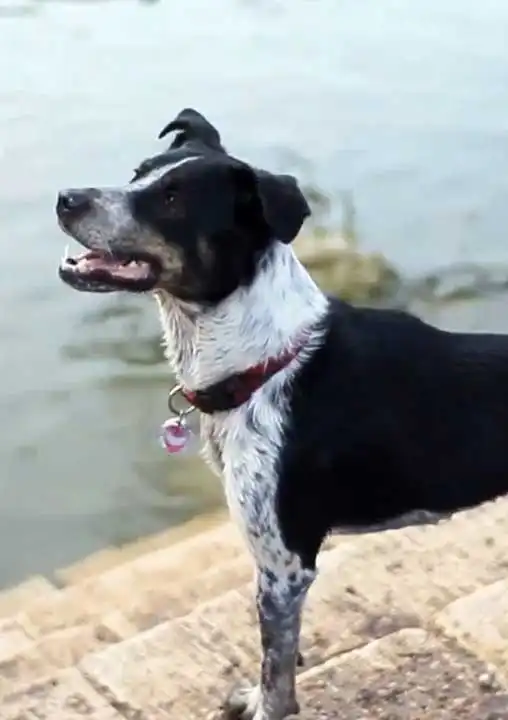
The Border Heeler often reflects the genetic traits of its parent breeds in its appearance. These dogs typically inherit the unique speckling or mottling in blue or red from the Australian Cattle Dog, combined with a diverse coat type from the Border Collie. Both breeds are known for their sturdy, compact physiques, which are slightly longer than they are tall, and they generally fall within similar height and weight categories. Their skulls are robust and well-proportioned to their bodies. The eyes are oval and of moderate size, predominantly brown, though they can appear in various colors, often conveying an alert expression. Ear size can differ; they may be moderate and broad at the base, either pricked and pointed or medium-sized, held erect or semi-erect, with tips that may droop forward or outward. The snout and muzzle are strong and of medium length, featuring tight lips and a scissors bite, supported by powerful jaws. The feet can be round with short toes, well-arched, and closely set, equipped with hard, deep pads and short, sturdy nails. Alternatively, they may be compact and oval-shaped, also possessing strong, deep pads and moderately arched toes that are close together, with moderately long, robust nails. The tail of a Border Heeler is usually low-set with a slight curl. This breed may have a double coat, consisting of a short, dense undercoat and an outer coat that can be short or medium in length, with straight or slightly wavy hair that is weather-resistant. The coloration of a Border Heeler can vary significantly, often featuring blue or red speckling or mottling along with a range of color markings.
Care Routine
The Border Heeler requires grooming that can range from minimal to moderate, depending on the traits it inherits from its parent breeds. To effectively manage shedding—a typical feature of both breeds—regular brushing is recommended, ideally once or twice a week. Bathing should be reserved for when it is truly necessary, as frequent washing can remove the coat's natural oils, which are essential for protecting against the elements. As with many dog breeds, it’s vital to routinely check and clean the ears to prevent infections, along with performing regular eye checks to identify any potential issues stemming from the parent breeds. Furthermore, consistent dental care, including check-ups and cleanings, is important to avert periodontal disease and tooth loss, which are prevalent concerns among various dog breeds.
Behavior & Temperament
The Border Heeler is a hybrid breed created by crossing a Border Collie with an Australian Cattle Dog, which means it can inherit traits from either or both of its parent breeds. Consequently, your dog may display a range of characteristics, including aggression, alertness, high energy levels, intelligence, loyalty, protectiveness, and responsiveness. This breed is often sensitive and can have varying barking tendencies, from occasional to frequent. You may also observe a moderate to high level of mouthiness during play, along with a natural hunting instinct and a tendency to roam. Border Heelers typically interact well with children and are generally friendly towards strangers, as well as other dogs and cats. Their impressive intelligence, derived from both parent breeds, necessitates regular mental and physical engagement to prevent boredom and the negative behaviors that can result. As a high-energy breed designed for hard work and assisting their owners, it’s advantageous to involve your Border Heeler in your daily activities whenever possible. You might notice that your dog has an instinctive urge to "herd" children, other pets in the household, or even neighborhood animals. Many owners have found that training this hybrid is as simple as providing instructions to a child.


Play & Exercise
The Border Heeler is a hybrid breed that emerges from the union of the Border Collie and the Australian Cattle Dog. Both of these parent breeds are recognized for their energetic nature and were initially bred for herding and demanding work. To ensure your Border Heeler remains content and to avoid destructive behaviors stemming from boredom, it is crucial to offer plenty of physical and mental engagement. This breed is not ideal for apartment living; rather, it flourishes in a family environment with a secure yard that provides ample space for exercise and stimulation. Daily activities, such as walks of one to two hours and games like fetch, frisbee, or football, are vital for keeping your dog entertained and redirecting her herding instincts away from other pets and children. Whether in a city or a rural area, your Border Heeler will thrive as long as there are enough opportunities for physical activity. Furthermore, this breed tends to prefer cooler climates, thanks to its thick, weather-resistant coat.
Things to Know
Cups Per Day
0.0 Cups
Daily Activity
0 Minutes
Average Lifespan
12 Years
Origin
Unknown
Type
Crossbreeds
Size
Not Set
Origin Country
Unknown
Brush Frequency
Daily
Coat Texture
Straight
Register
Your kids have been begging for a pet forever, and you've recently decided that it's time for your family to get a new addition -- a dog! While everyone is excited for the new arrival, you're wondering if you need to have a dog license. How much does it cost? Is it required? Where do you get one?
Member Clubs

PETINNATE
Other
Height & Weight
Weight
38 lbs (17 kg)Male: 38 lbs (17 kg) , Female: 38 lbs (17 kg)
Height
21 inches (53 sm)Male: 21 inches (53 sm) , Female: 21 inches (53 sm)