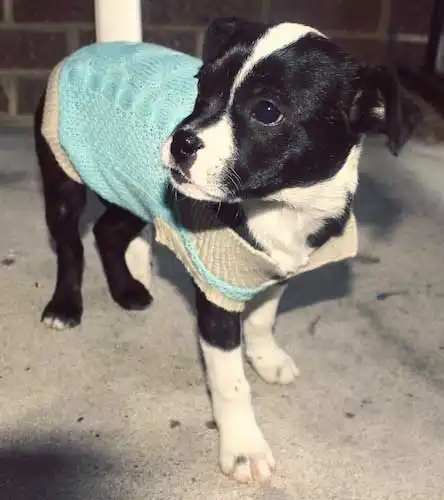
Bossie
Baussie
Bossies are a mixed breed created by crossing a Boston Terrier with an Australian Shepherd, combining features from both breeds. Although their personality and looks will showcase elements from each parent, it can be difficult to determine the precise blend of traits in any specific dog. These energetic animals thrive on social interaction and should not be left alone in the yard, as they might feel abandoned, which can result in anxiety and destructive actions. Generally, Bossies are of medium size and require a well-rounded diet, but it’s essential to provide them with sufficient exercise to avoid weight gain.
Breed Origin
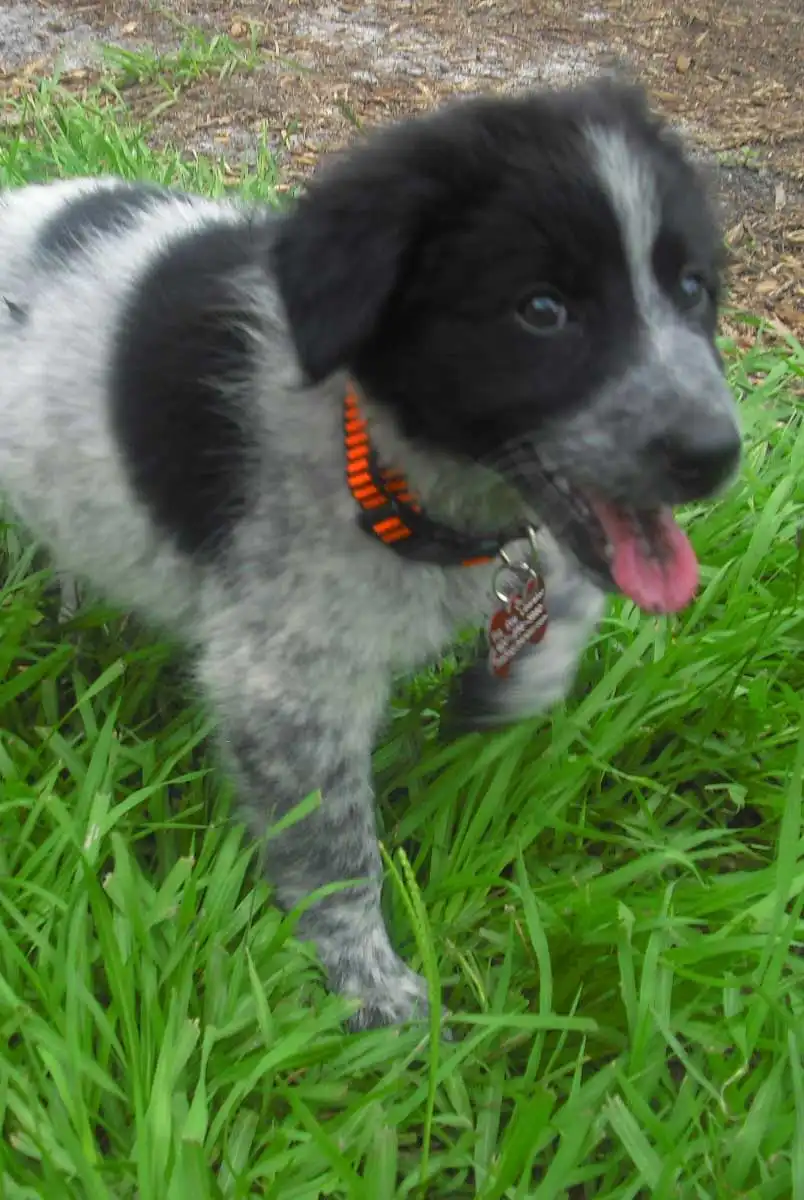
The origins of hybrid breeds remain largely unclear, as their development has occurred relatively recently. One notable hybrid is the Bossie, a cross between a Boston Terrier and an Australian Shepherd. Historically, Boston Terriers were much larger than the modern versions we see today and were initially bred for pit fighting. Their ancestry can be traced back to the now-extinct English White Terriers and English Bulldogs, with French Bulldogs also being introduced into their breeding lineage at one point. A significant contributor to the breed's evolution was a dog named Hooper’s Judge, which emerged from these two breeds. Over time, breeders began to mix Boston Terriers with smaller females to achieve a reduced size. Initially known as American Bull Terriers and informally referred to as roundheads, they eventually adopted the name Boston Terrier, which reflects their geographic roots. Conversely, the name Australian Shepherd can be somewhat misleading, as this breed does not actually originate from Australia; it was developed in the Pyrenees Mountains, located between France and Spain. In the United States, Australian Shepherds were primarily employed as herding dogs. Their ancestors likely included various Spanish breeds along with Collie genetics. From their beginnings to the present, Australian Shepherds have gained recognition for their outstanding skills in a variety of canine sports and activities, such as herding, obedience, agility, retrieving, police work, guarding, narcotics detection, performing tricks, and search and rescue missions.
Breed Appearance
Hybrid dogs inherit traits from both of their parent breeds. Bossies, a cross between the Boston Terrier and the Australian Shepherd, tend to bear a closer resemblance to Australian Shepherds and are usually larger than the average Boston Terrier. They are medium-sized with well-defined musculature. In contrast, Boston Terriers are compact and sturdy, characterized by their short, square bodies. Their heads are flat on top and proportionate to their frames, featuring a short, broad muzzle and a deep, wide structure. These dogs have black noses and noticeable stops, with bites that may be even or undershot. Their large, round eyes are dark and widely spaced, accompanied by small, upright ears. Bossies possess strong, straight legs that are slightly apart, along with broad chests and gently arched necks. Their tails are low-set and tapering, with shapes that can be either straight or corkscrew. Similarly, Australian Shepherds are also medium-sized but typically have longer fur and shorter tails, which are often docked.

Care Routine
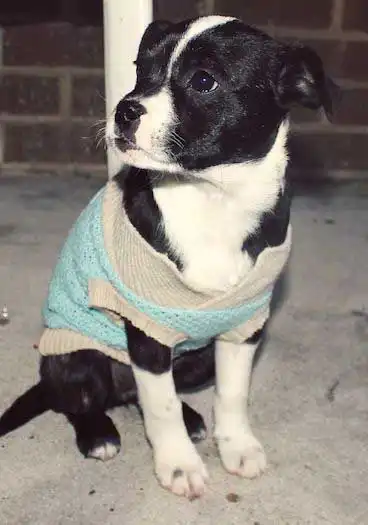
Although this breed has low grooming needs for their coat, they still require a considerable commitment in other aspects of care. They do not necessitate frequent baths or grooming sessions, as they generally have a subtle canine scent. It is essential to establish proper obedience and respect early on, as these dogs can be quite independent and sometimes stubborn. Like all dogs, the Bossie needs regular attention to their ears, teeth, and nails. Ideally, their teeth should be brushed two to three times a week, or daily if feasible. Nail trimming should be done as necessary, usually once or twice a month, unless they naturally wear down. To avoid infections, it’s important to clean your dog’s ears weekly using a cotton ball. Furthermore, all dogs, irrespective of their breed, require daily mental and physical stimulation to remain healthy and content.
Behavior & Temperament
These dogs are loving companions, but they generally do best around older children. Although they possess intelligence, they can also be quite willful; excessive reprimanding may lead to rebellious behavior. They have the ability to learn and forget commands with similar ease, which means regular reconditioning might be necessary. Consistent positive reinforcement for good behavior is essential, while misbehavior should be largely ignored. Early training is crucial for your Bossie, as they can be stubborn and nippy during their puppy stage, and they may pull on the leash during walks. They often try to assert their dominance, so it’s vital to establish yourself as the leader and gain their respect. Additionally, they may bark at other animals and can become destructive if they don’t receive enough mental and physical stimulation, making it important to provide a variety of toys to keep them occupied. Bossies are incredibly loyal to their families and should not be left outside alone for long periods, as this can lead to feelings of abandonment and potential behavioral problems.


Play & Exercise
This lively breed needs plenty of physical activity, both inside and outside the home. To avoid any destructive tendencies, it’s crucial to keep them stimulated and moving. If your Bossie shares traits with the Australian Shepherd, they flourish when given responsibilities and can become anxious if they don’t get enough exercise. For their overall happiness and health, aim for at least 60 to 120 minutes of exercise each day.
Things to Know
Cups Per Day
0.0 Cups
Daily Activity
0 Minutes
Average Lifespan
14 Years
Origin
Unknown
Type
Crossbreeds
Size
Not Set
Origin Country
Unknown
Brush Frequency
Daily
Coat Texture
Straight
Register
Your kids have been begging for a pet forever, and you've recently decided that it's time for your family to get a new addition -- a dog! While everyone is excited for the new arrival, you're wondering if you need to have a dog license. How much does it cost? Is it required? Where do you get one?
Member Clubs

PETINNATE
Other
Height & Weight
Weight
33 lbs (15 kg)Male: 33 lbs (15 kg) , Female: 33 lbs (15 kg)
Height
19 inches (48 sm)Male: 19 inches (48 sm) , Female: 19 inches (48 sm)