Brug
The Brug is an endearing small dog that emerges from the crossbreeding of a Brussels Griffon and a Pug. While this hybrid breed is still relatively rare, its appeal is growing due to its friendly nature and compact size, making it a perfect pet for those residing in smaller living spaces like apartments. Full of self-assurance and a joyful personality, the Brug exemplifies the qualities of a loyal companion, flourishing in a nurturing family setting where it receives ample attention. This little dog tends to see everyone it meets as a potential friend or admirer. However, its confidence can sometimes lead to issues, as the Brug may approach larger dogs without caution, which could be perceived as a challenge for dominance. Fiercely loyal to its owner, the Brug can display possessive behavior and may become uneasy around small children who might unintentionally hurt or play too roughly with it. Additionally, the Brug is sensitive to its owner’s emotions and may vocalize if it feels anxious or lonely. With its vibrant spirit, intelligence, and affectionate demeanor, the Brug is sure to be a devoted companion throughout its lively life.

Breed Origin
As a relatively recent hybrid breed, the Brug lacks the extensive history of many traditional dog breeds. However, by exploring the lineage of its parent breeds, we can better understand the characteristics the Brug is likely to inherit. The Pug, for example, traces its origins back to China, where it was cherished by emperors and enjoyed a life of luxury. In the late 1500s and early 1600s, as China began to trade with other countries, the first Pugs were brought to Europe by Dutch traders, who called them Mopshond—a name that persists today. The breed quickly became a favorite among European royalty. In the Netherlands, the Pug gained notoriety for saving the life of William, Prince of Orange, by warning him of approaching Spanish troops, which led to its designation as the official dog of the House of Orange. Prominent figures like Marie Antoinette, who had a Pug named Mops, and Josephine Bonaparte, with her Pug Fortune, further elevated the breed's status. Queen Victoria was also a passionate Pug lover, breeding many herself. Pugs made their way to the United States after the Civil War, and the American Kennel Club officially recognized the breed in 1885. In contrast, the Brussels Griffon has a history grounded in practicality rather than royal endorsement. Originating in Belgium, these dogs were originally bred to hunt and eradicate vermin in stables. The contemporary Brussels Griffon is a blend of several breeds, including the Affenpinscher, English Toy Spaniel, and notably, the Pug. Renowned for their remarkable hunting abilities, these lively little dogs eventually became popular among both the aristocracy and the working class. The breed arrived in America in 1898 and received AKC recognition in 1900. However, their population declined during World Wars I and II, as many families could not afford to keep pets. Thanks to the efforts of dedicated breeders in England, the breed endured and experienced a revival in popularity during the 1950s and again in the 1990s, particularly after a Brussels Griffon captured attention alongside Jack Nicholson in the film ‘As Good as It Gets.’ With such a diverse and rich history, the Brug carries itself with a sense of dignity and self-importance.
Breed Appearance
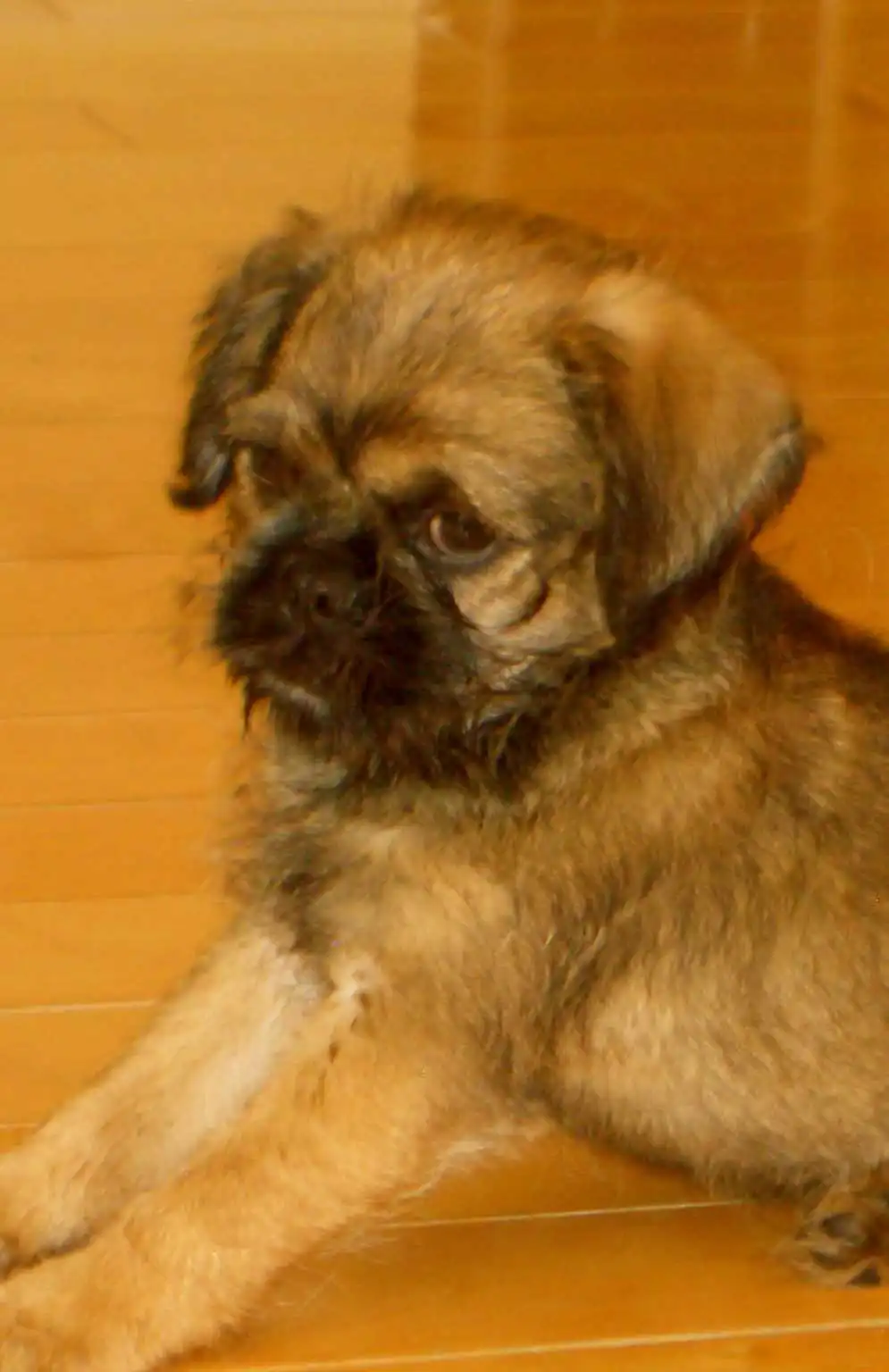
The Brug is an endearing small dog known for its moderately short hair, which can be either smooth or rough. Its coat showcases a variety of colors. The smooth-coated Brug has a short, straight fur that lies flat against the skin and has a shiny appearance, whereas the rough-haired version features a longer, dense, and wiry coat. This breed is characterized by a sturdy and compact build, with a short muzzle that is intermediate between the flat-faced Brussels Griffon and the Pug. They often display the undershot jaw typical of Pugs. With a slightly comical expression, often accentuated by wrinkles from its Pug ancestry, the Brug carries itself with a sense of dignity. Its head is round, adorned with large, expressive eyes. The ears are floppy and silky, while the legs are short and robust. The tail may be short and pointed or curled, and the paws are small and rounded. As a rare breed, the Brug's appearance can vary widely depending on the traits inherited from its parent breeds, but it is undoubtedly a dog that merits attention and admiration.

Care Routine
No matter the coat type, the Brug should be brushed once or twice weekly with a firm brush to minimize shedding. Bathing should be limited, as excessive washing can deplete the coat's natural oils, resulting in dry skin. A quick wipe with a soft, damp cloth can significantly improve the Brug's appearance, but be sure to dry any folds or wrinkles thoroughly. During grooming, take the chance to check the ears, cleaning them to support good health and eliminate dirt or wax buildup. This is also an ideal time to gently examine your dog's teeth for plaque or signs of infection while they are calm and enjoying your attention. Encourage your Brug to tolerate brief tooth brushing sessions, offering praise as a reward for their cooperation. Keep an eye on their nails and trim them when necessary; a clear sign they are getting too long is the sound of clicking as they walk.
Behavior & Temperament
The Brug is a compact dog with an unexpectedly bold character. It carries itself with an air of confidence, exuding charm and affection while demonstrating unwavering loyalty to its owner. It’s crucial for the owner to assert themselves as the authority figure; if not, the Brug may take advantage of any signs of weakness, potentially leading to possessive or aggressive tendencies. These dogs are inherently playful and curious, often believing that everyone and everything is enamored with them. When socialized properly as puppies, they tend to be quite outgoing. However, a lack of early socialization can result in emotional dependency and difficulties in unfamiliar situations or with energetic children. In terms of training, the Brug responds well to positive reinforcement, though it can show a stubborn streak at times. Patience is essential during these instances, as harsh treatment can negatively impact their sensitive nature. Ultimately, the Brug is a fantastic companion, offering solace during challenging times and sharing in your happiness during joyful moments. They thrive on affection and relish the opportunity to curl up in your lap, soaking up all the love you provide. With their lively and cheerful demeanor, the Brug is a truly delightful and playful addition to any household.


Play & Exercise
While the Brug is an active indoor breed that can satisfy its exercise requirements through a variety of indoor activities, taking them outside for walks remains advantageous. Outdoor excursions not only help expend their energy but also offer valuable mental stimulation as they encounter new surroundings. A walk or a visit to a dog park is a fantastic way to ensure your Brug is well-socialized with both humans and other animals. Given their small size and larger-than-life personality, it’s essential to monitor their behavior in public spaces. Their self-assured nature and belief that everyone will love them can sometimes lead to playful mischief. They are enthusiastic participants in games, but it’s wise to be vigilant to avoid any accidental mishaps during play. The Brug enjoys exploring a securely fenced yard, whether in an urban or rural environment, but ultimately, they prefer to be close to you, regardless of the setting.
Things to Know
Cups Per Day
1.0 Cups
Daily Activity
60 Minutes
Average Lifespan
14 Years
Origin
Unknown
Type
Crossbreeds
Size
Small
Origin Country
Unknown
Brush Frequency
Weekly
Coat Texture
Straight
Register
Your kids have been begging for a pet forever, and you've recently decided that it's time for your family to get a new addition -- a dog! While everyone is excited for the new arrival, you're wondering if you need to have a dog license. How much does it cost? Is it required? Where do you get one?
Member Clubs

PETINNATE
Other
Height & Weight
Weight
12 lbs (5 kg)Male: 13 lbs (6 kg) , Female: 11 lbs (5 kg)
Height
10 inches (25 sm)Male: 11 inches (28 sm) , Female: 10 inches (25 sm)
Eye Colors
Brown
Nose Colors
Black
Coat Colors
Cream
White
Brown
Black