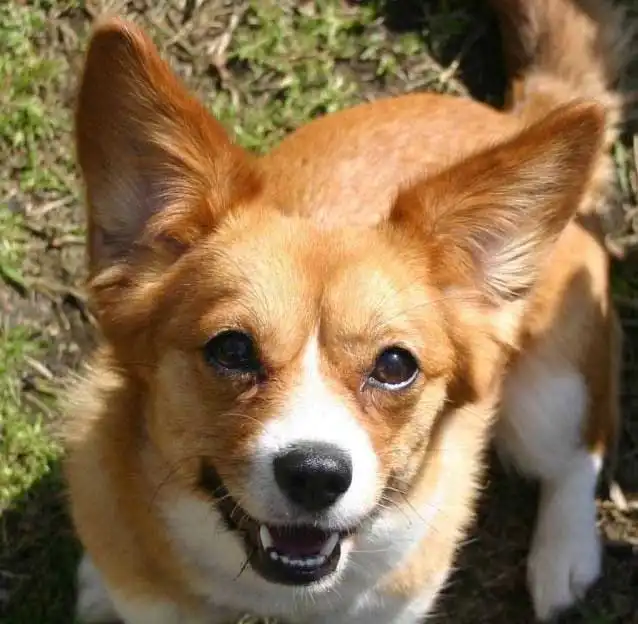
Cava-Corgi
The Cava-corgi is a delightful mixed breed created by crossing a King Charles Cavalier Spaniel with a Welsh Pembroke Corgi. Known for their small size and vibrant personality, these dogs are particularly great companions for families with children and are an excellent option for those new to dog ownership. While they possess a lively spirit, Cava-corgis are generally quite relaxed and not excessively energetic. They do, however, inherit a herding instinct from their Corgi ancestry. Available in a range of colors, Cava-corgis are relatively easy to care for compared to the Cavalier King Charles Spaniel, which often demands more grooming. This breed is well-suited for both apartment living and homes with a secure outdoor space.

Breed Origin
The Cavalier King Charles Spaniel is a relatively recent breed, with its roots linked to toy Spaniels that were cherished companions of nobility during the 16th, 17th, and 18th centuries. A notable historical figure, Mary, Queen of Scots, had a toy Spaniel that accompanied her during her final moments before execution. This breed also captured the affection of her descendants, Charles I and II, which ultimately led to its name. The breed made its debut in the United States in the 1940s, and by the 1950s, the Cavalier King Charles Spaniel Club was formed. It wasn't until 1995 that the American Kennel Club formally recognized this breed. In contrast, the Welsh Corgi has a rich and enchanting history steeped in folklore. According to Welsh legends, these dogs are said to have originated from the fairy realm. The tale recounts how two children, while herding their family's cattle, discovered puppies they initially thought were foxes. Sensing something extraordinary about them, they brought the pups home, where their parents explained that the dogs had been ridden by fairies, as evidenced by the fairy saddles on their backs. These dogs quickly became beloved family pets and demonstrated remarkable herding abilities. Historians propose that Welsh Corgis are descendants of Valhunds, Swedish herding dogs, while others contend that they were introduced to Wales by Flemish weavers in the 12th century. The breed gained recognition from the United Kennel Club in the 1920s and was officially acknowledged by the American Kennel Club in 1934. The Welsh Corgi holds a special place in royal hearts; Queen Elizabeth II received her first Corgi from King George VI and has maintained a deep affection for the breed, with a “pack” currently residing at Buckingham Palace.
Breed Appearance
The Cava-corgi is generally a small dog, typically weighing up to fourteen pounds and reaching about a foot in height at the shoulder. However, these dimensions can fluctuate based on the genetic traits passed down from its parent breeds. Notably, female Cava-corgis tend to be slightly larger than their male counterparts. Their coats are usually medium to long in length and may exhibit wavy or curly textures. In terms of coloration, this breed often mirrors the Cavalier King Charles Spaniel, showcasing patterns that include combinations of white with brown, red, fawn, or lemon hues. To fully appreciate the Cava-corgi's appearance, one must also consider the features of the Pembroke Welsh Corgi, recognized for its compact size and elongated body. As a result, the Cava-corgi is likely to inherit a mix of colors from both parent breeds, along with the characteristic short legs of the Corgi.


Care Routine
The Cava-corgi requires moderate grooming and is generally straightforward to care for, with grooming needs primarily determined by the coat type inherited from its parents. This breed tends to shed less than its Cavalier King Charles Spaniel lineage. Regular brushing is important, ideally once a week, while baths should be given only as needed. To tackle tangles and mats, a soft bristle brush is recommended. During shedding periods, increasing brushing to two or three times a week can be beneficial. Additionally, brushing your dog's teeth two to three times weekly can help prevent tooth decay and bad breath, although daily brushing is optimal for preventing gum disease. Nail trimming should be done at least every two weeks; a good guideline is to trim them when you start hearing them click on the floor. Establishing a grooming routine early in your Cava-corgi's life is essential for helping him become accustomed to the process.
Behavior & Temperament
The Cava-corgi is a remarkably loving breed, celebrated for its joyful nature. Often assuming a herding role within the household, this dog thrives on close companionship and enjoys being by your side wherever you venture. With a keen intelligence, Cava-corgis are generally straightforward to train, particularly when positive reinforcement techniques, like treats, are employed. They respond well to commands and are especially good with children, showcasing a playful and energetic spirit filled with affection for little ones. To gain a deeper insight into the Cava-corgi's character, it's beneficial to look at its parent breed, the Pembroke Welsh Corgi. Corgis are similarly known for their cheerful, loving, and smart demeanor, though they can also display a degree of independence that may complicate training. Additionally, Welsh Corgis sometimes nip at children's feet, a behavior stemming from their herding instincts. This nipping is not intended to be harmful; instead, it serves as their method of guiding their "charges" to safety. Moreover, Corgis are recognized as excellent watchdogs, suggesting that your Cava-corgi will likely inherit this protective trait. In summary, this breed is an excellent choice for first-time dog owners.


Play & Exercise
The Cava-corgi is a lively and spirited breed that needs a minimum of thirty minutes of daily exercise to channel its energy appropriately and avoid engaging in destructive behaviors. Although this breed enjoys interacting with other dogs, dog parks might not be the ideal setting for them. Cava-corgis often exhibit herding instincts, which can lead them to chase after other pets and small children; thus, they should be kept on a leash unless in a secure, fenced area. Taking your Cava-corgi for a walk or jog is an excellent way to fulfill its exercise requirements. It's crucial to never leave your Cava-corgi unattended in an unfenced yard, as they have a tendency to chase after cars. Therefore, when outside, they should always be leashed or in a safely enclosed environment.
Things to Know
Cups Per Day
0.0 Cups
Daily Activity
0 Minutes
Average Lifespan
12 Years
Origin
Unknown
Type
Crossbreeds
Size
Not Set
Origin Country
United States
Brush Frequency
Daily
Coat Texture
Straight
Register
Your kids have been begging for a pet forever, and you've recently decided that it's time for your family to get a new addition -- a dog! While everyone is excited for the new arrival, you're wondering if you need to have a dog license. How much does it cost? Is it required? Where do you get one?
Member Clubs

PETINNATE
Other
Height & Weight
Weight
22 lbs (10 kg)Male: 22 lbs (10 kg) , Female: 22 lbs (10 kg)
Height
11 inches (28 sm)Male: 11 inches (28 sm) , Female: 10 inches (25 sm)