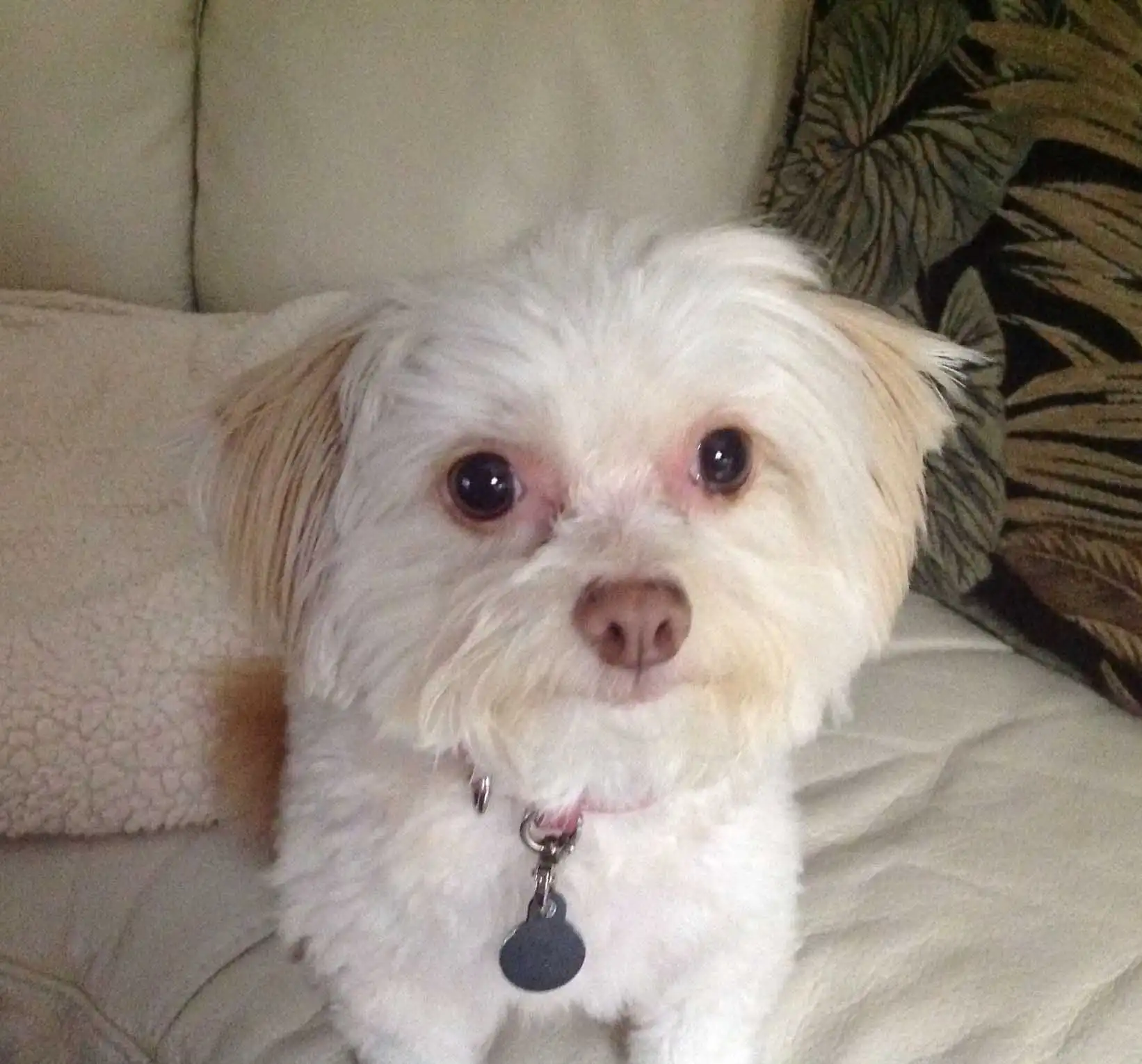
Cheenese
Hava Chi, Havachi
The Cheenese is a hybrid breed that emerges from the combination of a Chihuahua and a Havanese. This small dog usually boasts a long, straight coat. Training a Cheenese can be somewhat challenging due to their independent nature, which requires owners to exercise a good deal of patience. In general, Cheenese dogs flourish with social engagement and are recognized for their loyalty and attentiveness to their families; they tend to be unhappy when left alone. Many owners describe their Cheenese as joyful, loving, sensitive, and playful companions.

Breed Origin
There are various theories about the origins of the Chihuahua breed. One hypothesis suggests that it originated in Egypt around 3,000 years ago. Another theory proposes that Chihuahuas came from China and were brought to different areas by Spanish traders, where they were mixed with local small dog breeds. A third viewpoint indicates that the Chihuahua's ancestry can be traced back to Central and South America, specifically to a native dog called the “Techichi.” This small, mute canine was sometimes used in sacrificial ceremonies, as it was believed that a small red dog could guide souls to the afterlife. What is certain is that around 1850, three small dogs were found in Chihuahua, Mexico. A few of these dogs made their way to the United States, but they initially attracted little attention. Their popularity surged when Xavier Cugat began to prominently feature his Chihuahua in public appearances. In contrast, the Havanese is celebrated as the national dog of Cuba. This breed, which is related to the Bichon Frise, has Mediterranean roots and was brought to Cuba by Spanish traders who aimed to enhance trade relations, often gifting the dogs to Cuban women as symbols of wealth. Specifically bred for the upper class, Havanese dogs were not sold but given as gifts. Some were trained as entertainers, thriving on the attention they received, which further increased their appeal. During the Cuban Revolution, many wealthy families moved to the United States, though many were unable to bring their dogs with them. In the 1970s, a breeder named Mrs. Goodale sought out Cuban refugees in Florida who had managed to bring their Havanese along and began breeding them. She successfully continued the breed with six dogs that arrived from Cuba and five others from Costa Rica. The American Kennel Club officially recognized the Havanese in 1996.
Breed Appearance
The Cheenese is a delightful hybrid breed resulting from the combination of a Chihuahua and a Havanese. These small dogs are celebrated for their loyalty and affectionate nature, typically weighing between 4 and 16 pounds and standing around 6 to 9 inches tall. Their coats are usually long, straight, and silky, coming in a range of colors such as brown, gold, white, black, chocolate, and cream. Depending on their genetic makeup, Cheenese may have either erect or floppy, furry ears. Their dark, round eyes, which can appear somewhat bulging, reflect the Chihuahua's influence, shaped by the dominant traits inherited from their parent breeds.


Care Routine
The grooming requirements for a Cheenese are generally low to moderate. If your dog has a coat akin to that of a Chihuahua, anticipate a moderate level of shedding, which will require regular brushing approximately three times a week. On the other hand, if the coat is more similar to that of a Havanese, shedding will be minimal. A pin brush works well for both types of coats, effectively removing tangles and enhancing shine. Bathing should be reserved for when it is genuinely necessary, as frequent washing can deplete the coat of its natural oils. It is recommended to brush his teeth two to three times a week and to inspect and clean his ears weekly. Additionally, the nails of the Cheenese should be trimmed as needed.
Behavior & Temperament
The Cheenese is celebrated for its loyalty and sociable nature, thriving on interactions with people. This mixed breed is generally intelligent, eager to please, and possesses a cheerful disposition. Although they have an independent side, their well-balanced temperament makes them relatively easy to train. However, Cheenese dogs are quite sensitive and do not enjoy being left alone for long periods. They are also very alert and may bark to notify you of any incoming visitors. In general, Cheenese may not be the best fit for homes with young children; they tend to do better in environments with adults or older kids. If they are raised with small children from an early age, they can adapt well, but it is essential for the children to learn to handle this small breed with care. Early socialization is advantageous, and close supervision is crucial when they are around younger kids. Furthermore, Cheenese usually get along well with other pets and dogs, particularly if they are socialized early in their lives.


Play & Exercise
The Cheenese is an energetic breed that flourishes with regular physical activity. Due to its small stature, this hybrid is well-suited for apartment living; although a yard isn't necessary, having access to an outdoor space for running and playing is advantageous. To ensure the Cheenese remains fit and socially active, it's essential to take them on several walks each day and frequent dog parks. Furthermore, mental engagement is vital, as both parent breeds are smart and enjoy activities that allow them to demonstrate their skills. The Cheenese is perpetually alert and brimming with energy, often appearing to be lost in thought.
Things to Know
Cups Per Day
1.0 Cups
Daily Activity
30 Minutes
Average Lifespan
15 Years
Origin
Unknown
Type
Crossbreeds
Size
Small
Origin Country
Unknown
Brush Frequency
Weekly
Coat Texture
Straight
Register
Your kids have been begging for a pet forever, and you've recently decided that it's time for your family to get a new addition -- a dog! While everyone is excited for the new arrival, you're wondering if you need to have a dog license. How much does it cost? Is it required? Where do you get one?
Member Clubs

PETINNATE
Other
Height & Weight
Weight
10 lbs (5 kg)Male: 10 lbs (5 kg) , Female: 10 lbs (5 kg)
Height
8 inches (20 sm)Male: 8 inches (20 sm) , Female: 8 inches (20 sm)
Eye Colors
Brown

Nose Colors
Black
Coat Colors
Brown
White
Black

Cream