Chien d'Artois
Artois Hound, Picard, Briquet
Originating in the 15th century, the Chien d'Artois, or Artois Hound, is a breed rich in history, though it exists today in limited numbers. This breed holds a unique position in the canine world, being a descendant of the famous Bloodhound and likely an ancestor of the well-loved Beagle. However, unlike these two breeds, the Artois Hound has not achieved widespread recognition on an international scale. While it shares many physical and behavioral characteristics with both the Bloodhound and Beagle, the Artois Hound remains relatively rare outside of France. Nevertheless, its scarcity does not lessen its worth. Historically, this breed has been valued by royalty and respected by hunters for its remarkable abilities and temperament. Over the years, the Artois Hound has evolved from a hunting and tracking dog to a beloved companion, known for its friendly and affectionate nature. This shift seems to be ongoing, as the breed's popularity has been gradually rising in recent times.
Breed Origin
The Chien d'Artois has a fascinating history that traces back to the 15th century, originating from the dogs of St. Hubert, which closely resembled the modern Bloodhound. Initially, this breed was categorized into two main types: a variant similar to the Basset Hound and a larger breed referred to as the "Picardy Hound." Although they shared several characteristics, they differed significantly in size and structure. By the 1600s, the larger Picardy Hounds had come to be known as Chien d'Artois, existing in two sizes—large and small—though the smaller version became much more common. Their appearance also diverged from that of today’s Artois Hounds; at that time, they were primarily white with fawn and grey markings, appearing lighter than the current tri-color variations. The breed gained significant popularity among the French nobility in the late 1500s and early 1600s, who valued their exceptional tracking abilities, particularly in fox hunting. Nobles often exchanged these dogs as gifts, resulting in numerous accounts praising their skills and temperament. However, by the 1800s, the rise of the English Foxhound led to a decline in the Chien d'Artois, overshadowing many traditional French breeds. This reduction in numbers also caused a dilution of their lineage, as the dwindling population required crossbreeding with breeds like the now-extinct Normand Hounds to maintain their numbers. While this crossbreeding helped stabilize the population to some degree, it significantly changed the Chien d'Artois' appearance, moving it further from its original form by the late 1800s. Despite the dedicated efforts of breeders and enthusiasts, the breed nearly faced extinction during both World Wars. Fortunately, in the 1970s, M. Audrechy committed himself to finding pure specimens and launched a breeding program aimed at restoring the breed to its historical roots. Although modern Artois Hounds tend to display darker shades than their ancestors, Audrechy's initiatives have largely succeeded in reviving the breed's original traits as recorded in historical documents. Today, their population has rebounded to a healthier level, with around 500 registered with the Federation Cynologique Internationale. In 2006, the breed received official recognition from the United Kennel Club and continues to thrive as both hunting companions and cherished pets.
Breed Appearance
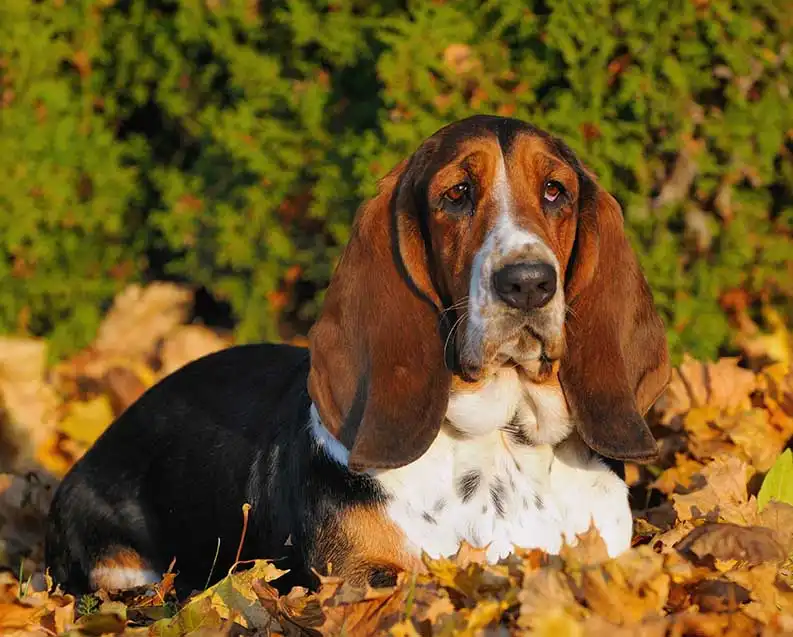
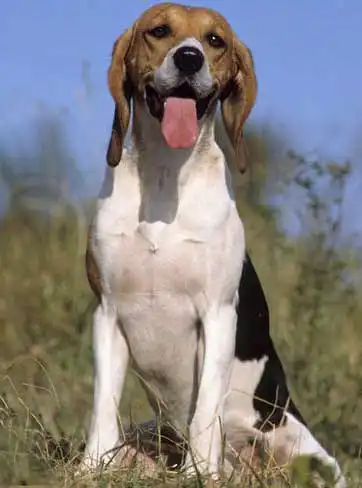
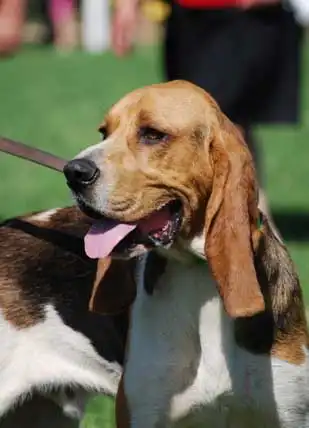
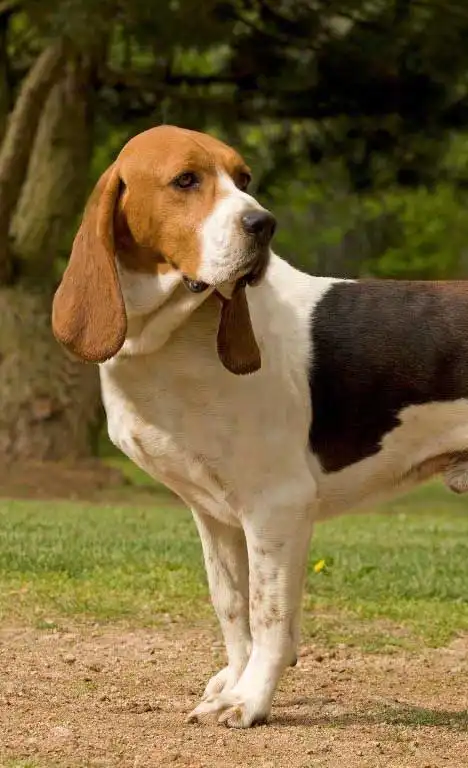
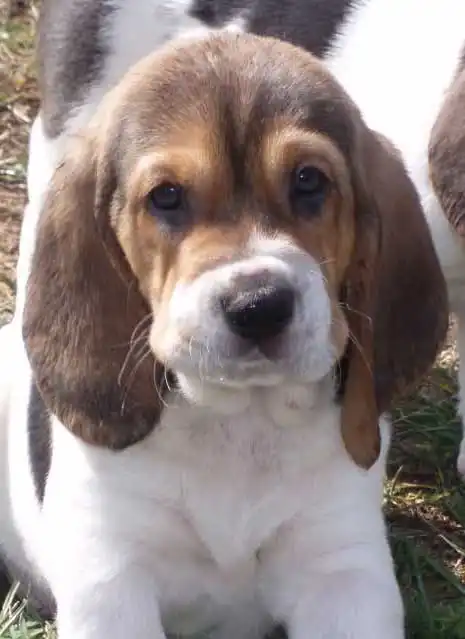
The Chien d'Artois is a medium-sized dog breed, standing just under two feet tall at the shoulder and typically weighing around 64 pounds. At first glance, they may be mistaken for a taller, more athletic version of the Basset Hound. Their heads are broad and rounded, featuring a distinct stop, while their muzzles are slightly shorter than their skulls and topped with a prominent black nose. Their eyes are well-spaced and align with their long, wide ears, which have rounded tips. This breed boasts a long, muscular neck, strong forequarters, and a deep, rounded chest that reaches down to the elbows. Their hind legs are sturdy and slightly angled, supporting a straight back that culminates in a thick, tapering tail held in a sickle shape. The coat is short, dense, and tri-colored, with a white base embellished by large patches of fawn and black.
Care Routine
The Chien d'Artois, like many other French scent hounds, is typically a breed that requires little upkeep. Grooming needs are minimal, usually involving just a firm bristle brush once or twice weekly to keep their coats clean and free of dirt, debris, and loose hair. This breed is quite adept at maintaining its own hygiene, needing baths only when they become especially dirty or develop unpleasant odors; otherwise, a simple towel wipe is usually sufficient. However, their folded ears can make them more prone to ear infections, as moisture and wax can accumulate in these areas. Therefore, it’s important to regularly check and occasionally clean their ears. Additionally, their nails should be monitored and trimmed as needed to prevent painful cracks or breaks, and, like all dogs, their teeth should be brushed at least once a week.
Behavior & Temperament
Like their relatives, the Bloodhound and Beagle, the Chien d'Artois is not only an adept hunter but also beloved for its friendly and easy-going demeanor. Originating from a history of pack hunting, these dogs generally get along well with others and are naturally gentle with children. Their behavior can greatly improve with appropriate training and socialization. However, one challenge with this breed is their intelligence, which can sometimes translate into a strong-willed stubbornness. To fully harness their best qualities, they require a firm, patient, and experienced owner. Despite this, their companionship is highly valued. They are recognized for their friendliness, playfulness, affection, and unwavering loyalty, making them excellent pets beyond hunting scenarios. While they can serve as reasonable watchdogs, they may not be as effective as other breeds due to their propensity to become easily distracted. Nonetheless, they often take it upon themselves to keep an eye on their environment and will alert their owners with a loud bark if they detect anything unusual. In the field, they exhibit enthusiasm and dedication, utilizing their impressive stamina to track scents over long distances or periods. Given their strong prey drive, it is crucial to socialize them with non-canine animals from an early age to promote harmonious living. Additionally, they flourish in active households, as their high energy levels necessitate ample exercise to keep them happy and well-mannered.
Play & Exercise
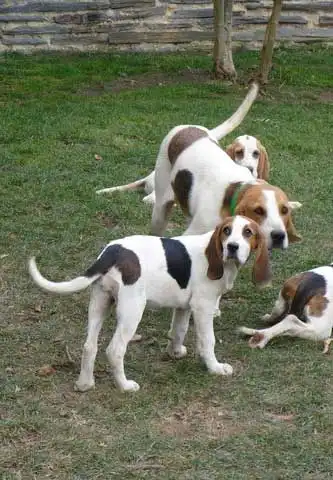
Artois Hounds are known for their medium to high energy levels, necessitating a significant amount of daily exercise to keep them happy and healthy. While these dogs can burn off considerable energy during hunting activities, they can manage with less physical exertion on their rest days. However, if they are kept as companion animals, they require at least 60 minutes of exercise each day. With their strong hunting instincts, they flourish in open areas where they can run and explore using their acute sense of smell. Many owners opt to exercise them in secure settings, like spacious backyards or dog parks, due to the breed's stubborn nature and propensity to wander off in search of intriguing scents. Artois Hounds particularly relish activities that involve chasing and fetching, as well as engaging in mentally stimulating games, which not only help expend their energy but also reduce boredom and frustration when they are confined for long periods.
Things to Know
Cups Per Day
3.5 Cups
Daily Activity
60 Minutes
Average Lifespan
14 Years
Origin
15th Century
Type
Pure Breeds
Size
Large
Origin Country
France
Brush Frequency
Weekly
Coat Texture
Straight
Register
Your kids have been begging for a pet forever, and you've recently decided that it's time for your family to get a new addition -- a dog! While everyone is excited for the new arrival, you're wondering if you need to have a dog license. How much does it cost? Is it required? Where do you get one?
Member Clubs

PETINNATE
Scenthound

UKC
Scenthound
Height & Weight
Weight
64 lbs (29 kg)Male: 64 lbs (29 kg) , Female: 64 lbs (29 kg)
Height
22 inches (56 sm)Male: 22 inches (56 sm) , Female: 22 inches (56 sm)
6 Months
45 lbs ( m 45 lbs, f 45 lbs )
15 inches ( m 15 inches, f 15 inches )
12 Months
53 lbs ( m 53 lbs, f 53 lbs )
18 inches ( m 18 inches, f 18 inches )
18 Months
64 lbs ( m 64 lbs, f 64 lbs )
22 inches ( m 22 inches, f 22 inches )
Eye Colors
Brown

Nose Colors
Black
Coat Colors
Brown
Fawn
Black
White