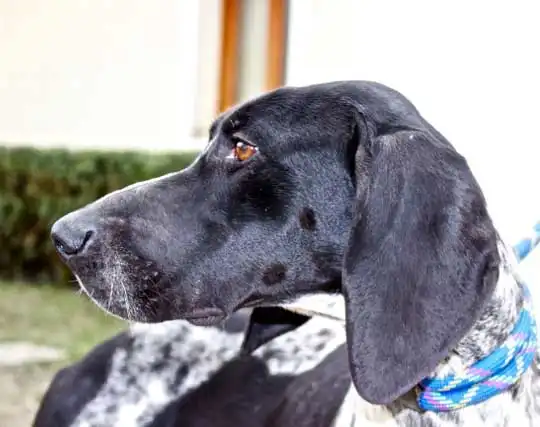
Chien Francais Blanc et Noir
French Black and White Hound, White and Black French Hound, Francais Blanc et Noir
The Chien Français Blanc et Noir is one of three breeds classified as French scent hounds, alongside the Chien Français Tricolore and the Chien Français Blanc et Orange. Although these breeds share certain physical characteristics, they differ significantly in their temperaments. True to its name, the Blanc et Noir originates from France and was developed in the early 19th century by a breeder focused on creating a dog with an outstanding sense of smell, remarkable endurance, and a well-rounded temperament. Originally intended for hunting small game, these dogs later evolved to work effectively in larger packs, allowing them to pursue bigger prey such as deer. Their instinctive pack mentality has fostered a sociable nature, resulting in a friendly and easy-going disposition that enables them to get along well with people, including strangers and children, as well as with other dogs. This blend of characteristics, combined with their moderate trainability and adaptability, makes them excellent family pets, even as they retain their hunting instincts. While they can thrive in various family settings, they do have a considerable amount of energy and a propensity to bark, making them particularly well-suited for active families—ideally those with a yard—who are prepared to dedicate time to their training and socialization.
Breed Origin
The Chien Français Blanc et Noir has a somewhat obscure history, primarily attributed to Henri de Falandre, a passionate hunter, who is believed to have developed the breed in the early 19th century. However, the precise origins are still debated among enthusiasts. It is widely accepted that the Blanc et Noir emerged from the crossbreeding of several breeds, such as the Gascon Saintongeois, Bleu de Gascogne, Poitevin, and possibly the English Foxhound. This breeding resulted in a dog renowned for its keen sense of smell, distinctive baying, impressive stamina, and well-rounded temperament. As a result of this selective breeding, three distinct varieties were established: the Blanc et Noir, the Blanc et Orange, and the Chien Français Tricolore. While these breeds share certain physical characteristics, their temperaments differ considerably, and each features its own unique coat colors and patterns. Collectively, they are known as the Youngest, Newest, or Rarest French Hounds due to their limited historical documentation. Unfortunately, their lack of recognition in the mid-20th century contributed to a significant decline during World War II. Although the breed managed to survive, it did so in very small numbers. Following its recognition in 1957, the population of the Chien Français Blanc et Noir began to stabilize and grow more effectively than its two counterparts, yet it is still considered rare today, with annual registrations ranging from 200 to 400. The breed received official recognition from the United Kennel Club in 1996.
Breed Appearance
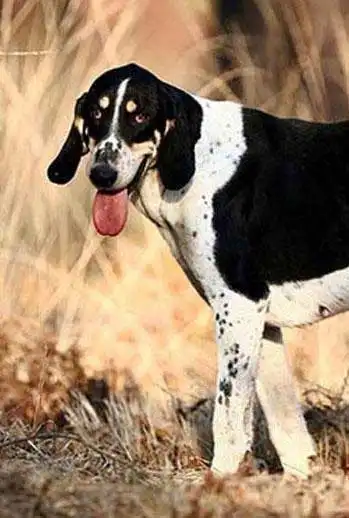
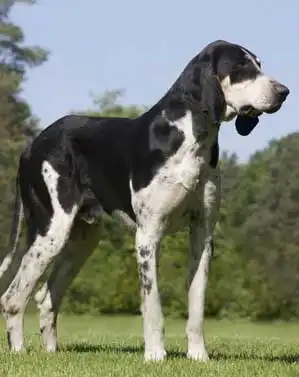
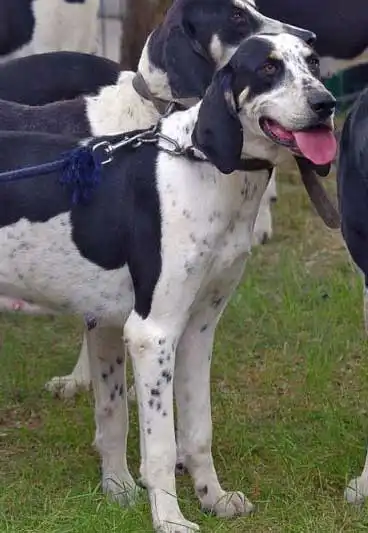
The Chien Français Blanc et Noir is a medium to large breed, typically standing just over two feet tall at the shoulder and averaging around 60 pounds in weight. Its coat is dense, short, and coarse, predominantly displaying a striking black and white pattern, often embellished with black spots (sometimes blue) and touches of tan on the face, legs, and tail. This breed is known for its lean, muscular build, featuring long legs and a thick, tapering tail that is held upright. The head is slightly rounded, with a long muzzle and an arched nasal bridge, complemented by a black nose with prominent nostrils and dark, expressive eyes. Additionally, it has a longer neck, a moderately deep yet slender chest, a slightly tucked abdomen, strong, straight front legs, gently angled hind legs, and a subtly arched lower back.
Care Routine
The Chien Français Blanc et Noir has a moderate to heavy shedding pattern and needs to be brushed with a stiff bristle brush approximately twice a week to keep its dense coat in good condition. Trimming is not necessary, and baths are only required if the dog comes into contact with strong-smelling materials, as their natural oils and self-grooming habits usually keep them clean and free of odors. The main aspects of their care involve regular checks on their nails and teeth; nails should be clipped as necessary, and dental hygiene should ideally be maintained on a weekly basis.
Behavior & Temperament
The Chien Français Blanc et Noir displays two contrasting temperaments: one that is spirited, eager, and attentive while hunting, and another that is calm and laid-back when at home with family. Due to their background as pack hunters, they typically get along well with other dogs and people, including strangers and children. Their attitude towards newcomers is often either neutral or welcoming, which is why they are more suited for hunting than guarding. With their families, they are loving, cheerful, and devoted, making them wonderful companions. However, they do present some challenges. Initial training can be somewhat challenging, but once they are fully trained, they respond well to commands. Their strong hunting instincts also cause them to bark frequently and loudly, alerting their owners to anything that captures their attention, whether it’s an intriguing scent or a small animal outside. This behavior can pose issues in apartment living. Furthermore, their high energy levels and strong hunting drive necessitate ample exercise, making them ideal for active families or those with plenty of space for them to explore.


Play & Exercise
While Chien Français Blanc et Noirs are not overly active dogs, they do need a moderate amount of exercise to ensure their well-being and happiness, generally placing them above average in activity requirements compared to other breeds. Their intelligence also demands sufficient mental stimulation to avoid boredom and frustration. Owners who enjoy jogging or taking regular walks will find this breed particularly compatible, but those who can spend time playing in the yard or at a dog park—participating in games like fetch or frisbee—will also effectively meet their exercise needs. Ideally, this breed should get around 14 miles of walking each week and about 45 minutes of daily physical activity to remain healthy and well-mannered.
Things to Know
Cups Per Day
3.5 Cups
Daily Activity
45 Minutes
Average Lifespan
13 Years
Origin
Early 19th Century
Type
Pure Breeds
Size
Large
Origin Country
France
Brush Frequency
Weekly
Coat Texture
Straight
Register
Your kids have been begging for a pet forever, and you've recently decided that it's time for your family to get a new addition -- a dog! While everyone is excited for the new arrival, you're wondering if you need to have a dog license. How much does it cost? Is it required? Where do you get one?
Member Clubs

PETINNATE
Scenthound

UKC
Scenthound
Height & Weight
Weight
65 lbs (29 kg)Male: 65 lbs (29 kg) , Female: 65 lbs (29 kg)
Height
26 inches (66 sm)Male: 26 inches (66 sm) , Female: 26 inches (66 sm)
6 Months
46 lbs ( m 46 lbs, f 46 lbs )
17 inches ( m 17 inches, f 17 inches )
12 Months
55 lbs ( m 55 lbs, f 55 lbs )
21 inches ( m 21 inches, f 21 inches )
18 Months
65 lbs ( m 65 lbs, f 65 lbs )
25 inches ( m 25 inches, f 25 inches )
Eye Colors
Brown

Nose Colors
Black
Coat Colors
White
Black