Corgi Bichon
Corgi Frise
The Corgi Bichon is an enchanting mix of charm, playfulness, and a touch of independence, resulting from the combination of the Pembroke Welsh Corgi and the Bichon Frise. Although the specific history of this hybrid breed is still being explored, the lineage of its parent breeds is well-documented. This lively dog is characterized by its spirited nature and a strong desire for freedom, often seen joyfully darting around. Depending on which parent’s traits are more dominant, your Corgi Bichon may display characteristics from either breed. Ultimately, this breed is intended to be a devoted companion for families, making it a wonderful addition to any home. With its high energy levels, the Corgi Bichon thrives on active play, which is essential for maintaining its health and vitality.

Breed Origin
The precise beginnings of the Corgi Bichon remain somewhat ambiguous, particularly in terms of its creation timeline and location. It is generally believed that the surge in popularity of designer dog breeds over the last twenty years significantly contributed to its emergence. To better understand the potential characteristics of the Corgi Bichon, it is beneficial to examine its parent breeds. The Pembroke Welsh Corgi is thought to have roots in the Spitz family, developed by Flemish weavers who needed a dog skilled in herding cattle. These Corgis were particularly known for their ability to nip at the heels of cattle to capture their attention. The breed first gained widespread recognition in 1926 when it made its debut at dog shows. Additionally, Queen Elizabeth II's well-known fondness for the Pembroke Welsh Corgi has played a crucial role in enhancing its popularity over the years. The American Kennel Club (AKC) officially recognized the Pembroke Welsh Corgi in 1934. On the other hand, the origins of the Bichon Frise are less well-documented, though it is widely believed to have descended from the Barbet, a medium-sized water dog. It is thought that French sailors brought this breed back from the Canary Islands during the 14th century. The Bichon Frise quickly became associated with the aristocracy, but its popularity declined until after World War I, when French breeders worked to revive the breed. The Bichon Frise was accepted into the French Kennel Club in 1934, and it made its way to the United States in 1956, becoming eligible for the AKC's Miscellaneous Class in 1971. However, due to its hybrid status, the Corgi Bichon does not have official recognition from the AKC.
Breed Appearance
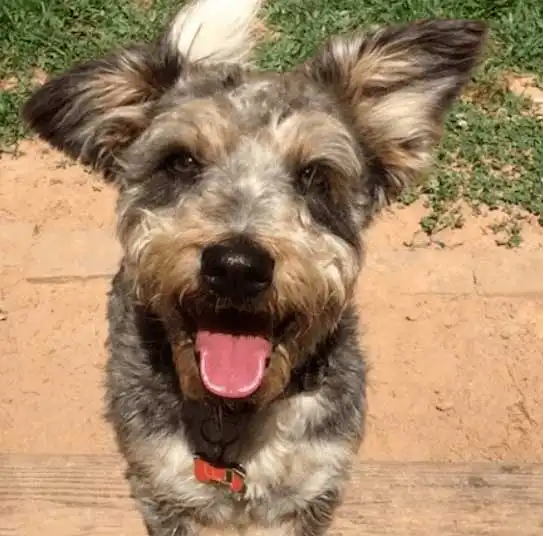
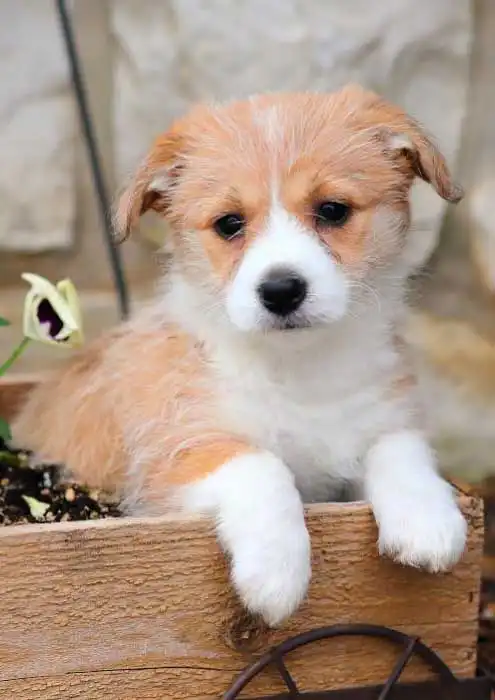
The Corgi Bichon does not have a formal breed standard, which allows it to take on traits from either of its parent breeds: the Pembroke Welsh Corgi or the Bichon Frise. This small hybrid typically has a longer body compared to its height, a characteristic inherited from its Corgi ancestry. Its compact physique may also resemble the facial features of the Pembroke Welsh Corgi. Generally, Corgi Bichons have upright ears, a feature commonly associated with the Pembroke Welsh Corgi. Their coats are usually dense and of medium length, showcasing either wavy or curly textures similar to those of the Bichon Frise. Color options can range from tan to white. When at rest, this breed often exhibits a naturally inquisitive expression and stance.

Care Routine
While the Bichon Frise is often classified as a hypoallergenic breed, the Corgi Bichon does not possess this trait. Shedding in a Corgi Bichon can differ depending on the coat type it inherits; if it resembles the Bichon Frise, there may be minimal shedding during the spring season. To prevent matting, daily brushing is crucial for coats similar to that of the Bichon Frise. Using a firm bristle brush in conjunction with a greyhound comb can effectively keep the coat free of tangles. Before giving your dog a bath, make sure to untangle any knots. A bath every 6 to 8 weeks is generally advisable, though this may vary based on individual needs. If the coat is akin to that of the Bichon Frise, professional grooming every 4 to 8 weeks is likely necessary. Nail trimming should occur every 2 to 3 weeks, while ear plucking may be required on a monthly basis, with weekly cleaning recommended. Additionally, brushing your dog's teeth once a week can help prevent the buildup of tartar.
Behavior & Temperament
The Corgi Bichon is known for its spirited independence and playful demeanor. However, this energetic companion will consistently seek your attention. If left alone for too long, he may resort to excessive barking, a behavior that can typically be curbed with early training. Your Corgi Bichon will quickly bond with you and your family, though he might initially be wary of newcomers. With time, he is likely to become more comfortable around them. To promote positive interactions with young children and other pets, early socialization is vital. With the right training, he can learn to distinguish between friends and strangers. It’s important to provide your lively Corgi Bichon with plenty of physical activity to keep him stimulated; otherwise, he may engage in destructive behaviors, like chewing on your carpet, which can be costly to fix. This active breed flourishes in an environment where someone is home for most of the day. Although he may show some stubbornness during training, success is attainable with consistent effort, patience, and time.


Play & Exercise
The Corgi Bichon is a lively breed that requires approximately 45 to 60 minutes of daily exercise. To keep your energetic friend happy, it's beneficial to include multiple walks in their schedule, along with activities such as running, swimming, playing frisbee, and engaging in other energetic games. This breed flourishes best in a spacious environment—whether in the countryside or a city—ideally with access to a yard, particularly in warmer climates. Although they are small, living in an apartment may not be the most suitable option due to their high energy. However, if you have a dog park nearby and can commit to visiting it twice a day, residing in an apartment or condo could work. Providing your active dog with sufficient exercise is essential for their overall happiness and well-being.
Things to Know
Cups Per Day
1.0 Cups
Daily Activity
60 Minutes
Average Lifespan
14 Years
Origin
Unknown
Type
Crossbreeds
Size
Small
Origin Country
Unknown
Brush Frequency
Daily
Coat Texture
Straight
Register
Your kids have been begging for a pet forever, and you've recently decided that it's time for your family to get a new addition -- a dog! While everyone is excited for the new arrival, you're wondering if you need to have a dog license. How much does it cost? Is it required? Where do you get one?
Member Clubs

PETINNATE
Other
Height & Weight
Weight
20 lbs (9 kg)Male: 20 lbs (9 kg) , Female: 20 lbs (9 kg)
Height
11 inches (28 sm)Male: 11 inches (28 sm) , Female: 11 inches (28 sm)
Eye Colors
Brown

Nose Colors
Black
Coat Colors
White
Fawn