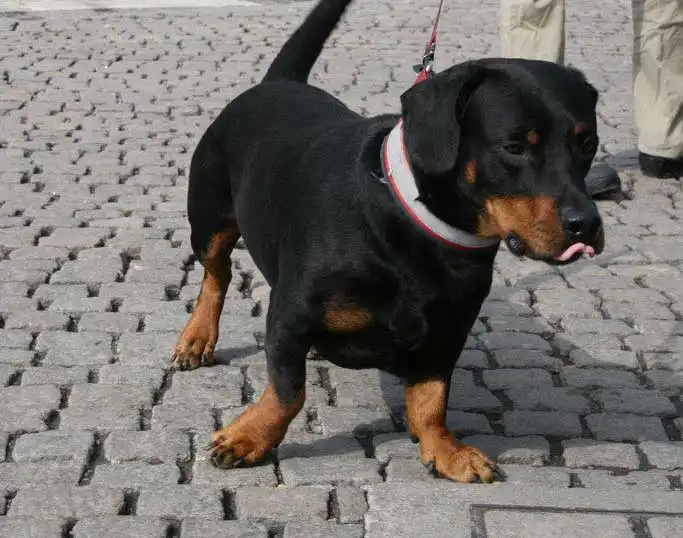
Dachsweiler
The Dachsweiler is a rare hybrid breed resulting from the crossbreeding of a Dachshund and a Rottweiler. As a relatively new breed, detailed information about its characteristics is still scarce. However, it is observed that Dachsweiler puppies can display a diverse array of appearances, sizes, and traits due to their mixed heritage. Many people note that they resemble Rottweilers but have shorter legs. By looking at the characteristics of their parent breeds, we can gain some understanding of the Dachsweiler's temperament. These dogs are recognized for their intelligence, balanced nature, playful spirit, and strong loyalty and protectiveness towards their families. Their coats usually showcase a bi-color pattern, such as black and chocolate or black and tan, although other colors may also be present. Physically, they typically have a long body similar to that of a Dachshund, paired with the robust build of a Rottweiler. With their loving nature, dependability, and lively energy, Dachsweilers can be wonderful family companions, particularly when they are socialized from a young age.

Breed Origin
The Dachsweiler's origins are somewhat unclear, primarily because it is a relatively recent breed. Nevertheless, we can gain a better understanding of its development by examining the rich histories of its parent breeds, the Dachshund and the Rottweiler. The Dachshund's lineage dates back to 15th-century Germany, where it was initially bred to hunt badgers and other burrowing creatures such as foxes and rabbits. These early dogs came in various sizes, a characteristic that remains evident today with both miniature and standard varieties. Although the breed's popularity declined during World War I, it experienced a revival in the United States after dogs were imported from Germany. Renowned for their Terrier-like traits, Dachshunds are known for their adaptability and courage. The American Kennel Club (AKC) officially recognized the breed in 1885. Conversely, the Rottweiler is thought to be a descendant of the Italian Mastiff, which traveled with Roman herds during their conquests across Europe. In the Middle Ages, Rottweilers took on various roles, including guarding and herding livestock, serving as messenger dogs, and aiding in police work. This breed originated in the German town of Rottweil, which is reflected in its name. Although it faced the threat of extinction in the 1800s, dedicated breeders successfully revived the Rottweiler through careful breeding efforts. The AKC recognized the breed in 1931. Rottweilers are celebrated for their versatility, excelling in tracking, search and rescue, guiding the visually impaired, and performing various police functions. They are also valued as loyal companions, known for their affectionate nature and calm demeanor towards their families.
Breed Appearance
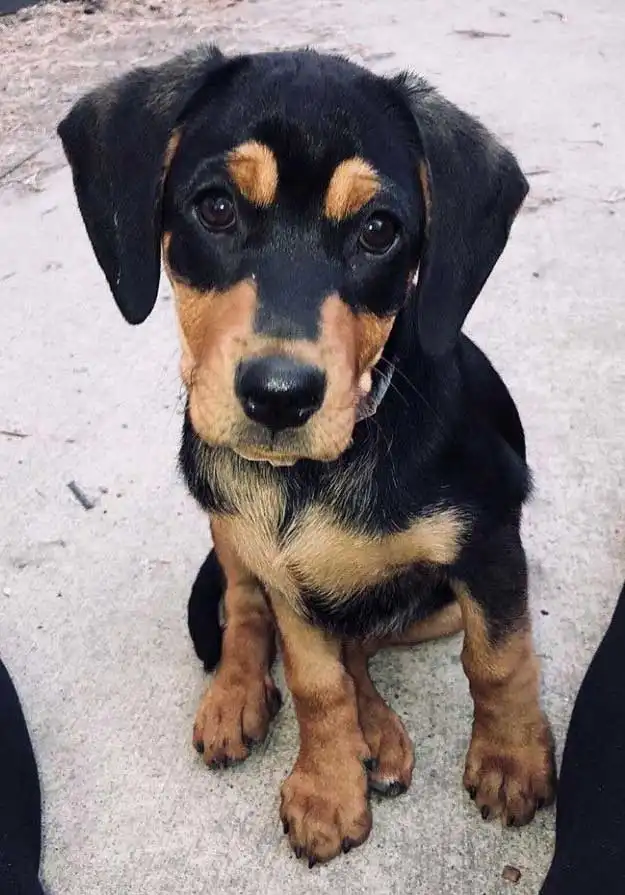
The Dachsweiler showcases a remarkable variety of physical traits, even among puppies born in the same litter. Some may take on a build similar to that of a Rottweiler, boasting a strong and muscular frame while still exhibiting the Dachshund's characteristic short legs. In contrast, other puppies might closely resemble the Dachshund, with its elongated body and short legs, yet possess a head that displays Rottweiler features. This mixed breed is challenging to define precisely due to its diverse attributes. Typically, they have a prominent head with a long, well-defined muzzle, sturdy short legs, and a long, robust tail that aligns with the spine. Their deep chest and ample lung capacity suggest a breed built for active pursuits. Some Dachsweilers may inherit the paddle-shaped paws of their Dachshund ancestry, while others could have the solid, rounded paws typical of Rottweilers. Their ears are generally long, smooth, and floppy, and their dark, almond-shaped eyes often shine with curiosity. The elongated body, a signature trait of the Dachshund, adds to the breed's widespread charm.

Care Routine
The Dachsweiler is typically a breed that requires minimal upkeep, especially when it has a short, smooth coat. In such cases, weekly brushing, a quick wipe with a damp cloth, and regular tasks like nail trimming and dental care are sufficient. However, for those with longer or wiry fur, more frequent brushing is essential to control shedding and prevent tangles. Bathing should be done only as necessary to keep the coat healthy. Given their floppy ears, it's crucial to clean the insides regularly to prevent debris buildup and to check for any signs of infection, which may manifest as swelling or an unpleasant smell. Starting a grooming routine early can make future vet visits easier. Moreover, grooming not only strengthens the bond between you and your dog but also provides a chance to check for any cuts, sores, or parasites such as ticks and fleas.
Behavior & Temperament
The Dachsweiler breed originates from dogs that possess a natural talent for hunting, tracking, and, particularly in the case of the Dachshund, eliminating their prey. Your Dachsweiler will inherit these instinctual abilities, along with a temperament that is typically balanced, courageous, self-assured, and occasionally a bit headstrong. This breed is not ideal for first-time dog owners; without appropriate guidance to foster respect and establish the owner as the pack leader, they can become quite difficult to manage. Such challenges may result in destructive behaviors, disobedience, and a tendency to resist commands. However, for those who are assertive and consistent, a well-socialized and trained Dachsweiler can evolve into a loyal, affectionate, and gentle companion. They can thrive as family pets, providing protection to their loved ones, and can live harmoniously with cats and other pets, as long as they have been properly socialized and the owner maintains control. These dogs are observant, often evaluating situations before taking action, and may develop a barking habit if not adequately trained. With the right training, socialization, and strong leadership, Dachsweilers can be loving, entertaining, energetic, and delightful companions.


Play & Exercise
The Dachsweiler breed inherits characteristics from both of its parent breeds, which are known for their lively disposition, indicating that this hybrid will likely exhibit similar qualities. To help them channel their energy, daily walks or stimulating activities at home are vital. Their elongated bodies make them prone to back injuries, even from seemingly minor jumps, like those from a bed. When lifting your dog, it’s crucial to support both their back and hindquarters properly. Early training in obedience and socialization is essential for their growth. Until they are sufficiently trained and socialized, it’s best to keep them on a leash, as they may show aggression towards other dogs of the same sex. With appropriate training, along with ample praise and rewards, Dachsweilers can master a range of commands. They do best in homes with secure yards and can adapt to various climates.
Things to Know
Cups Per Day
2.0 Cups
Daily Activity
90 Minutes
Average Lifespan
11 Years
Origin
Unknown
Type
Crossbreeds
Size
Large
Origin Country
Unknown
Brush Frequency
Weekly
Coat Texture
Wiry
Register
Your kids have been begging for a pet forever, and you've recently decided that it's time for your family to get a new addition -- a dog! While everyone is excited for the new arrival, you're wondering if you need to have a dog license. How much does it cost? Is it required? Where do you get one?
Member Clubs

PETINNATE
Other
Height & Weight
Weight
59 lbs (27 kg)Male: 65 lbs (29 kg) , Female: 54 lbs (24 kg)
Height
17 inches (43 sm)Male: 18 inches (46 sm) , Female: 17 inches (43 sm)
Eye Colors
Brown

Nose Colors
Black
Coat Colors
Blue
Cream
Black