Danish Broholmer
Danish Mastiff, Danish Broholmer, Gammel Dansk Hund, Old Danish Dog, Dog of Frederick VII
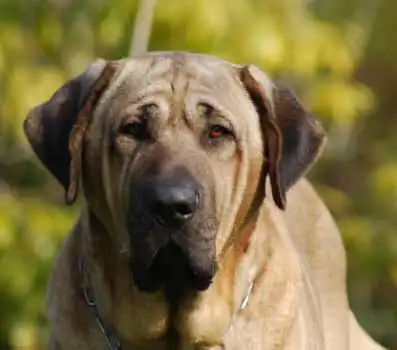
The Broholmer is a striking breed reminiscent of the Mastiff, recognized for its strong and sturdy build. Originally bred for guarding, this dog has transformed into a devoted companion over time. While it does well in homes with older children, it is not ideal for families with younger kids. The Broholmer is both loving and protective, often showing wariness towards unfamiliar people or those entering its space. To foster appropriate behavior, a confident trainer is necessary to assert leadership, as this breed can be quite headstrong. Continuous training throughout its adult years is crucial; without it, the Broholmer may try to take charge.
Breed Origin
The Broholmer is believed to have emerged in the late 1500s, around the time of the marriage between Danish King Frederick II and the daughter of Scottish King James VI. Legend has it that King James VI gifted King Frederick II with dogs that bore a resemblance to Mastiffs as a wedding present. Additionally, it is thought that Danish Vikings returned from their expeditions with similar breeds. These Mastiff-like dogs were later interbred with local canines known as Slagterhunden, or Butcher’s Dogs. The descendants of this crossbreeding, known as Old Danish Dogs, are regarded as the forebears of the Broholmer. Many in Denmark consider the Broholmer to be the authentic Great Dane, as it predates that breed. The Old Danish Dog was closely linked to the Danish aristocracy, serving as a protector of castles and estates, as well as a guardian of livestock and a hunting partner. This breed was often presented as gifts to royals and nobles throughout Europe. However, as hunting methods changed, the Old Danish Dog fell out of favor, leading to its near extinction by the mid-1800s. A Danish nobleman, Niels Frederik Sehested, took significant measures to restore the breed, instituting a rigorous breeding standard that emphasized specific traits. Thanks to his efforts, the breed began to flourish once more and garnered affection from various social strata. Sehested was also instrumental in renaming the Old Danish Dog to the Broholmer, in honor of his estate, Castle Broholm. The first Broholmer to arrive in the United States was brought by Joe and Kathy Kimmeth. The breed gained recognition from the United Kennel Club (UKC) in 2010, and in 2013, it was included in the American Kennel Club's Foundation Stock Service.
Breed Appearance
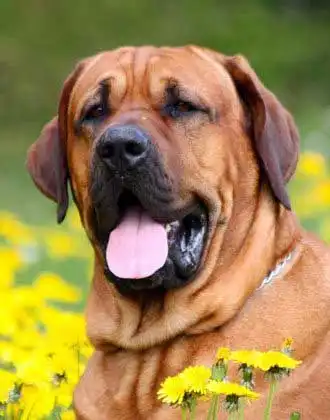
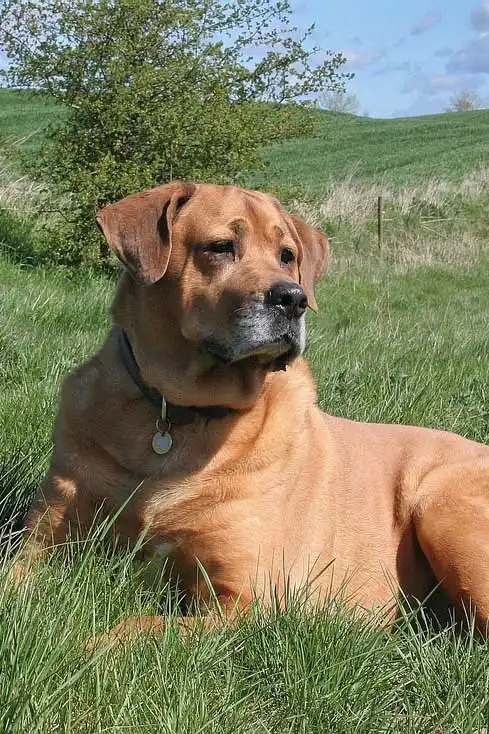
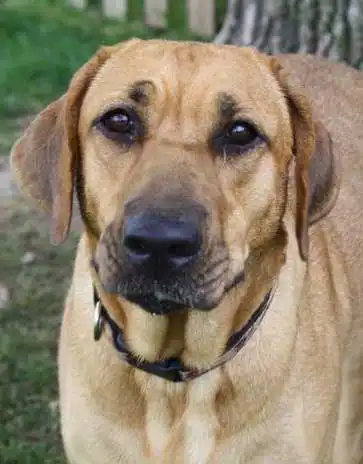
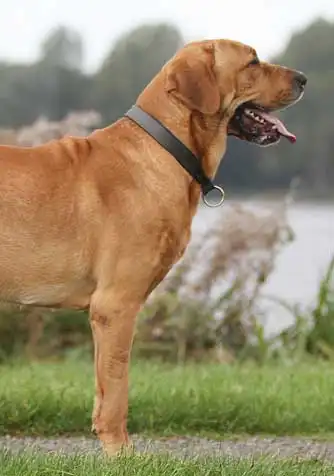
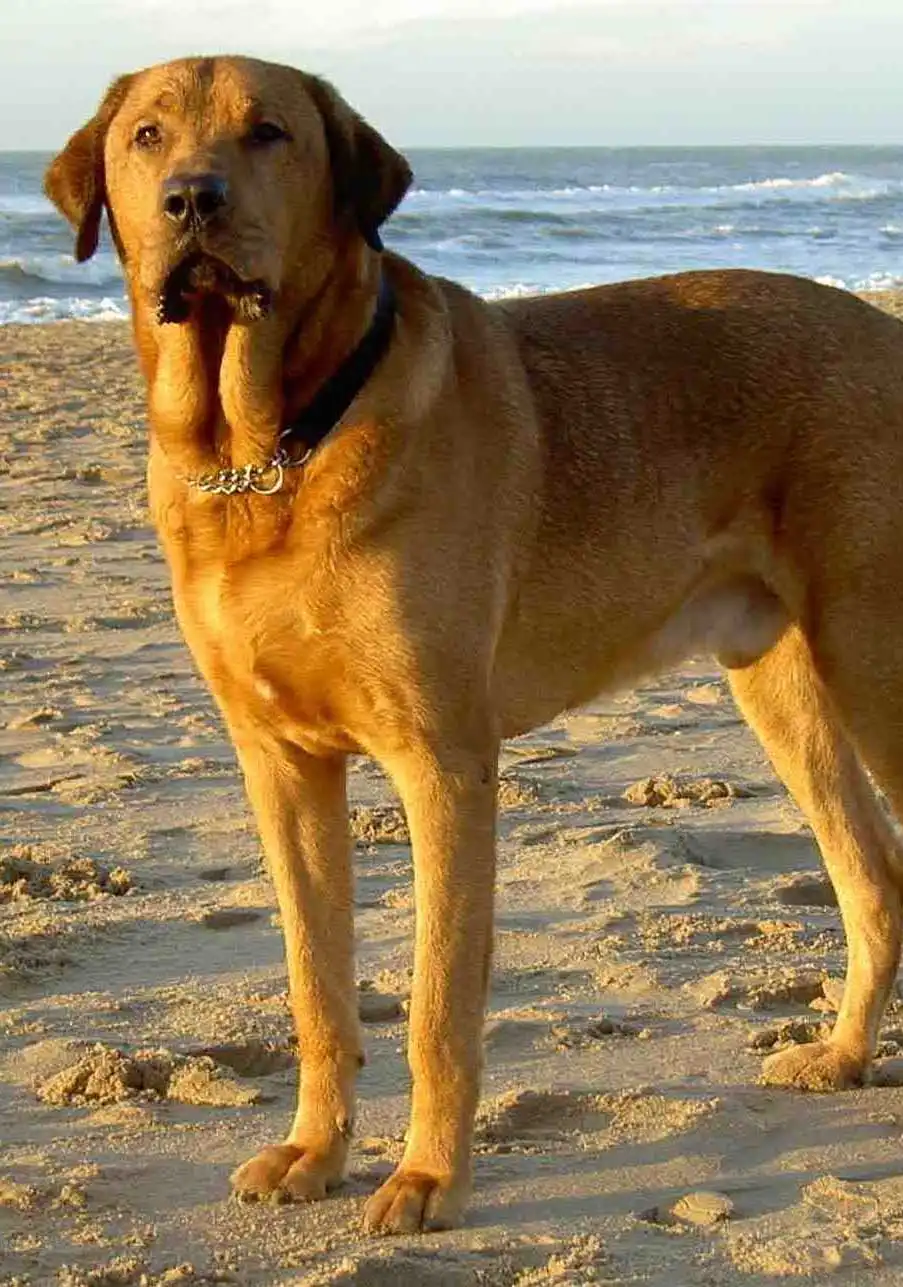
The Broholmer is a robust and powerful dog that falls within the Mastiff lineage, radiating a sense of strength and dominance. It boasts a wide, substantial head and a deep, broad chest. The breed typically has loose, abundant skin, especially noticeable around the neck. Ideally, the skin should have a rich pigmentation, devoid of any freckles or ticking, while the nose, lips, and rims of the eyes must be black. This breed is characterized by a short coat that lies flat against the body, supported by a dense undercoat that sheds with the changing seasons. Broholmers can be found in various colors, such as yellow with a black mask, solid black, or red golden. A yellow Broholmer is always required to have a black mask, whereas the red golden variant may display some black on the muzzle, but this should not extend beyond the eyes. Minimal white markings on the chest and feet are acceptable, as long as they do not interfere with the dog's overall appearance.
Care Routine
The Broholmer undergoes considerable seasonal shedding, losing its undercoat multiple times each year. During these intense shedding phases, consistent and thorough grooming becomes crucial. Although the Broholmer has a short coat, it features a dense undercoat. Shedding occurs throughout the year, but the volume is typically manageable, with only a few instances of more noticeable loss. It is recommended to brush the dog at least weekly, increasing to daily during peak shedding periods. For effective removal of loose fur and dead skin, a natural bristle brush or a slicker brush is ideal. Generally, the Broholmer needs to be bathed only two to three times a year; however, during heavy shedding, more frequent baths can aid in loosening the hair. When bathing, opt for a mild shampoo to avoid skin irritation. Additionally, regular nail trimming is essential to ensure the dog is comfortable with having its paws handled. As the Broholmer matures into a large breed, it is vital for it to become familiar with grooming routines, making the process easier for the owner.
Behavior & Temperament
The Broholmer is a breed characterized by its poise and self-assurance, particularly in the company of its family. This dog should never exhibit shyness or hesitation when faced with new situations. As a devoted guardian, the Broholmer takes its protective duties seriously and tends to be wary of strangers. To keep him safe and contained, a robust, high fence is necessary, as he will patrol the area and alert you to any unusual activity. Consistent training is vital for the Broholmer, as he flourishes in a well-structured environment with a defined hierarchy. He may try to position himself as the dominant figure, so it’s essential for him to understand that he ranks lowest in the family order. Generally, he gets along well with older children, especially if they participate in his training and he views them as authority figures. However, he is not a good fit for homes with young children. Furthermore, small pets, such as cats, should be kept in secure enclosures to avoid any risk of harm.
Play & Exercise
Things to Know
Cups Per Day
3.0 Cups
Daily Activity
45 Minutes
Average Lifespan
9 Years
Origin
1500s
Type
Pure Breeds
Size
Giant
Origin Country
Denmark
Brush Frequency
Weekly
Coat Texture
Straight
Register
Your kids have been begging for a pet forever, and you've recently decided that it's time for your family to get a new addition -- a dog! While everyone is excited for the new arrival, you're wondering if you need to have a dog license. How much does it cost? Is it required? Where do you get one?
Member Clubs

PETINNATE
Guardian Dog

AKC
Foundation Stock Service

UKC
Guardian Dog
Height & Weight
Weight
130 lbs (59 kg)Male: 136 lbs (62 kg) , Female: 124 lbs (56 kg)
Height
26 inches (66 sm)Male: 27 inches (69 sm) , Female: 24 inches (61 sm)
6 Months
35 lbs ( m 35 lbs, f 35 lbs )
9 inches ( m 9 inches, f 9 inches )
12 Months
62 lbs ( m 62 lbs, f 62 lbs )
17 inches ( m 17 inches, f 17 inches )
18 Months
117 lbs ( m 117 lbs, f 117 lbs )
26 inches ( m 26 inches, f 26 inches )
Eye Colors
Amber

Nose Colors
Black
Coat Colors
Brown
Black
White