Daug
The Daug is an endearing and laid-back hybrid breed, a cross between a Dachshund and a Pug. This small to medium-sized dog originated in the United States around 15 to 20 years ago. Renowned for their loyalty, Daug dogs possess a robust and muscular physique relative to their size. They usually have rounded faces characterized by the unique wrinkles and folds passed down from their Pug ancestry. Additionally, these dogs are typically low-maintenance, making them ideal companions for individuals seeking a pet that is not excessively active.

Breed Origin
The Pug is a historic small dog breed with origins that can be traced back to China, predating 400 B.C. Although the specifics of its beginnings are somewhat ambiguous, it is thought that the Pug may have descended from breeds such as the Pekingese or a smaller type of Bulldog. Historically, Pugs were cherished primarily as companions for aristocrats and emperors, leading lives of luxury and esteem, often in grand residences. Renowned for their remarkable performances in dog shows, Pugs were officially recognized by the American Kennel Club in 1885 and placed in the Toy Group. In contrast, the Dachshund is an energetic and courageous breed that was originally developed for hunting purposes. These dogs were mainly used to track and hunt a variety of animals, including badgers, foxes, deer, and weasels. Their robust, short legs made them well-suited for burrowing into narrow spaces, enabling them to effectively pursue their prey. Emerging from Germany in the 1600s, the Dachshund rose to prominence in the late 1800s, admired for its endurance and agility in the field. This determined breed was recognized by the American Kennel Club as part of the Hound Group in 1895.
Breed Appearance
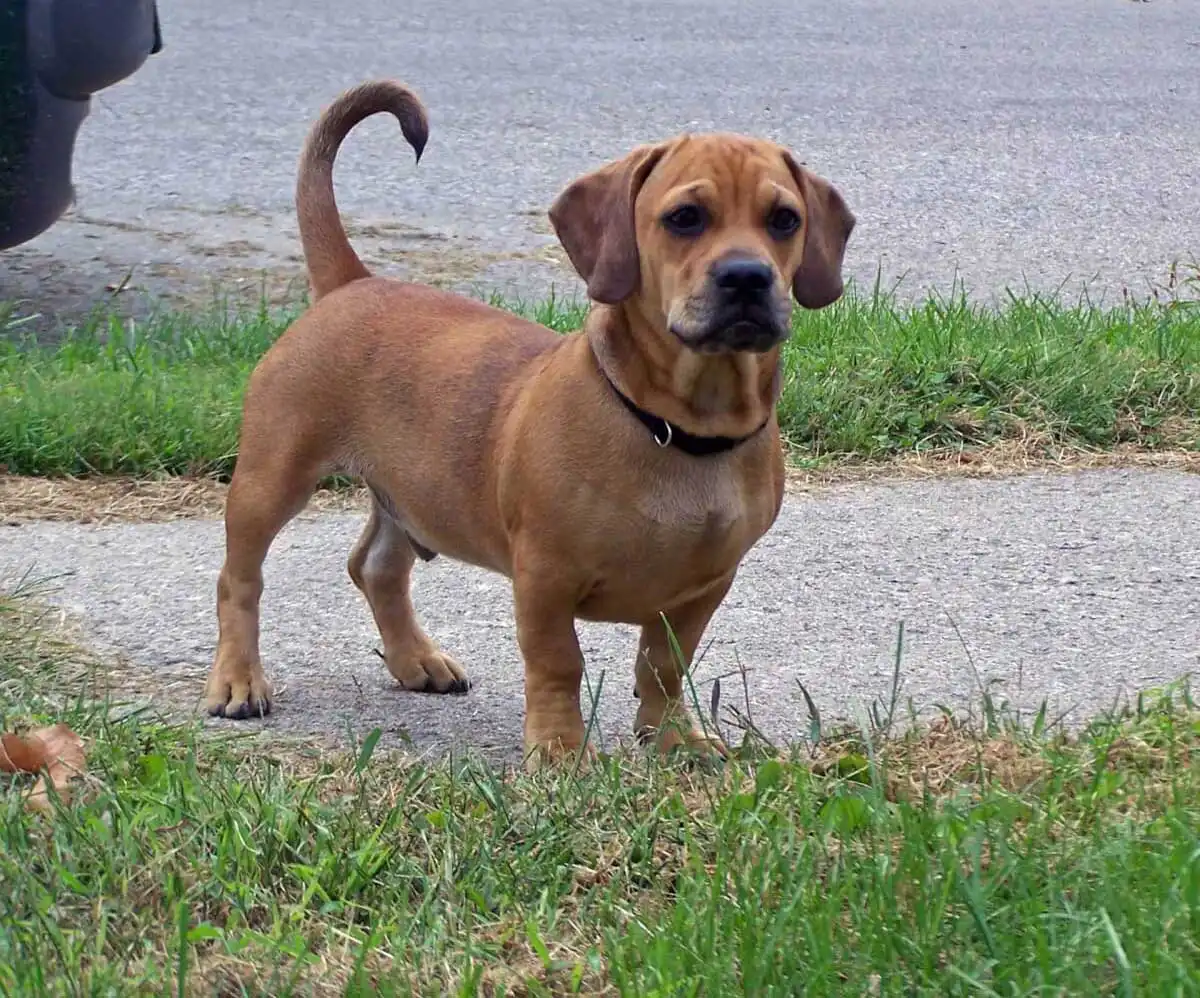
The Daug is recognized as a small to medium hybrid breed, usually standing between 11 and 13 inches tall and weighing up to 25 pounds. This breed is characterized by a muzzle that is medium-sized—larger than that of a Pug—along with an angular face, drooping rounded ears, and prominent, bulging eyes. Generally, they possess a sturdy and muscular build, featuring strong legs and a solid body. Their physique merges the elongated body of a Dachshund with the broader structure of a Pug. You may notice wrinkles and folds, particularly around the forehead and snout, and some individuals may display the distinctive underbite often seen in Pugs. Their coat colors can vary widely, including shades of silver, fawn, brown, and black.


Care Routine
These hybrid dogs can have coats that vary from short to slightly longer fur, which means their grooming requirements will depend on the length of your Daug's fur. Generally, Daug hybrids are regarded as low-maintenance pets, making them ideal for busy owners. They usually shed moderately to lightly during seasonal transitions but may lose some fur throughout the year. To maintain their coat's health, it's advisable to brush them at least twice a week with a soft bristle brush. Bathing should be kept to a minimum, as these dogs can be prone to dry skin and dandruff. Like all dogs, they require regular dental care, ear cleaning, and nail trimming every four to six weeks, with a particular emphasis on dental hygiene. If your Daug shows more Pug-like traits, such as wrinkles and skin folds, it's crucial to clean these areas regularly to prevent bacterial growth.
Behavior & Temperament
Daugs are wonderful companions for families, thanks to their friendly and laid-back demeanor, which allows them to form deep connections with their owners. These sturdy little lap dogs are usually quite sociable, getting along well with other pets such as cats, dogs, and even small rodents. Although they may bark and show some reluctance to be left alone for long periods, they typically become more welcoming to strangers after a brief period of initial caution. With time, your Daug is likely to accept new visitors into their home. They generally interact well with children, but it’s crucial to introduce them to kids during their puppy phase. Similarly, children should be educated on how to treat animals with care and respect.


Play & Exercise
This hybrid breed may show occasional bursts of energy, but generally, he is quite relaxed. While he doesn't need a lot of exercise, it's essential to take him for at least two walks daily. The Daug may have a strong prey drive, so providing him with soft toys and balls can help keep his mind engaged. He will also seek out interaction with family members. Regular trips to the dog park will give him the chance to socialize with other dogs and people. He is likely to enjoy obedience training and could thrive in earth dog competitions if given the chance. By ensuring he stays entertained and mentally stimulated, you'll discover that your lap becomes his preferred spot to unwind after a fulfilling day.
Things to Know
Cups Per Day
1.0 Cups
Daily Activity
30 Minutes
Average Lifespan
14 Years
Origin
Unknown
Type
Crossbreeds
Size
Small
Origin Country
North America
Brush Frequency
Weekly
Coat Texture
Straight
Register
Your kids have been begging for a pet forever, and you've recently decided that it's time for your family to get a new addition -- a dog! While everyone is excited for the new arrival, you're wondering if you need to have a dog license. How much does it cost? Is it required? Where do you get one?
Member Clubs

PETINNATE
Other
Height & Weight
Weight
20 lbs (9 kg)Male: 22 lbs (10 kg) , Female: 18 lbs (8 kg)
Height
12 inches (30 sm)Male: 12 inches (30 sm) , Female: 12 inches (30 sm)
Eye Colors
Brown

Nose Colors
Black
Coat Colors
Fawn
Brown
Black
Silver