Elk-Kee
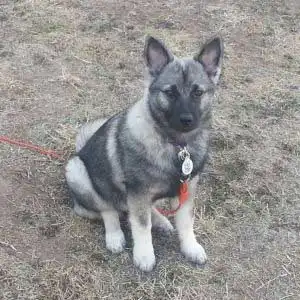
The Elk-Kee is a hybrid dog breed that results from crossing a Norwegian Elkhound with a Keeshond. Typically, these dogs weigh around 45 pounds, placing them in the medium size category. Their coats are generally short, thick, and smooth, with common hues such as black, silver, gray, and cream. Renowned for being excellent family pets, Elk-Kees are particularly affectionate with children and are usually quite trainable. Although the Keeshond is often regarded as the more trainable of the two parent breeds, both are suitable for first-time dog owners, indicating that the Elk-Kee would likely share this trait. Regular physical activity is crucial for this breed, and due to the shedding characteristics of both parent breeds, consistent grooming is important to keep their coat in good condition.
Breed Origin
The Elk-Kee is a hybrid dog breed that emerges from the crossbreeding of a Keeshond and a Norwegian Elkhound. The Norwegian Elkhound, known as Norway's national dog, is one of the oldest breeds, with roots dating back around a thousand years to the Viking Age. This ancient Northern Spitz-type dog was specifically developed for hunting and protection, demonstrating exceptional skills in tracking a variety of game, including moose, elk, bears, mountain lions, and rabbits. They would skillfully keep the prey at bay by barking until the hunter arrived. Additionally, they are prized as sled dogs. In Norwegian, this breed is referred to as Norsk Elghund, which means "Norwegian moose dog." The American Kennel Club officially recognized the breed in 1913. Conversely, the Keeshond is also a member of the Spitz or Nordic family and is often referred to as the Dutch Barge Dog. Its name pays tribute to Cornelis (Kees) de Gyselaer, a Dutch patriot who led a rebellion against the House of Orange. After the House of Orange regained power, the breed fell out of favor and was nearly lost. However, in 1905, Miss Hamilton-Fletcher (later Mrs. Wingfield-Digby) rediscovered the breed and introduced it to England. In 1920, Baroness van Hardenbroek traveled to the Netherlands to revive interest in the Keeshond, which led to the formation of the Nederlandse Keeshond Club in 1924. The first litter of Keeshonds in the United States was bred by Carl Hinderer in 1929, and the breed was registered with the American Kennel Club the following year, in 1930.
Breed Appearance
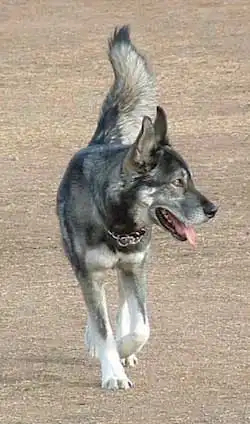
Elk-Kee dogs are medium-sized breeds that emerge from the crossbreeding of Keeshonds and Norwegian Elkhounds. These canines display a variety of colors, such as black, silver, gray, and cream, and are known for their short, dense, and smooth fur. The Norwegian Elkhound is recognized for its dark brown, oval-shaped eyes and ears that are set high, while the Keeshond is notable for its distinctive facial markings that resemble glasses, accentuated by a dark line that runs from the outer corner of each eye to the ear. Their eyes are almond-shaped, dark brown, and bordered by black rims, complemented by small, triangular ears that stand upright. Both parent breeds possess tails that curl over their backs, a characteristic trait likely passed down to the Elk-Kee.

Care Routine
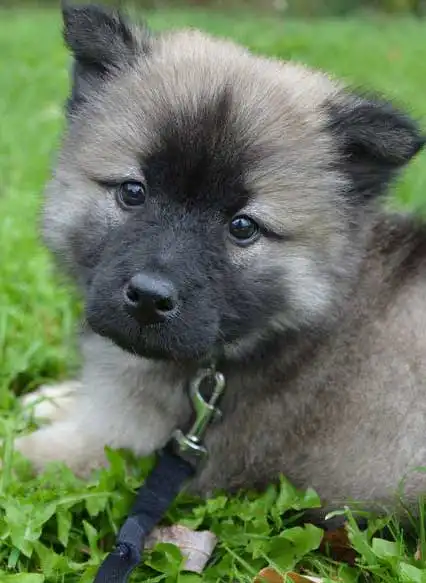
An Elk-Kee requires regular grooming to keep its coat in good condition, typically needing to be brushed around three times a week. Since both of its parent breeds are known for shedding, it’s expected that the Elk-Kee will shed as well. Fortunately, the fur of these breeds tends to be self-cleaning and doesn’t retain a doggy smell, which means that frequent baths are not necessary. Additionally, as neither parent breed is hypoallergenic, it’s unlikely that the Elk-Kee will be either. To maintain dental health, aim to brush your pet’s teeth two to three times a week. Regular ear inspections are also important; clean them with a damp cotton ball when needed. Lastly, monitor the nails and trim them if they grow too long.
Behavior & Temperament
Elk-Kees can make excellent family pets, displaying a warm and friendly attitude towards children, much like their parent breeds. These dogs are smart, but they need consistent and firm training to acknowledge you as the leader of the pack. Keeshonds are known for their independent nature and are effective watchdogs, yet they flourish when included in family activities, similar to the Norwegian Elkhound, which prefers not to be left out. Both breeds are highly loyal and may show possessiveness over their families. Training an Elk-Kee may be easier if it takes after the Keeshond, as they generally respond better to training than Norwegian Elkhounds. However, success in training any Elk-Kee will depend on the traits inherited from its parent breeds, and patience along with positive reinforcement is crucial for all. Both breeds require significant physical and mental engagement due to their high energy levels. While the Norwegian Elkhound is typically friendly with strangers, it can display aggression towards other dogs, making early socialization vital. On the other hand, Keeshonds are usually more cautious around unfamiliar people but tend to get along well with other dogs.


Play & Exercise
The Elk-Kee thrives on regular physical activity to maintain its health and happiness, reflecting the energetic nature of its parent breeds. The Norwegian Elkhound, in particular, requires ample exercise, ideally around an hour each day, which can include walks, play, or runs. It's crucial to keep them leashed, as they tend to wander off in search of interesting scents. Likewise, the Keeshond also needs daily exercise and enjoys both walks and runs, with a particular love for water that makes trips to the beach a great choice. When they’re feeling playful, they often spin in circles, indicating it’s time for some fun or a walk. Both breeds are better suited to colder climates than to heat. While having a fenced yard is ideal, the Elk-Kee can adapt to apartment living as long as it receives consistent exercise.
Things to Know
Cups Per Day
3.0 Cups
Daily Activity
60 Minutes
Average Lifespan
14 Years
Origin
Unknown
Type
Crossbreeds
Size
Medium
Origin Country
United States
Brush Frequency
Weekly
Coat Texture
Straight
Register
Your kids have been begging for a pet forever, and you've recently decided that it's time for your family to get a new addition -- a dog! While everyone is excited for the new arrival, you're wondering if you need to have a dog license. How much does it cost? Is it required? Where do you get one?
Member Clubs

PETINNATE
Other
Height & Weight
Weight
38 lbs (17 kg)Male: 40 lbs (18 kg) , Female: 35 lbs (16 kg)
Height
19 inches (48 sm)Male: 20 inches (51 sm) , Female: 19 inches (48 sm)
Eye Colors
Brown

Nose Colors
Black
Coat Colors
Black
Silver
Gray
Cream