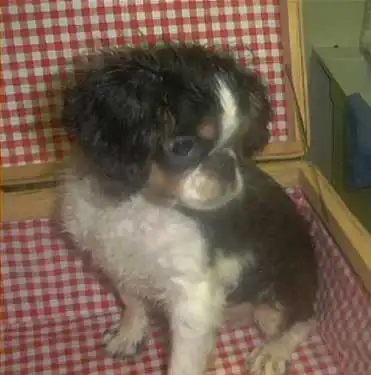
Engachon
The Engachon is an affectionate and spirited breed, born from the combination of the English Toy Spaniel and the Bichon Frise. This charming hybrid embodies the best qualities of its parent breeds, displaying a joyful and loving nature. Perfect for individuals who appreciate a furry friend to cuddle with, the Engachon proves to be a loyal companion. Although this small dog is full of energy, it is also easy to handle and care for.
Breed Origin
The English Toy Spaniel was initially acknowledged in England, although its roots are believed to trace back to Asia, where it is thought to have been gifted to royalty from Japan. Before 1903, the breed's four color variations—King Charles, Prince Charles, Blenheim, and Ruby—were regarded as separate breeds for exhibition purposes, despite being interbred. In 1904, the American Kennel Club unified these colors under the single designation of English Toy Spaniel. The breed's compact size and short muzzle are believed to have developed from early 20th-century breeding practices involving pugs. Although these dogs were originally intended for hunting, their diminutive size made them unsuitable for that task. Despite their hunting instincts, they are more inclined to relish the comforts of being a lap dog. The origins of the Bichon Frise are enveloped in a variety of theories. Some propose that the breed existed before the birth of Christ, while others link it to Maltese ancestry. Many accounts suggest that the Bichon Frise may have evolved from the Barbet or Water Spaniel, and possibly the Poodle, leading to the belief that the name “barbichon” originated from these breeds and was later shortened to “bichon.” Historically, Bichons were divided into four categories: bichon Bolognais, bichon Havanais, bichon Maltais, and bichon Teneriffe, all believed to have connections to the Mediterranean region. Sailors frequently traded these dogs, which became quite popular in Spain, where it is thought that Spanish sailors introduced them to Teneriffe, an island in the Canary Islands. In the 1300s, Italian sailors reintroduced the breed, leading to its rise in popularity among the Italian nobility. During the Renaissance, the Bichon Frise thrived in France, especially during the reign of Henry III. However, by the late 1800s, the breed's appeal diminished, and it became associated with fairs and circuses. In 1933, the president of the International Canine Federation suggested the name Bichon Frise for the breed. The first litter of Bichon Frise puppies born in the United States arrived in 1956.
Breed Appearance
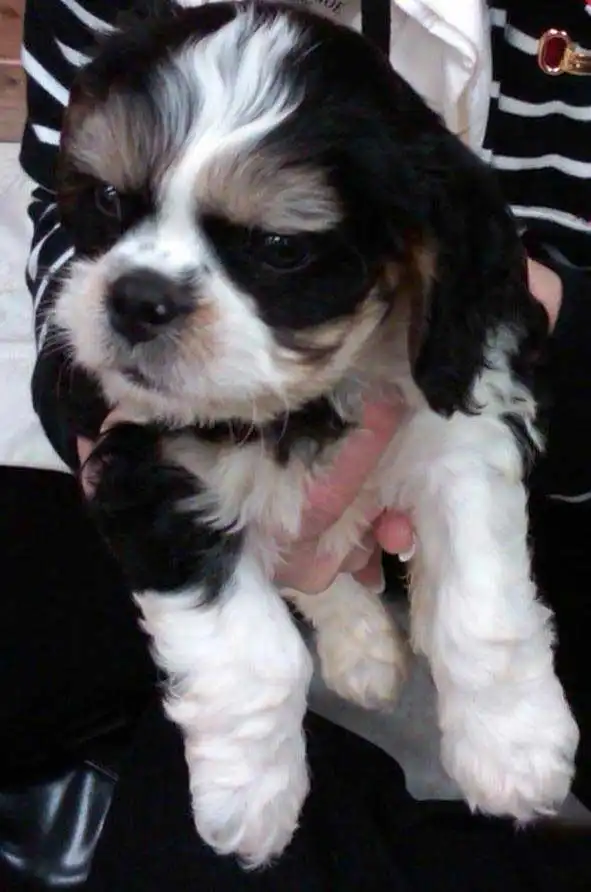
The spirited Engachon is a compact and sturdy breed, known for its powerful legs and small, furry feet. Its dense coat, which ranges from medium to long, often has a wavy texture, a trait inherited from its Bichon Frise ancestry. This breed stands tall with a posture that radiates vitality and assurance. Its eyes are round, bright, and brown, complemented by a black nose and a relatively short muzzle. The Engachon features long, fluffy ears, and its tail often has a feathery look.

Care Routine
The Engachon needs to be brushed at least every other day with a pin brush. If you find any tangles, a metal comb can be helpful. Bathing should be done only every few months or when your dog becomes especially dirty. To simplify grooming after a bath, make sure to detangle your Engachon beforehand, as failing to do so can make brushing difficult. It's also crucial to keep his long ears clean and dry. Occasionally, you might need to remove stray hairs from deeper in his ear canal; if you're unsure about this, a professional groomer can help. Furthermore, it's important to maintain cleanliness around your dog's face due to the long hair near his mouth and eyes. His eyes may water, and if the discharge isn't cleaned regularly, it can cause staining and other problems with his fur.
Behavior & Temperament
The Engachon is a lively and affectionate dog known for its gentle nature. Owners of this mixed breed often observe that, while he can be somewhat stubborn during training, he is usually easygoing and a pleasure to have around. He gets along well with both children and other dogs; however, due to his small size, it's crucial to keep an eye on him when he's with younger kids who may not be aware of his delicate build. Although he doesn't tend to bark excessively, he might vocalize his excitement but usually settles down quickly. Generally, he is sociable with strangers, but it's important to ensure he has plenty of chances to interact with people and other dogs to avoid any feelings of anxiety or irritability.

Play & Exercise
This lively and brave little companion is excited to accompany you on your adventures. Though he may be small, his passion for exploration is immense. He loves curling up for a warm, cozy afternoon but needs a couple of short walks each day to keep his legs active. Not fond of being alone for too long, he thrives with a variety of safe toys to keep him engaged while you're not around. If he doesn't receive enough mental and physical stimulation, he might entertain himself with some mischievous antics. However, with adequate daily exercise, he will be content and ready to nap while you’re away.
Things to Know
Cups Per Day
1.0 Cups
Daily Activity
30 Minutes
Average Lifespan
11 Years
Origin
Unknown
Type
Crossbreeds
Size
Small
Origin Country
Unknown
Brush Frequency
Weekly
Coat Texture
Wavy
Register
Your kids have been begging for a pet forever, and you've recently decided that it's time for your family to get a new addition -- a dog! While everyone is excited for the new arrival, you're wondering if you need to have a dog license. How much does it cost? Is it required? Where do you get one?
Member Clubs

PETINNATE
Other
Height & Weight
Weight
13 lbs (6 kg)Male: 13 lbs (6 kg) , Female: 13 lbs (6 kg)
Height
12 inches (30 sm)Male: 12 inches (30 sm) , Female: 12 inches (30 sm)
Eye Colors
Brown
Nose Colors
Black
Coat Colors
Black

White
Red