English Toy Terrier
Black and Tan Toy Terrier, Toy Manchester Terrier
Belonging to the Toy breed category, the English Toy Terrier is an exceptionally loyal and devoted pet, though it is relatively rare and classified as a vulnerable breed. These dogs flourish with attention and love being part of family life, easily blending into everyday activities. Unlike many other Terriers, they possess a moderate energy level; they enjoy both cozy moments curled up in your lap and playful interactions or leisurely strolls. Weighing just under 8 pounds, this small breed is ideal for apartment living or smaller homes. They typically get along well with children, but it’s essential to teach kids to handle them gently, as the dog may become anxious with rough play. This breed thrives on companionship, dislikes being left alone for long periods, and loves to snuggle. With their endearing looks and affectionate demeanor, the English Toy Terrier makes a delightful addition to any household.
Breed Origin
The English Toy Terrier presents an elegant appearance that might lead one to believe it is a contemporary breed; however, its roots extend back to the 16th century. Initially, this petite dog was a favorite among gentleman hunters, who would carry them in their pockets and release them to drive out foxes and other game when the prey was trapped. Moreover, the breed participated in the contentious sport of rat pitting, where dogs were set loose in an enclosed area filled with rats, and onlookers would bet on how quickly the dog could dispatch them. This practice was outlawed in 1898, prompting a transition for the breed from a working dog to a companion animal. As breeders aimed to produce smaller iterations of the English Toy Terrier, these new dogs encountered various health complications, which led to a decline in their popularity and brought them close to extinction. Thankfully, the dedication of a handful of enthusiastic breeders focused on improving the breed's health and vitality played a crucial role in its preservation. The English Toy Terrier eventually earned recognition in conformation shows, where its graceful appearance distinguished it from others. In the 1920s, the Kennel Club classified the breed by size, identifying the larger variant as the Manchester Terrier and the smaller one as the Miniature Black and Tan Terrier. It wasn't until the 1960s that the designation English Toy Terrier was officially adopted. This breed has navigated a challenging path, oscillating between phases of popularity and obscurity. We can only hope that it has now firmly established its place in the hearts of dog enthusiasts, allowing us to cherish the companionship of this delightful little Terrier for many years to come.
Breed Appearance
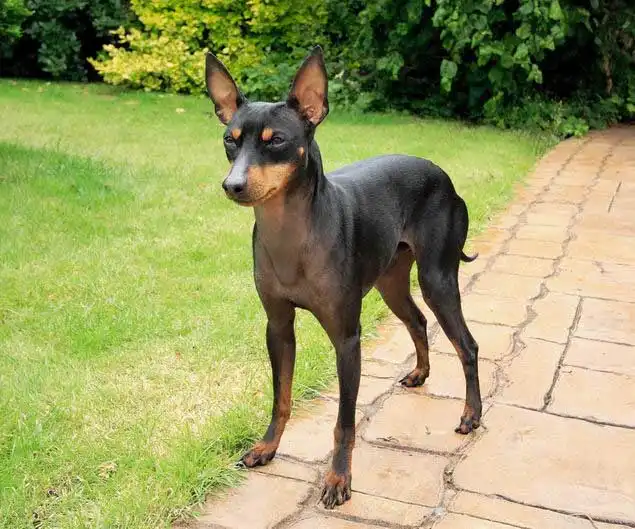
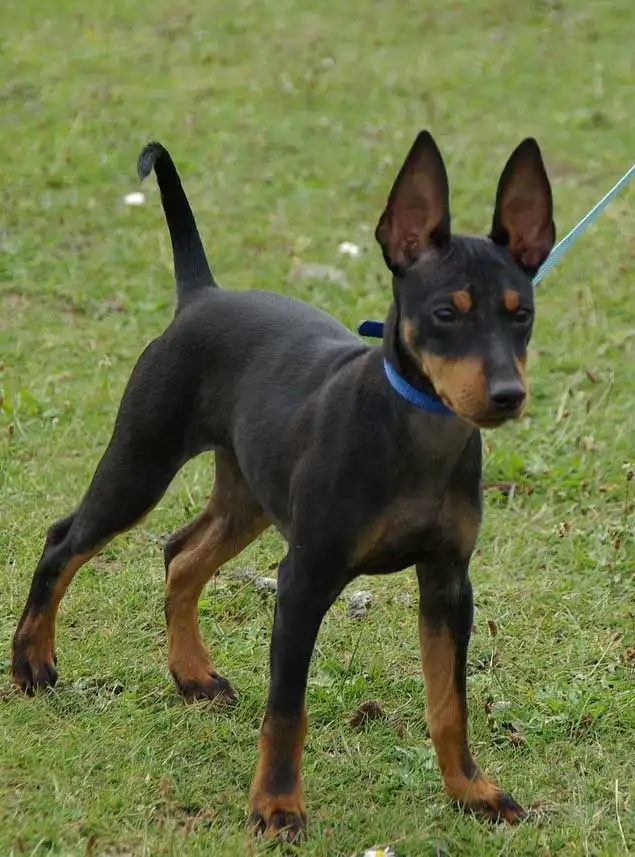
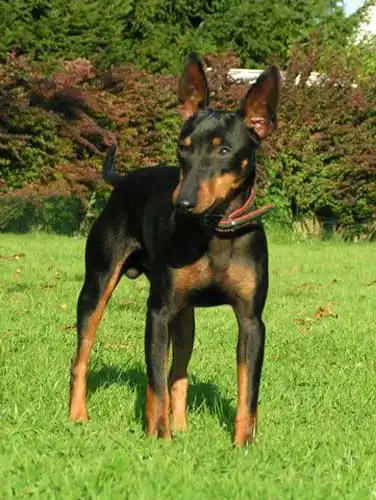
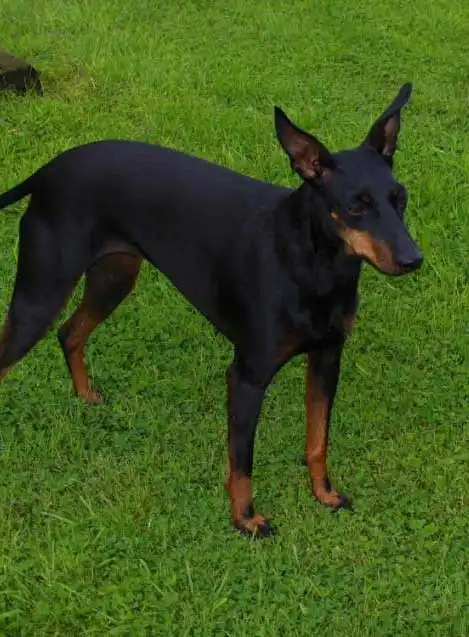
The English Toy Terrier is distinguished by its petite stature and harmonious proportions. This breed presents a captivating appearance, marked by a rich black and tan coat that features sharp, well-defined lines. The tan coloring is especially noticeable on the front and back legs, particularly around the knees. With a tapered muzzle and a scissors bite, their teeth fit together neatly. Their dark, almond-shaped eyes add to their expressive look, while their ears, which are set high and stand erect, further emphasize their inquisitive nature. The body of the English Toy Terrier is slightly elongated compared to its height, complemented by a long, slender tail that hangs down. These compact dogs have a narrow yet deep chest and a gracefully arched neck. Their legs are slender, ending in small, well-formed feet with an arch. The breed's official coloration is black, accented by distinct tan markings on the face, legs, and chest. Renowned for their alertness and curiosity, English Toy Terriers exhibit a lively personality, characterized by agility, playfulness, and a strong eagerness to please their human companions.
Care Routine
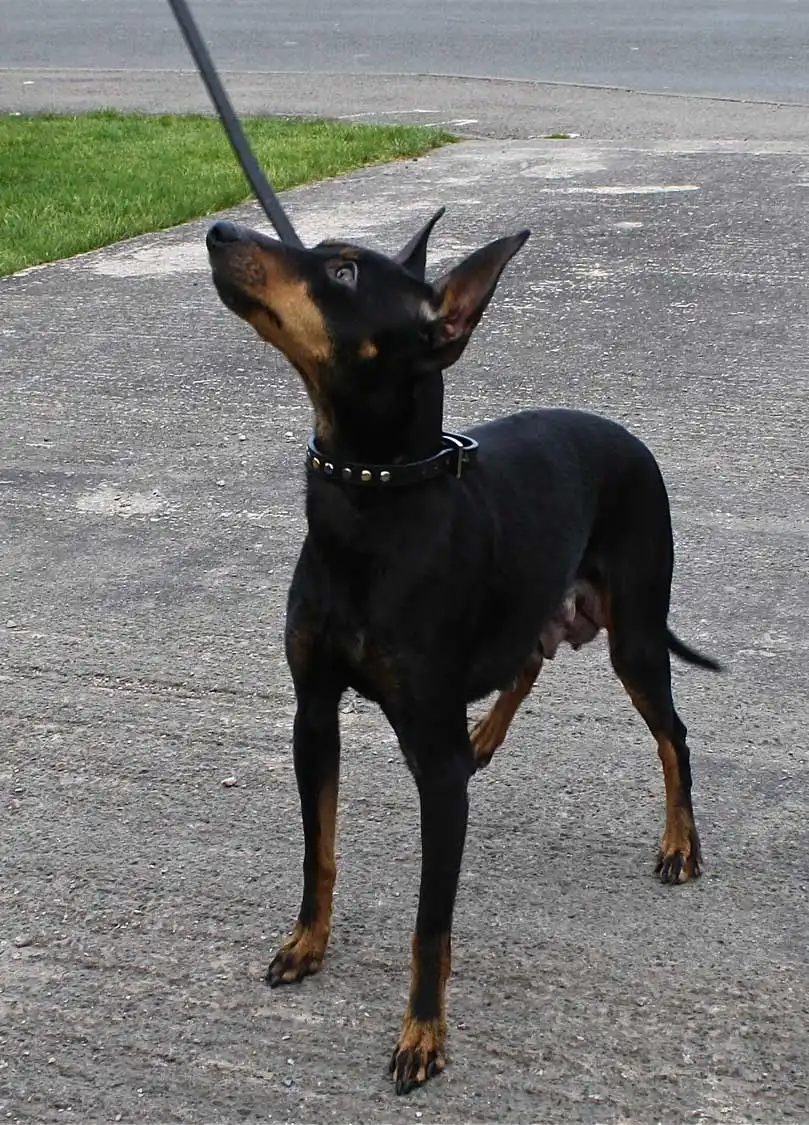
The English Toy Terrier is an exceptionally easy breed to care for, primarily due to its short, dense coat that fits closely to the body. Their well-defined black and tan fur gives them a consistently polished appearance. Although they are small in size, these dogs are remarkably intelligent, fiercely loyal, and deeply affectionate, making them excellent companions. However, they do require social interaction and may suffer from separation anxiety if left alone for long periods. This desire for companionship means they often enjoy being groomed. Regular brushing, once or twice a week, will keep their coat looking its best, while a gentle wipe with a soft, damp cloth will help maintain its cleanliness. Baths should only be given when absolutely necessary, using dog shampoos that are formulated to protect their skin's natural oils. Since these little dogs can be susceptible to skin sensitivities or allergies, it’s crucial to choose mild, gentle products to keep their skin healthy. Additional grooming tasks include brushing their teeth two to three times a week, checking their ears for any signs of infection, and trimming their nails. Once the grooming session is finished, it’s a great time for some cuddles and maybe a tasty treat for your affectionate English Toy Terrier.
Behavior & Temperament
The English Toy Terrier is known for its loving and affectionate temperament, paired with a curious and intelligent personality. However, they can sometimes display a stubborn side when things don’t go their way. This highlights the importance of training, which helps them manage their unique traits and learn proper behavior. With a blend of patience, kindness, and engaging training techniques, these small dogs respond positively to guidance. If they become bored, they might wander off and find themselves in trouble. These terriers make wonderful family pets, enjoying playtime with children as long as the interactions are gentle. Their low tendency to bark makes them well-suited for apartment living, especially in crowded areas. While they can handle being alone for brief periods, it’s advisable not to leave them unattended for too long, as boredom can lead to mischievous behavior. They thrive on human interaction and will miss their owners when left alone, cherishing moments of attention, petting, and cuddling. The English Toy Terrier is an excellent choice for both individuals and families. It’s crucial to offer them plenty of socialization opportunities, such as walks where they can encounter other dogs and their owners; otherwise, they may develop a fear of unfamiliar people. They enjoy walking by your side and are best kept on a leash, as their inquisitive nature can sometimes lead them into trouble. Overall, the English Toy Terrier is a charming companion, exuding warmth and affection.

Play & Exercise
The English Toy Terrier tends to be less active than many other Terrier breeds. This breed is satisfied with a daily walk and a few play sessions at home, which may involve chasing a ball or playing with children. They also love to curl up on your lap for some quality cuddle time, often followed by a nap. A daily walk around the neighborhood or a trip to the dog park offers a great opportunity for socialization, allowing your dog to meet different people and other dogs, which helps boost their confidence with both humans and canines. It's essential to keep this small dog on a leash, as their inquisitive nature might lead them to chase after small, fast animals, a behavior rooted in their background as hunting companions. They will enjoy having a variety of toys to play with at home, and when the kids come back from school, this charming little dog might even try to help with their homework or sneak a taste of their afternoon snack! The English Toy Terrier is truly a delightful companion—affectionate, loving, and always eager to be around people.
Things to Know
Cups Per Day
1.0 Cups
Daily Activity
60 Minutes
Average Lifespan
13 Years
Origin
16th Century
Type
Pure Breeds
Size
Small
Origin Country
Great Britain
Brush Frequency
Weekly
Coat Texture
Straight
Register
Your kids have been begging for a pet forever, and you've recently decided that it's time for your family to get a new addition -- a dog! While everyone is excited for the new arrival, you're wondering if you need to have a dog license. How much does it cost? Is it required? Where do you get one?
Member Clubs

PETINNATE
Other
Height & Weight
Weight
7 lbs (3 kg)Male: 7 lbs (3 kg) , Female: 7 lbs (3 kg)
Height
11 inches (28 sm)Male: 11 inches (28 sm) , Female: 11 inches (28 sm)
6 Months
4 lbs ( m 4 lbs, f 4 lbs )
5 inches ( m 5 inches, f 5 inches )
12 Months
7 lbs ( m 7 lbs, f 7 lbs )
9 inches ( m 9 inches, f 9 inches )
18 Months
7 lbs ( m 7 lbs, f 7 lbs )
11 inches ( m 11 inches, f 11 inches )
Eye Colors
Brown
Amber
Nose Colors
Black
Coat Colors
Brown
Black

Pied