Eskifon
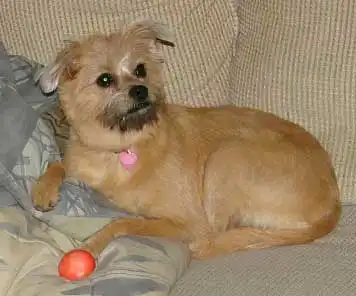
The Eskifon is a mixed breed that emerges from the combination of the American Eskimo Dog and the Brussels Griffon. This small dog is available in various colors and typically requires significant grooming, as both parent breeds have moderate upkeep needs. Eskifons are known for their friendly and loving nature towards their families, although they may initially be wary of strangers. Ideally, they should live indoors with their owners, but it’s crucial to provide them with regular, supervised outdoor exercise to maintain their health and fitness. Care must be taken to avoid overheating, especially if the dog inherits the short snout typical of the Brussels Griffon. While they can sometimes be a bit stubborn or assertive, their loyalty to their family remains steadfast.
Breed Origin
Details regarding the Eskifon breed are somewhat scarce, but by exploring its parent breeds, we can better understand what to expect from this hybrid. The American Eskimo Dog, once a highlight in traveling circuses, enchanted audiences with its beautiful white fur and remarkable tricks. This history as a performer significantly boosted its popularity throughout the United States. In 1917, the breed, previously known as the American Spitz, was renamed the American Eskimo Dog, although the reasons behind this change remain uncertain. Conversely, the Brussels Griffon hails from Belgium, where small terrier-like dogs were intentionally bred for hunting and pest control. This breed may have connections to the Affenpinscher, Pug, and English Toy Spaniel. A notable advocate for the Brussels Griffon was Queen Marie Henriette of Belgium, who helped elevate the breed's status across Europe. By the early 1890s, the Brussels Griffon had reached England and later made its way to the United States. Unfortunately, after World War II, the breed nearly faced extinction as dog ownership became a luxury that many could not afford. However, committed breeders in England worked tirelessly to keep the breed alive. Today, while still considered uncommon, the Brussels Griffon saw a revival in popularity during the 1990s, largely thanks to its role alongside Jack Nicholson in the film *As Good As It Gets*.
Breed Appearance
The Eskifon is anticipated to inherit characteristics from both of its parent breeds: the American Eskimo Dog and the Brussels Griffon. While detailed information about the Eskifon is scarce, we can glean valuable insights by exploring its progenitors. The American Eskimo Dog is known for its fluffy white fur, which consists of a double coat made up of a thick undercoat and a long, silky outer layer. This breed is easily recognizable due to its prominent ruff around the neck, feathery legs, and bushy tail. Although primarily white, its coat can also present a cream hue. Conversely, the Brussels Griffon typically comes in one of four color patterns: red with black highlights on the chin and whiskers, beige with a black mask and whiskers, black and tan, or solid black. As they mature, some Brussels Griffons may develop gray fur around their muzzles. Considering these traits, it is likely that your Eskifon will have a coat in shades of tan or white and will probably inherit the distinctive beard characteristic of the Brussels Griffon. Its tail is expected to be upright and may curl over its back.


Care Routine
The Eskifon is not anticipated to shed heavily, but it will need to be brushed at least twice a week. Depending on its parent breeds, it may have either a smooth, short coat or a longer coat that could be prone to matting. During peak shedding seasons, using a deshedding tool is advisable, while a pin brush will be adequate for the rest of the year. If your Eskifon inherits the Brussels Griffon’s unique beard and eyebrows, regular scissor trimming will help keep them neat. Should your hybrid have a coat similar to that of the Brussels Griffon, occasional professional grooming will be beneficial to maintain its appearance. Additionally, remember to check the ears for dirt accumulation and trim the nails if they grow too long. It's also important to brush the teeth at least twice a week. By following these straightforward care routines, your Eskifon will always look its best!
Behavior & Temperament
The American Eskimo Dog is an energetic and intelligent breed that thrives on activity, making him a joyful companion. He also excels as a watchdog. To keep him content and to avoid any destructive tendencies, it’s important to provide him with ample exercise on a regular basis. Although he can be quite spirited and sometimes a bit headstrong, consistent and firm training will help mold him into a wonderful pet. If left alone for too long, he may resort to excessive barking or chewing out of boredom. In contrast, the Brussels Griffon is generally more reserved, taking his time to warm up to new individuals. He may display a hint of bossiness and is deeply loyal to his family, often earning the nickname “Velcro dog” due to his desire to stay close to his loved ones. This breed can suffer from separation anxiety and may act out mischievously if he feels overlooked. Therefore, early socialization is vital to help him grasp what is expected of him. By blending the characteristics of both breeds, your Eskifon will be a loving and interactive companion who enjoys your company. Employing a gentle yet firm training style, along with plenty of socialization opportunities at the dog park, will help him feel at ease in various environments.


Play & Exercise
The Eskifon is an energetic breed that requires regular physical activity to stay happy and healthy. Without enough exercise, this dog may exhibit destructive behaviors. He thrives in an active family setting and relishes outdoor play, but it’s important for him to be indoors at night, as he enjoys being close to his family. Whether living in an apartment or a house with a yard, he will be satisfied as long as he can spend quality time with his loved ones. If your Eskifon has a shorter snout, akin to that of a Brussels Griffon, be mindful not to let him overdo it during exercise. If you notice signs of fatigue or excessive panting, it’s vital to bring him inside immediately. Additionally, he should always have access to fresh water.
Things to Know
Cups Per Day
1.0 Cups
Daily Activity
30 Minutes
Average Lifespan
11 Years
Origin
Unknown
Type
Crossbreeds
Size
Small
Origin Country
United States
Brush Frequency
Weekly
Coat Texture
Straight
Register
Your kids have been begging for a pet forever, and you've recently decided that it's time for your family to get a new addition -- a dog! While everyone is excited for the new arrival, you're wondering if you need to have a dog license. How much does it cost? Is it required? Where do you get one?
Member Clubs
PETINNATE
Other
Height & Weight
Weight
18 lbs (8 kg)Male: 18 lbs (8 kg) , Female: 18 lbs (8 kg)
Height
9 inches (23 sm)Male: 9 inches (23 sm) , Female: 9 inches (23 sm)
Eye Colors
Brown
Nose Colors
Black
Coat Colors
Isabella
White
Red
Black
Gray