Eskland
The Eskland is an energetic blend of the American Eskimo and the Shetland Sheepdog. Both of these parent breeds are recognized for their small to medium size, durability, and beautiful, dense double coats featuring long fur. The size and weight of an Eskland can vary, influenced by the traits of its parent breeds. As a designer dog, the Eskland is intentionally bred for companionship, making it a fantastic option for active families. Although it may be difficult to anticipate the exact characteristics of this hybrid due to limited data, potential owners can refer to the traits of the parent breeds for guidance.
Breed Origin
The Eskland is a modern hybrid breed that merges the American Eskimo dog with the Shetland Sheepdog. As a contemporary designer dog, it was developed mainly for companionship and does not have a long-standing historical background. Future owners can better understand the potential characteristics of their Eskland by looking into the histories, health issues, and temperaments of its parent breeds. The American Eskimo dog, often called the Eskie, boasts a deep-rooted history as a working dog, believed to have been in service for over 6,000 years, contributing its vigilant nature to the Eskland mix. This breed is also related to the white Pomeranian and the white Keeshond. The German Spitz was historically known as the Eskie, but it was renamed the American Eskimo due to anti-German sentiments during the World Wars. Conversely, the Shetland Sheepdog, or Sheltie, is a hardy breed that originated in the Shetland Islands, located between Scotland and Norway. This small dog bears a resemblance to the Collie and shares lineage with Border Collies. Originally bred to help herd and protect Shetland sheep, the Sheltie saw a decline in its original form by the 19th century due to extensive crossbreeding. For many years, there was considerable debate regarding the breed's standard appearance, but in 1930, Scottish and English clubs agreed that the Shetland Sheepdog should look like a miniature version of the rough-coated Border Collie, although the American Kennel Club officially recognized the breed in 1911. At present, the Eskland remains relatively unknown, with scant documentation available about this hybrid. While the American Eskimo dog is not as widely acknowledged as the Shetland Sheepdog, the Eskland has started to gain recognition from various organizations, including the American Canine Hybrid Club, the Designer Dogs Kennel Club, the Dog Registry of America, and the International Designer Canine Registry.
Breed Appearance
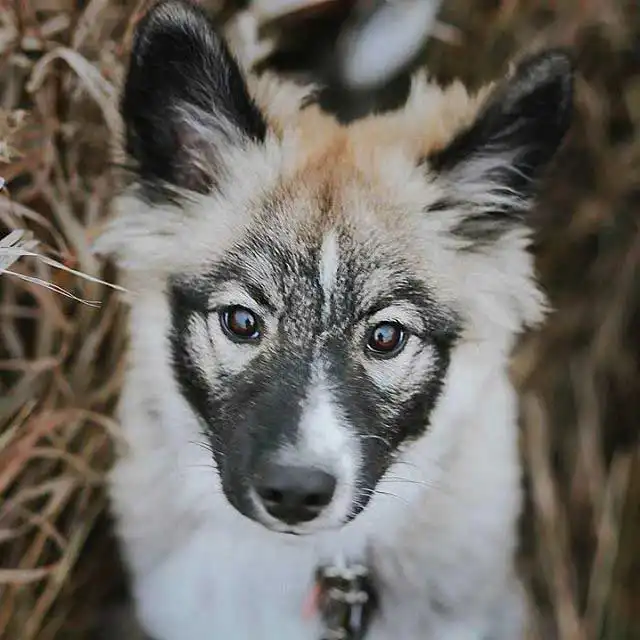
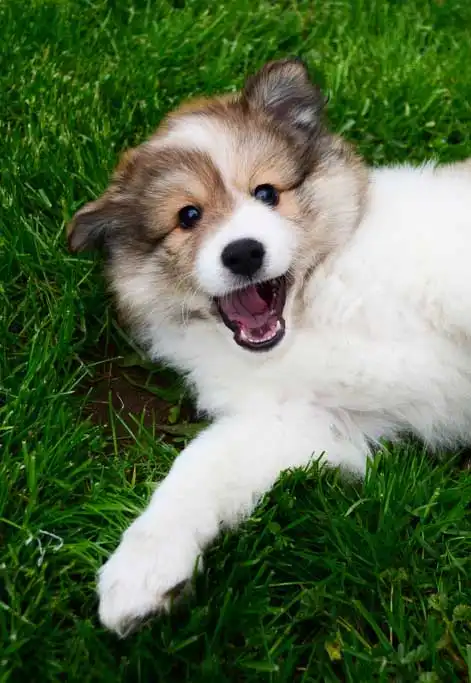
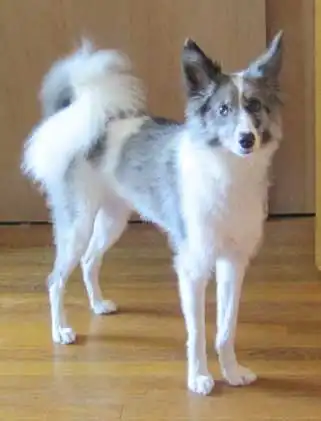
The Eskland is a sturdy dog that typically falls within the small to medium size category. There are noticeable differences in height and weight between males and females, and their fur often resembles that of the Shetland Sheepdog, although it can also be found in solid colors. The Eskland has an elongated head with a muzzle that is longer than that of the American Eskimo, and its dark brown, oval eyes reflect a curious and energetic personality. In instances where the coat is gray, the eyes may exhibit a merle pattern. The body of the Eskland is slightly longer than it is tall, and its tail is held high, gracefully arching over the back and featuring a generous amount of feathering.

Care Routine
The Eskland is not classified as a hypoallergenic breed and tends to shed significantly, especially during its shedding season. This hybrid has medium to long hair that requires daily brushing to remove loose hair and prevent tangles and mats. When grooming your Eskland, it’s also essential to gently clean its ears with a solution recommended by your veterinarian. Rather than giving your Eskland baths, prioritize regular brushing to help distribute its natural oils, as this breed is prone to skin problems. Furthermore, while grooming, make it a routine to clean your Eskland's teeth; starting this practice early will simplify the process.
Behavior & Temperament
The Eskland is an energetic and friendly breed that flourishes in a family environment. This sturdy hybrid has a special affinity for children and, while it may be a bit reserved with strangers at first, it soon warms up and shows its affectionate side. Renowned for its friendliness towards other dogs and its protective nature towards all household members, including cats, the Eskland greatly benefits from early and continuous socialization to strengthen these qualities. Furthermore, this clever mix is generally straightforward to train, but it needs plenty of mental stimulation and physical activity each day to stay content and satisfied.


Play & Exercise
The Eskland is a dynamic mix of two lively breeds, characterized by its sharp intelligence, which makes mental stimulation essential. To keep your Eskland engaged, it's beneficial to introduce games or present it with stimulating challenges. This breed can quickly grow bored with repetitive tasks, leading to potentially destructive behaviors. With adequate mental and physical activity each day, the Eskland can thrive in an apartment setting, though having a small yard is ideal for this hybrid. While it can adapt to different climates, it tends to favor cooler weather. Given their thick fur, Esklands are susceptible to overheating in warmer months, so it's crucial to provide them with ample water and shade during hot days.
Things to Know
Cups Per Day
1.0 Cups
Daily Activity
120 Minutes
Average Lifespan
14 Years
Origin
Unknown
Type
Crossbreeds
Size
Small
Origin Country
United States
Brush Frequency
Daily
Coat Texture
Straight
Register
Your kids have been begging for a pet forever, and you've recently decided that it's time for your family to get a new addition -- a dog! While everyone is excited for the new arrival, you're wondering if you need to have a dog license. How much does it cost? Is it required? Where do you get one?
Member Clubs

PETINNATE
Other
Height & Weight
Weight
15 lbs (7 kg)Male: 15 lbs (7 kg) , Female: 15 lbs (7 kg)
Height
15 inches (38 sm)Male: 15 inches (38 sm) , Female: 15 inches (38 sm)
Eye Colors
Brown

Nose Colors
Black
Coat Colors
Pied
Brown
Gray
White
Cream