Finnish Hound
Finnish Scenthound, Finnish Bracke, Suomenajokoira, Finsk Stovare
The Finnish Hound stands out as one of Finland's five native dog breeds, renowned for its exceptional hunting abilities, particularly in challenging, snowy terrains. This scent hound originated in the 19th century through the crossbreeding of various English Foxhounds with select French and German breeds. While it holds a cherished status in Finland and Sweden, it remains relatively unknown outside these regions. Today, the Finnish Hound is primarily valued as a hunting partner rather than a show dog or household pet. Nevertheless, its friendly nature makes it well-suited for family life. These dogs are affectionate and tend to form deep bonds with their owners. Although they display high energy during hunts, they are generally calm and sociable around people and other dogs. Finnish Hounds are known for their independent spirit, which can lead to determination and stubbornness. This trait requires an owner who is confident and patient, capable of establishing themselves as a leader to promote consistent positive behavior and obedience. Furthermore, as a highly active breed, they need regular, vigorous exercise to remain healthy, especially when not engaged in hunting.
Breed Origin
The Finnish Hound's early history may not be extensively recorded, but it is generally accepted that this breed originated in the early 19th century from a mix of English Foxhounds and various hounds from France and Germany. The primary aim of these initial breeding efforts was to create a sturdy dog capable of withstanding the severe winters of Finland and Sweden, equipped with impressive stamina for traversing challenging terrains, a unique bay to alert hunters, and the skill to track hares and foxes by scent. Once it was established, the Finnish Hound quickly became one of Finland's most cherished native breeds, renowned for its outstanding hunting prowess and admirable temperament. Although it still functions as a hunting dog in its native region, it is less frequently seen as a pet or in dog shows, and it is seldom found outside of Finland. The breed standard was first set in 1932, but it did not receive recognition from the UKC until 1996.
Breed Appearance
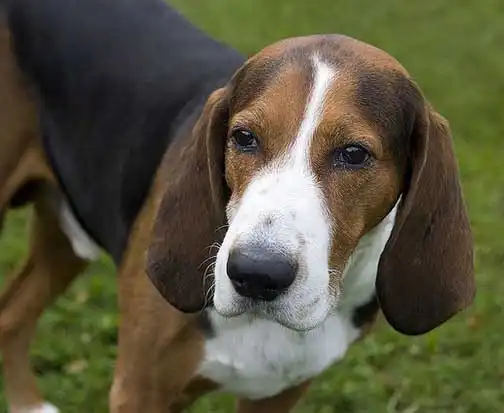
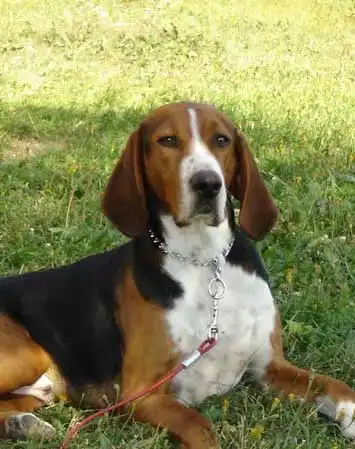
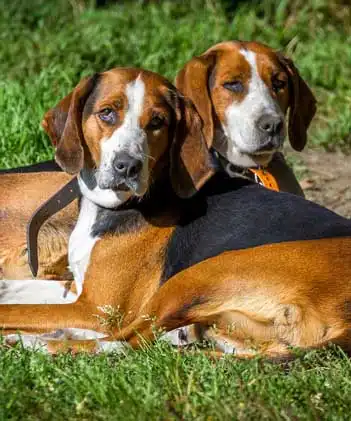
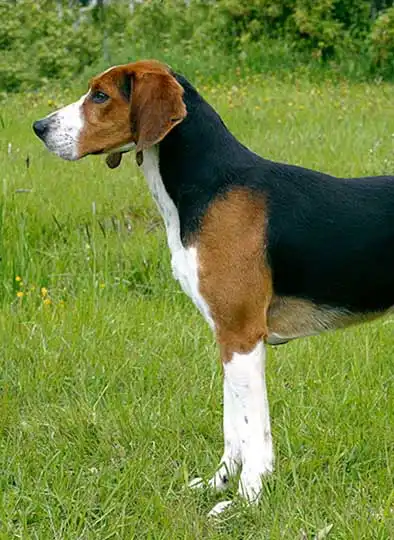
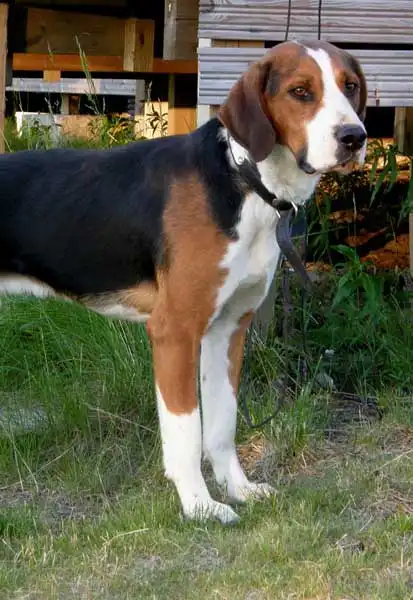
Finnish Hounds are medium-sized dogs, generally standing around two feet tall at the shoulder and weighing between 45 and 55 pounds, showcasing a robust and athletic build. Their coat is short, thick, and coarse, featuring a striking tri-color pattern that consists of a black saddle, prominent tan markings, and white accents on the chest, legs, paws, and fringes. This breed has a slightly rounded skull and a muzzle that is well-proportioned, enhanced by a gently curved upper lip, a black nose, oval dark brown eyes, and ears that hang down. They possess a strong musculature while maintaining a relatively light frame, which gives them a sleek appearance rather than a bulky one. Their posture is square, characterized by a straight back and a low-set, tapered tail.
Care Routine
Finnish Hounds are relatively low-maintenance dogs, requiring only moderate grooming. To keep their coats healthy, they should be brushed a few times a week. Given the density of their fur, a firm bristle brush is ideal for removing loose hair and distributing natural oils evenly. Generally, these dogs do not need baths since their fur has self-cleaning properties, unless they come into contact with particularly strong odors; in such instances, a dry shampoo can be used as needed. If they are not actively hunting, which naturally helps to wear down their nails, it’s essential to regularly check and trim their nails to prevent cracking or breaking. Furthermore, to maintain good dental health, their teeth should be brushed at least once a week.
Behavior & Temperament
Finnish Hounds are energetic and enthusiastic hunters, but they usually display a calm and friendly attitude in their daily lives. Their extensive background as hunting dogs has instilled a sense of independence in them, which can lead to a strong-willed and occasionally stubborn personality. Consequently, they thrive under the guidance of a knowledgeable and assertive owner who can help them understand appropriate behavior and respect boundaries. With proper training and socialization, these dogs form strong bonds with their families and are recognized for their loving disposition. They typically get along well with other dogs and people, especially if they are socialized early on. However, due to their natural hunting instincts, they are not ideal for homes with small pets that are not dogs, as they may instinctively exhibit predatory behavior. Furthermore, Finnish Hounds, bred for stamina, require plenty of daily exercise—whether through long walks or access to a large yard—and can become restless if they do not get enough physical activity.
Play & Exercise
Finnish Hounds are exceptionally active dogs, often outpacing many other breeds in terms of energy levels, making consistent exercise crucial for their health and behavior. For those chosen as hunting partners, participating in hunting activities on a semi-regular basis usually meets their exercise needs. However, if you intend to keep them purely as pets, it’s vital to provide them with at least 16 miles of walking or running each week, along with a daily minimum of approximately 45 minutes of physical activity. Engaging them in games like fetch can greatly improve their physical fitness and mental engagement, which is essential for their overall well-being and happiness.
Things to Know
Cups Per Day
3.0 Cups
Daily Activity
45 Minutes
Average Lifespan
11 Years
Origin
Early 19th Century
Type
Pure Breeds
Size
Medium
Origin Country
Finland
Brush Frequency
Weekly
Coat Texture
Straight
Register
Your kids have been begging for a pet forever, and you've recently decided that it's time for your family to get a new addition -- a dog! While everyone is excited for the new arrival, you're wondering if you need to have a dog license. How much does it cost? Is it required? Where do you get one?
Member Clubs

PETINNATE
Scenthound

UKC
Scenthound
Height & Weight
Weight
50 lbs (23 kg)Male: 50 lbs (23 kg) , Female: 50 lbs (23 kg)
Height
22 inches (56 sm)Male: 23 inches (58 sm) , Female: 22 inches (56 sm)
6 Months
35 lbs ( m 35 lbs, f 35 lbs )
15 inches ( m 15 inches, f 15 inches )
12 Months
42 lbs ( m 42 lbs, f 42 lbs )
18 inches ( m 18 inches, f 18 inches )
18 Months
50 lbs ( m 50 lbs, f 50 lbs )
21 inches ( m 21 inches, f 21 inches )
Eye Colors
Brown

Nose Colors
Black
Coat Colors
Brown
White
Black