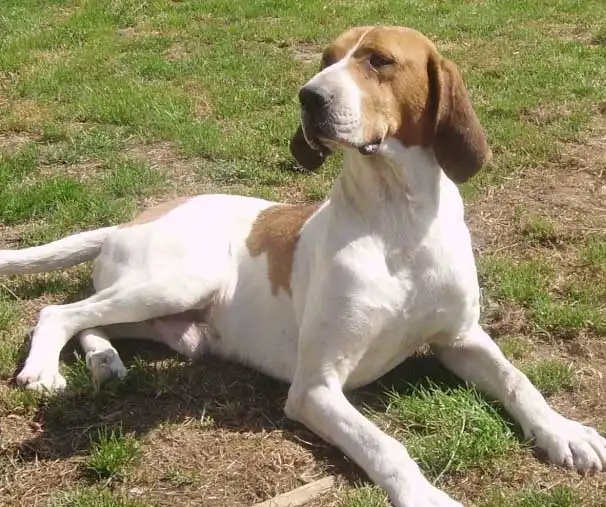
Francais Blanc et Orange
French White and Orange Hound, White and Orange French Hound, Francais Blanc et Orange
The Chien Francais Blanc et Orange is relatively rare outside of its native France. It is part of a trio known as the Chien Francais, or French Hounds, which also encompasses the Chien Francais Tricolore and the Chien Francais Blanc et Noir. Initially, these breeds were grouped together, but over time, dog enthusiasts have differentiated them and created specific breed standards for each. The Chien Francais Blanc et Orange is an exuberant and spirited dog, originally developed to work in packs as a scent hound. Given its high energy, this breed is not ideal for apartment living, as it requires plenty of space to run and engage in play.
Breed Origin
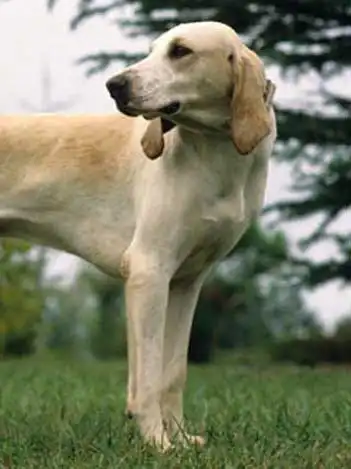
The Chien Francais Blanc et Orange was developed in the early 20th century and is thought to have ancestry linked to various French and English hounds, particularly the now-extinct Hound of Saintonge. Experts also propose that this breed may have connections to certain French Braque breeds, especially the Billy, a pointing dog that emerged in the 19th century and functioned as both a pointer and a scent hound. Similar to the Chien Francais Blanc et Orange, the Billy primarily hunted in packs alongside other dogs. While the Chien Francais breed has roots that extend before the 1900s, it was only when breed enthusiasts decided to classify it into three distinct breeds that the Chien Francais Blanc et Orange was recognized with its own breed standard. The other two breeds in this classification are the Chien Francais Tricolore and the Chien Francais Blanc et Noir. Collectively, dog enthusiasts sometimes refer to these three breeds as the Youngest, Rarest, or Newest French Hounds. Due to its relatively recent establishment, information about the Chien Francais Blanc et Orange remains somewhat scarce. In 1957, a committee was formed to reevaluate the classifications and standards of all hounds believed to have originated in France. This committee chose to categorize the breeds into two main groups: Anglo-French and French, differentiating those with English heritage from those without. The Chien Francais Blanc et Orange gained official recognition from the United Kennel Club in 1996 and is also acknowledged by the Federation Cynologique Internationale.
Breed Appearance
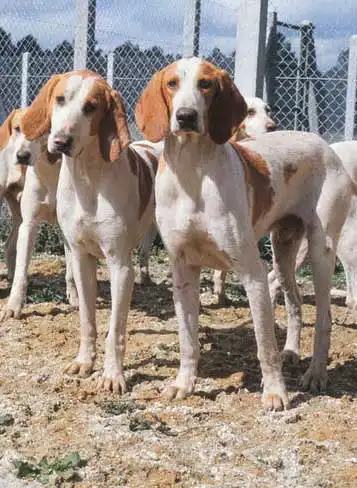
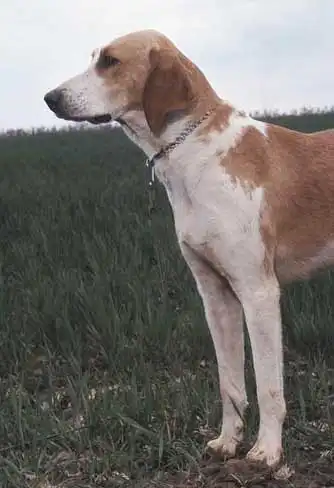
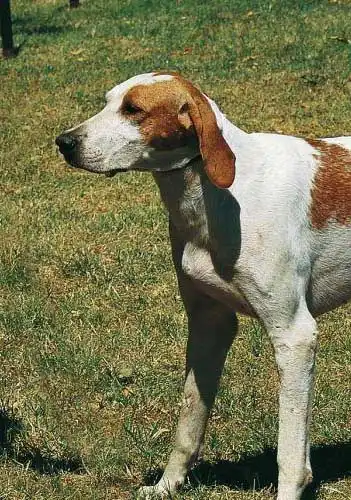
The Chien Francais Blanc et Orange is a large hound recognized for its elegant yet sturdy build. This breed should display well-defined musculature without appearing overly bulky. It features a slightly rounded head, complemented by long legs and drooping ears. The dome of the head is subtle, with the occipital bone being only faintly visible, while the arches above the eyes are notably pronounced. The ears are situated just below the eye line, characterized by their thin, soft, and slightly wrinkled texture, extending about two fingers beyond the nose when pulled forward. This breed has a relatively large, well-structured nose with open nostrils, which can be either black or a brown-orange shade. The eyes should be large and dark brown, as lighter colors are not acceptable. The Chien Francais Blanc et Orange boasts a smooth, fine coat that tends to thicken in colder weather. There are only two permissible color combinations for this breed: white with lemon or white with orange, with the orange never being dark or reddish.
Care Routine
The Chien Francais Blanc et Orange is a breed that demands very little grooming. Its sleek, fine coat tends to shed lightly during the spring and summer seasons. Generally, a monthly grooming session with a soft slicker brush or hound mitt is adequate to keep its coat healthy. For those planning to enter their dog in conformation shows, weekly brushing is advisable. This breed typically does not carry an odor, and regular baths are not necessary unless the dog has been hunting and has come into contact with something unpleasant. When a bath is required, it’s important to use a mild shampoo and ensure that all residue is thoroughly rinsed away to avoid skin irritation. The breed's long, drooping ears also need attention; after bathing, it’s crucial to dry the insides of the ears properly to prevent moisture accumulation that could lead to infections. Furthermore, weekly ear cleaning and nail trimming as needed will contribute to the overall well-being of the dog.
Behavior & Temperament
The Chien Francais Blanc et Orange is a lively and clever hound, recognized for its vocal tendencies, which can be quite pronounced and potentially bothersome to neighbors. This breed flourishes in a large yard with a sturdy fence, where it can burn off energy, and it requires daily playtime or interaction with its owner. Leaving this dog alone in the yard for long stretches can result in disruptive behavior. As a breed that thrives in packs, the Chien Francais Blanc et Orange often enjoys the company of other dogs, sometimes preferring their presence over that of humans. Early socialization and training are crucial for this breed, and the training process is usually quite manageable. To help your dog grow into a loving family companion, ensure it receives plenty of mental and physical engagement. Aim to spend around an hour outdoors with your dog each day, whether through walks, scent activities, or games of fetch.

Play & Exercise
The Chien Francais Blanc et Orange is a highly active breed that needs plenty of opportunities to burn off energy. This dog is not suited for apartment living; rather, it flourishes in a large, securely fenced yard where it can run and play without restrictions. As a scent hound, it possesses a strong instinct to track scents, making it crucial to engage him in stimulating activities. Involving your Chien Francais Blanc et Orange in scent work not only fosters a delightful bonding experience but also allows him to channel his excess energy. Furthermore, participating in barn hunts and various dog sports can provide excellent outlets for his vigor, as these activities stimulate both his intellect and olfactory abilities.
Things to Know
Cups Per Day
3.0 Cups
Daily Activity
60 Minutes
Average Lifespan
14 Years
Origin
1900s
Type
Pure Breeds
Size
Large
Origin Country
France
Brush Frequency
Monthly
Coat Texture
Straight
Register
Your kids have been begging for a pet forever, and you've recently decided that it's time for your family to get a new addition -- a dog! While everyone is excited for the new arrival, you're wondering if you need to have a dog license. How much does it cost? Is it required? Where do you get one?
Member Clubs

PETINNATE
Scenthound

UKC
Scenthound
Height & Weight
Weight
65 lbs (29 kg)Male: 65 lbs (29 kg) , Female: 65 lbs (29 kg)
Height
26 inches (66 sm)Male: 26 inches (66 sm) , Female: 26 inches (66 sm)
6 Months
32 lbs ( m 32 lbs, f 32 lbs )
20 inches ( m 20 inches, f 20 inches )
12 Months
50 lbs ( m 50 lbs, f 50 lbs )
23 inches ( m 23 inches, f 23 inches )
18 Months
65 lbs ( m 65 lbs, f 65 lbs )
26 inches ( m 26 inches, f 26 inches )
Eye Colors
Brown

Nose Colors
Black
Brown
Coat Colors
White
Fawn