French Bull Dane
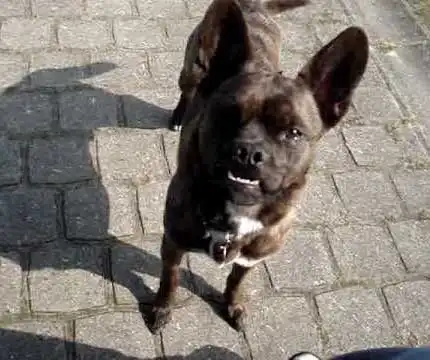
The French Bull Dane is an intriguing hybrid, merging the exceptional traits of two notable breeds: the Great Dane and the French Bulldog. Each breed brings its own unique strengths to the mix, resulting in a playful, affectionate, and loyal companion that provides steadfast love to its family. While this breed is still relatively new and not extensively documented, we can draw conclusions about its health and temperament based on the characteristics of its parent breeds. However, due to the considerable differences in size, weight, and energy levels between the Great Dane and the French Bulldog, it can be difficult to predict the exact appearance and activity needs of this designer dog.
Breed Origin
The French Bull Dane is a hybrid breed that emerged from the crossbreeding of the Great Dane and the French Bulldog. The French Bulldog itself is a descendant of the toy English Bulldog and gained significant popularity in England during the 1850s and 1860s. This breed was particularly favored by lacemakers in Nottingham, who often took their dogs with them when relocating to France. It was in France that these dogs were interbred with other breeds, leading to their unique name. They quickly became cherished companions among various social strata, from rural landowners to wealthy urban residents. Serving dual roles as pets and watchdogs, their popularity soared after the French Bulldog Club of America hosted a specialty show in 1898 at the Waldorf Astoria ballroom in New York. Although the breed faced a decline in numbers during World War I and an even sharper decrease during the Great Depression, it experienced a resurgence in popularity during the 1980s and 1990s. The precise origins of the Great Dane remain somewhat ambiguous, but it is believed that their ancestors have been around for thousands of years. Artistic depictions resembling the Great Dane can be found in Egyptian monuments dating back to approximately 3000 B.C., and similar dogs are mentioned in Chinese texts from 1121 B.C. The Irish Wolfhound and English Mastiff are thought to be among the breed's forebears. Historically, these large dogs were employed for hunting European wild boar in Germany, a task that suited their brave and tenacious nature. They were also favored as guard dogs and companions by the German nobility. In 1876, the breed was officially recognized as the National Dog of Germany. Worldwide, the Great Dane is known by various names; in Italy, they are called Alano, which translates to "mastiff," while in Germany, they are referred to as Deutsche Dogge. The Deutsche Dogge Club of Germany was founded in 1891, and the breed made its way to the United States by the mid-1800s. The American Kennel Club officially recognized them as a breed in 1887, and the Great Dane Club of America, originally named the German Mastiff Club of America for its first two years, was established in 1889.
Breed Appearance
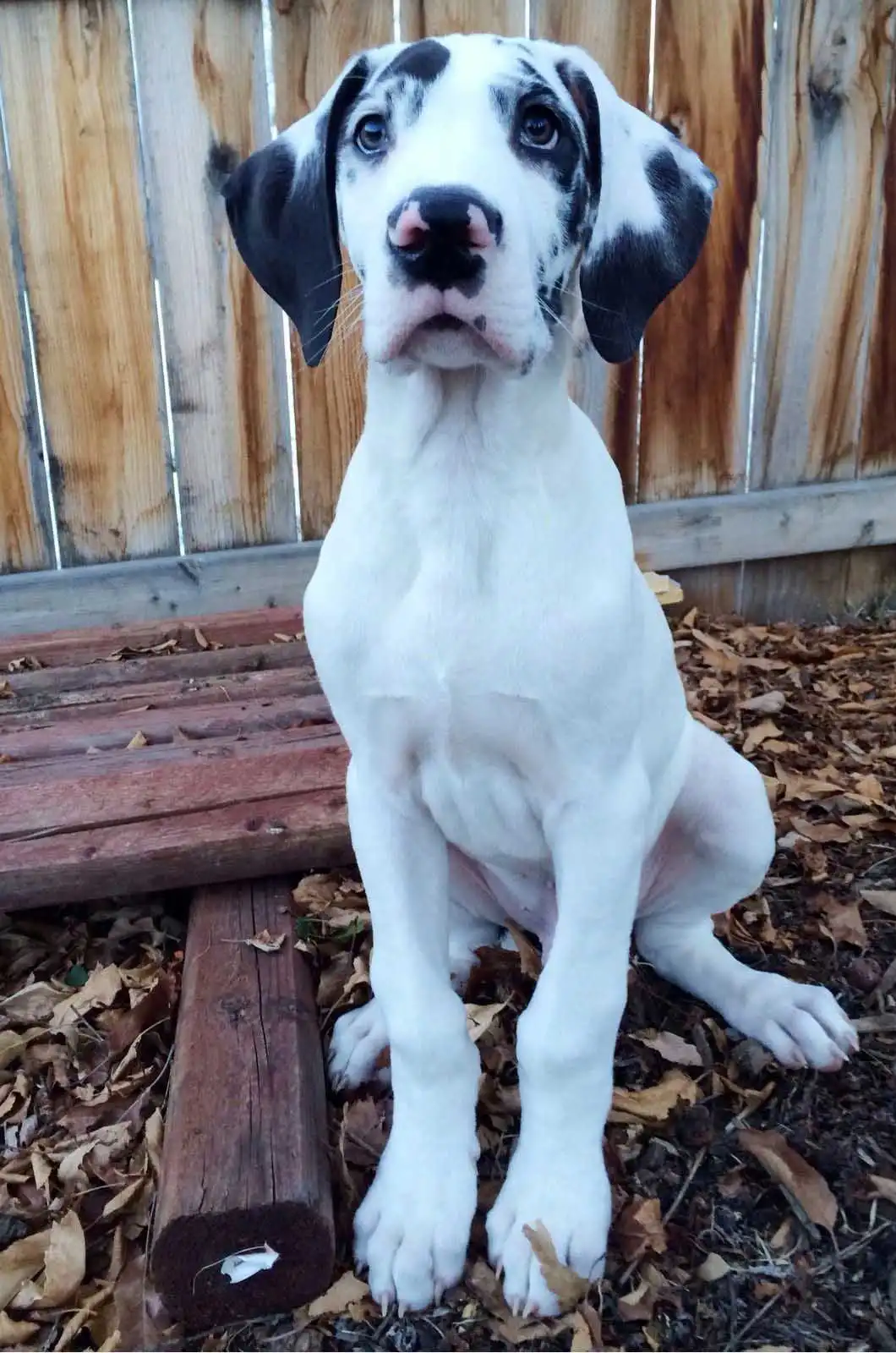
The French Bull Dane is a distinctive breed that merges the sturdy and compact build of the French Bulldog with characteristics reminiscent of Pugs, including their short snouts and bat-like ears. This breed features a rounded forehead and a flat, well-proportioned head, typically displaying an underbite and large, round eyes. Their tails can be either corkscrew or straight, differing from one individual to another. Overall, the breed has a somewhat square appearance, with the length from the withers to the tail being roughly equal to their height at the withers. They also exhibit a pear-shaped body, characterized by shoulders that are slightly wider than their hindquarters. In contrast, the Great Dane is known for its large, elegant, and muscular physique, featuring a square build where height and length are well-balanced. Their heads are square, and they have medium-sized ears that are positioned high; these ears may be cropped, but if left natural, they typically fold forward towards the cheeks. Their tails, which are never cropped, taper to a point. The French Bull Dane inherits a unique combination of traits from both parent breeds, leading to considerable diversity among puppies in the same litter.


Care Routine
The French Bull Dane features a coat that is relatively low-maintenance, benefiting from the easy-care characteristics of its parent breeds. To keep the French Bulldog's coat clean and shiny, weekly brushing is advisable, although frequent baths or grooming sessions are not required. In contrast, Great Danes are known for their considerable shedding, necessitating weekly brushing with a firm bristle brush. Some owners may choose to seek professional assistance for nail trimming and bathing, as the size of the French Bull Dane can complicate these tasks if the dog is not cooperative. It’s crucial to trim their nails every one to two months. Furthermore, daily brushing of their teeth is recommended, or at least two to three times a week, and it’s essential to check and clean their ears weekly to prevent infections.
Behavior & Temperament
Upon exploring the parent breeds of the French Bull Dane, it becomes evident that this mixed breed is poised to be a wonderful companion. The French Bulldog is celebrated for its affectionate and endearing personality. Although these small dogs can sometimes display a playful yet stubborn attitude during training sessions, they are usually quite manageable. They generally coexist harmoniously with other animals and humans. This breed tends to forge deep connections with their families and may suffer from sadness or separation anxiety if left alone for long durations. Conversely, Great Danes are recognized for their power, intelligence, and courage—qualities that historically made them excellent hunters of wild boar. In contemporary times, they are valued as devoted and loving pets. Their substantial size also contributes to their role as effective guard dogs, as they can appear quite intimidating. Despite their protective nature, Great Danes are gentle giants who typically do not pose a threat unless absolutely necessary. It is crucial to supervise young children in their presence, as these dogs may unintentionally forget their own size and strength. They possess a moderate level of intelligence, which generally facilitates a straightforward training process.


Play & Exercise
The French Bulldog is typically a low-energy breed, satisfied with just a few brief walks each day, along with some playtime and games of fetch. On the other hand, Great Danes are generally more active during their younger years and need regular walks to stay healthy. To prevent joint problems, it’s crucial to avoid letting your French Bull Dane jump or run too much while they are still growing. The exercise demands of this mixed breed can differ based on the dog's individual traits, but they usually need between 30 to 120 minutes of physical activity each day, mirroring the requirements of their parent breeds. Ultimately, the specific exercise needs will depend on the dog's unique personality and temperament.
Things to Know
Cups Per Day
3.0 Cups
Daily Activity
120 Minutes
Average Lifespan
9 Years
Origin
Unknown
Type
Crossbreeds
Size
Large
Origin Country
Unknown
Brush Frequency
Weekly
Coat Texture
Straight
Register
Your kids have been begging for a pet forever, and you've recently decided that it's time for your family to get a new addition -- a dog! While everyone is excited for the new arrival, you're wondering if you need to have a dog license. How much does it cost? Is it required? Where do you get one?
Member Clubs

PETINNATE
Other
Height & Weight
Weight
85 lbs (39 kg)Male: 85 lbs (39 kg) , Female: 85 lbs (39 kg)
Height
22 inches (56 sm)Male: 22 inches (56 sm) , Female: 21 inches (53 sm)
Eye Colors
Brown
Nose Colors
Black
Coat Colors
Fawn
Brindle
White
Black
Blue