Greenland Dog
Greenland Husky, Grønlandshund/Grünlandshund, Esquimaux Dog
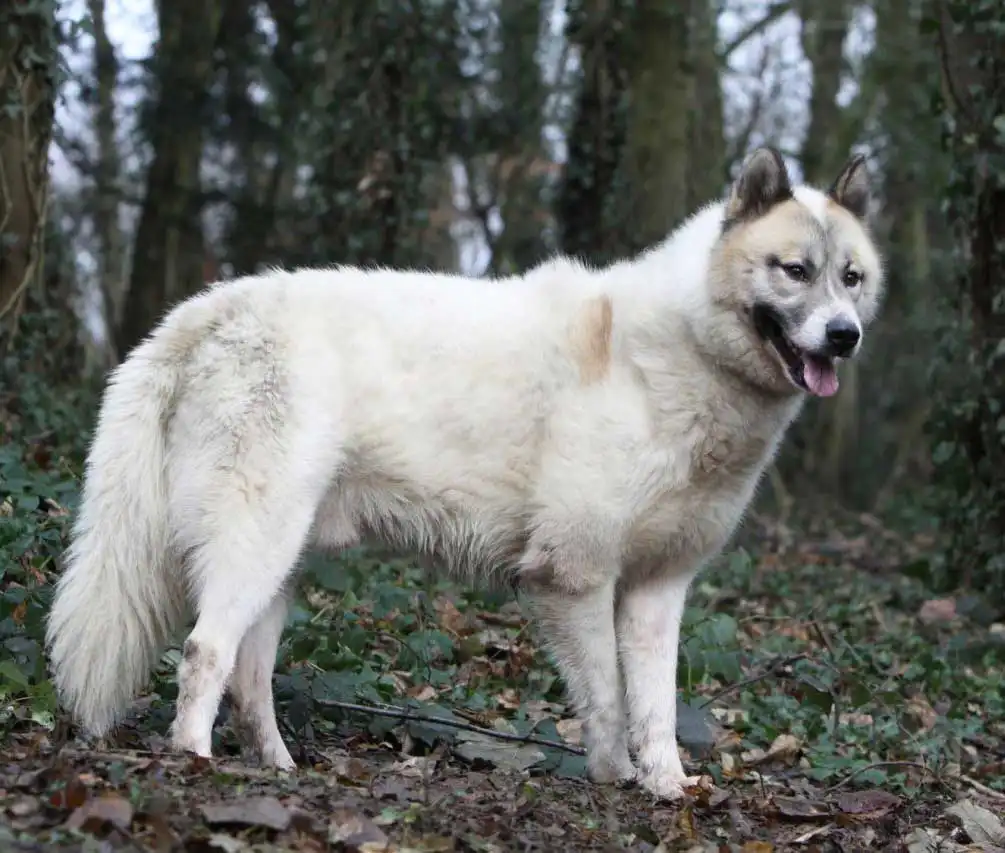
The Greenland dog, one of the rarest and oldest breeds in North America, embodies a timeless essence marked by an unquenchable thirst for both work and play. Outside its homeland of Greenland, this breed is rarely seen due to its isolation, thick fur, and unwavering temperament, which render it ill-equipped for climates that differ from its natural surroundings. With an exceptionally dense double coat, these dogs flourish in extreme cold, withstanding temperatures as low as -75°F, and their furry, upright ears are remarkably resistant to frostbite. While they are known for their affectionate and generally sociable nature, they require an experienced and consistently assertive owner to effectively manage their behavior, even after extensive training. Bred for high energy and labor, Greenland dogs possess an innate drive to work. Their impressive stamina and sturdy build make them excellent candidates for sledding. Historically, they have also been utilized in hunting polar bears and seals, thanks to their acute sense of smell, refined hunting instincts, and remarkable mental and physical endurance. Despite their impressive capabilities and well-rounded personalities, they do not thrive in confined spaces, environments that lack adequate exercise, or without a strong leader to guide them.
Breed Origin
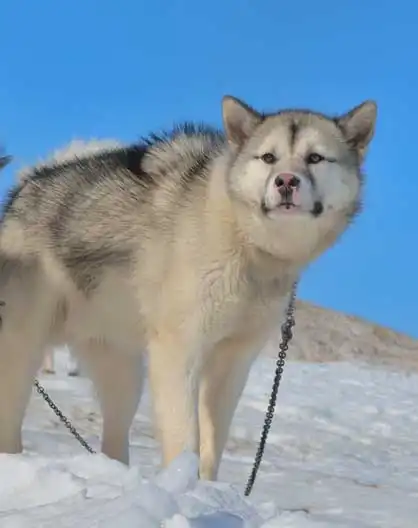
Greenland has a deep and varied history, much of which is not well-documented, stretching back approximately 12,000 years to its ancient beginnings in Siberia. Historical records suggest that around 4,000 to 5,000 years ago, the Sarqaq people, who also originated from Siberia, brought a dog breed similar to the modern Greenland dog to the region. However, findings from the New Siberian Islands indicate that this breed might have been established nearly 7,000 years ago, making it one of the oldest dog breeds still in existence. European settlers, especially the Vikings, adopted various hunting and sledding methods from the Inuit, training dogs specifically for these purposes. The Greenland dog is thought to have first reached England around 1750, but it only gained notable attention when a female was showcased at one of Britain’s earliest dog shows in 1875. While the breed was recognized by the Kennel Club in its early years in 1880, it did not receive acknowledgment from the United Kennel Club until 1996. Throughout their history, Greenland dogs have been companions to famous explorers on their Arctic and Antarctic journeys, renowned for their exceptional endurance and strength. Since the 1900s, as alternative transportation methods emerged, their numbers have dwindled, yet they are still used in Greenland and similar climates. Outside of Greenland, they are quite rare.
Breed Appearance
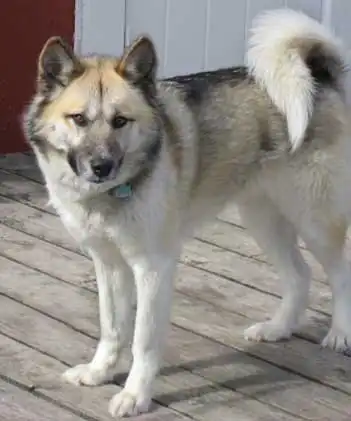
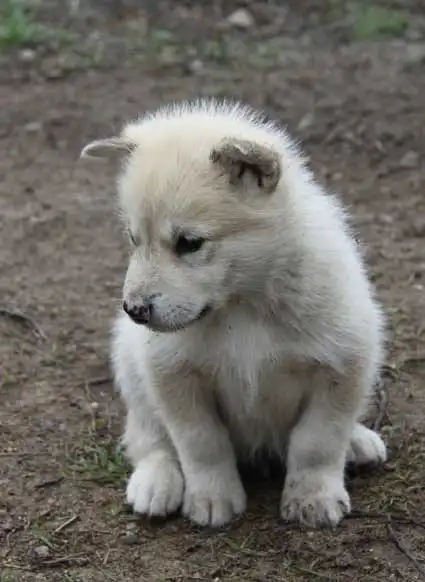
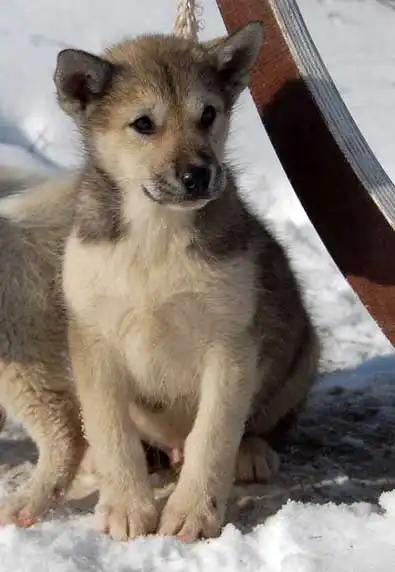
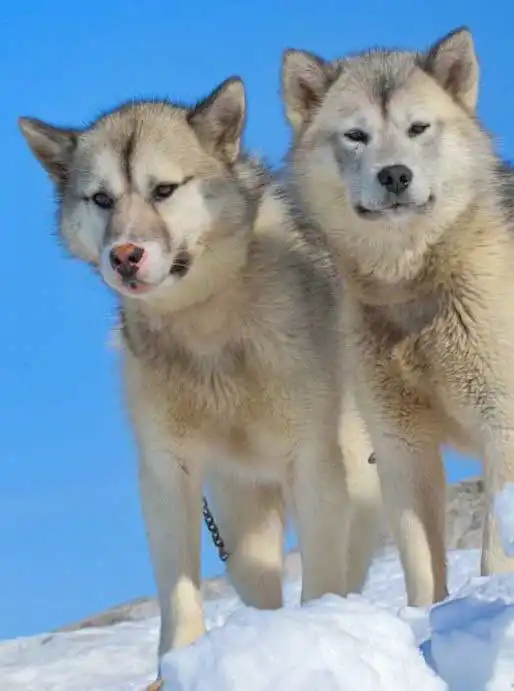
The Greenland dog is a strong and sturdy breed, typically reaching a height of around two feet and weighing approximately 70 pounds. This breed is distinguished by its thick double coat, which includes a soft, woolly undercoat and a coarse, waterproof outer layer, offering exceptional protection against cold weather, water, and potential dangers. The fur is less dense on the face and legs, becoming more abundant along the neck, back, and chest, and it culminates in a notably long, curly tail that often forms a complete loop resting to one side of the hindquarters. With a broad, wedge-shaped head that resembles that of a wolf, the Greenland dog has a shorter muzzle and upright ears, both lined with dense fur to guard against frigid temperatures. Its powerful, well-muscled legs support large paws that are equipped with substantial pads covered in thick fur. The breed's coat comes in a variety of colors, including white, black, gray, brown, and red.
Care Routine
Although Greenland dogs have a dense coat, they are relatively low-maintenance compared to many other breeds. Their long fur should be brushed two to three times a week to prevent matting and tangling, but they generally shed very little. It's also important to regularly trim their paws to avoid matting. They only need a bath every two to three months since they naturally keep themselves clean. Additionally, regular tooth brushing is recommended due to their diet, and nail trimming should be performed as necessary by the owner.
Behavior & Temperament
Greenland dogs are typically friendly towards people, but they often develop a deep connection with just one owner, if any, due to their independent and occasionally aloof temperament. Although they are intelligent, they need thorough training and a strong leader to ensure they remain disciplined, as their determined nature can result in stubborn behavior if not properly guided. These dogs are known for their high energy and require significant exercise, often outpacing their owners in stamina. Their natural work ethic makes them ideal for roles such as sled or hunting dogs; however, they can quickly become bored and frustrated without engaging activities or regular social interaction. When playing, they are lively and, due to their size and somewhat reckless behavior, they require plenty of space to move around safely. Consequently, they are not the best choice for family pets, guard dogs, or companions, nor are they suited for apartment living or warmer climates. Instead, they thrive as hardworking dogs in colder regions, where they are used to being part of a pack led by a dominant figure, although they may not always get along with other dogs.
Play & Exercise
Greenland dogs rank among the most active breeds, demanding considerable exercise to even start wearing them out. Owners must be ready to jog alongside them for several miles daily or think about training them for tasks like work or sledding to keep them content and healthy. These dogs require several hours of physical activity and ongoing mental engagement, which calls for thorough training and a defined objective to avoid issues such as frustration, boredom, or destructive behavior.
Things to Know
Cups Per Day
4.0 Cups
Daily Activity
120 Minutes
Average Lifespan
13 Years
Origin
Ancient Times
Type
Pure Breeds
Size
Large
Origin Country
Greenland
Brush Frequency
Weekly
Coat Texture
Wiry
Register
Your kids have been begging for a pet forever, and you've recently decided that it's time for your family to get a new addition -- a dog! While everyone is excited for the new arrival, you're wondering if you need to have a dog license. How much does it cost? Is it required? Where do you get one?
Member Clubs

PETINNATE
Northern Breed

UKC
Northern Breed
Height & Weight
Weight
69 lbs (31 kg)Male: 69 lbs (31 kg) , Female: 69 lbs (31 kg)
Height
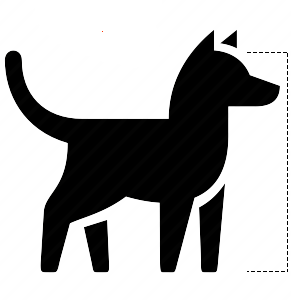
24 inches (61 sm)Male: 25 inches (64 sm) , Female: 22 inches (56 sm)
6 Months
48 lbs ( m 48 lbs, f 48 lbs )
15 inches ( m 15 inches, f 15 inches )
12 Months
58 lbs ( m 58 lbs, f 58 lbs )
18 inches ( m 18 inches, f 18 inches )
18 Months
68 lbs ( m 68 lbs, f 68 lbs )
22 inches ( m 22 inches, f 22 inches )
Eye Colors
Blue
Hazel
Brown
Amber
Nose Colors
Black
Brown
Isabella
Coat Colors
Black
Brown
Red
White
Gray