Griffon Nivernais
Chien de Pays, Griffon Vendeen Nivernais, Chien Gris de St. Louis
The Griffon Nivernais is a French dog breed celebrated for its amiable personality, making it an excellent choice for families, especially those with kids. This breed is not only intelligent but also exhibits a notable degree of independence, which can occasionally result in playful mischief if left unsupervised. Due to its strong-willed character, it thrives under the guidance of a confident owner. Furthermore, the Griffon Nivernais generally interacts well with other dogs. However, potential owners should be aware that this breed is quite vocal and may become bothersome if left alone outdoors for long stretches.
Breed Origin
The Griffon Nivernais is a robust, rough-coated scent hound that was traditionally employed by farmers and shepherds in France to ward off wolves and wild boar. This breed hails from the central highlands of France, with its ancestry dating back to the 1200s, making it one of the country’s oldest hound breeds. Both the nobility and the common folk esteemed the Griffon Nivernais, with King Louis IX reportedly having a particular fondness for it. During his reign, the breed was known as the Chien Gris de St. Louis, or the Grey Dogs of St. Louis. After the French Revolution, its popularity spread beyond its original highland home, and it was initially referred to as the Griffon Vendeen Nivernais. Some researchers suggest that the Griffon Nivernais may trace its roots to Balkan dogs brought back by the Crusaders, and it is believed to share a direct lineage with the Bulgarian Barak, which closely resembles the Griffon Nivernais and exhibits similar characteristics. Another hypothesis posits that this breed descends from the Gallic Hound, known during Ancient Roman times and thought to have been introduced to France by the Romans. In 1990, initiatives were launched to restore the Griffon Nivernais to the prominence it once held during King Louis IX's reign. The breed is slowly gaining recognition outside of France, with imports starting to arrive in the United States and Canada. In 1995, the United Kennel Club officially recognized the Griffon Nivernais, allowing it to compete in all UKC-sanctioned events, although it has not yet been acknowledged by the American Kennel Club.
Breed Appearance
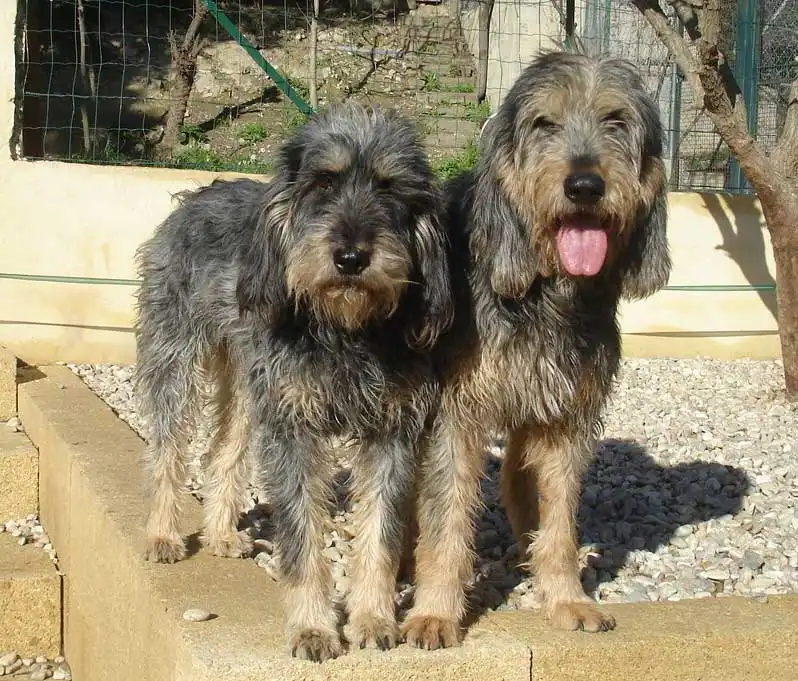
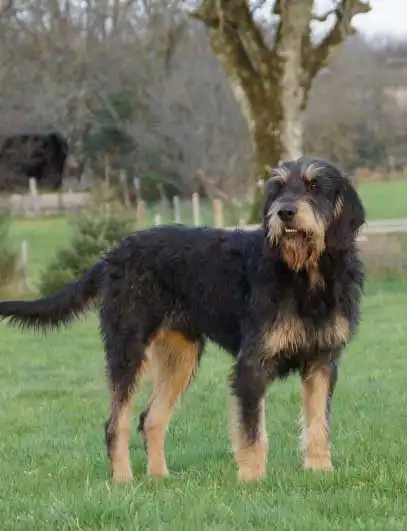
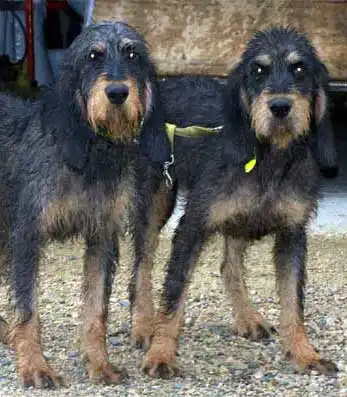
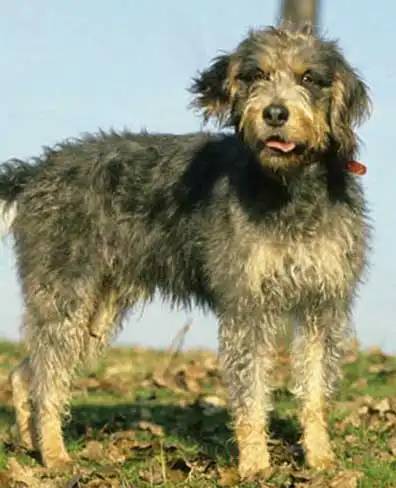
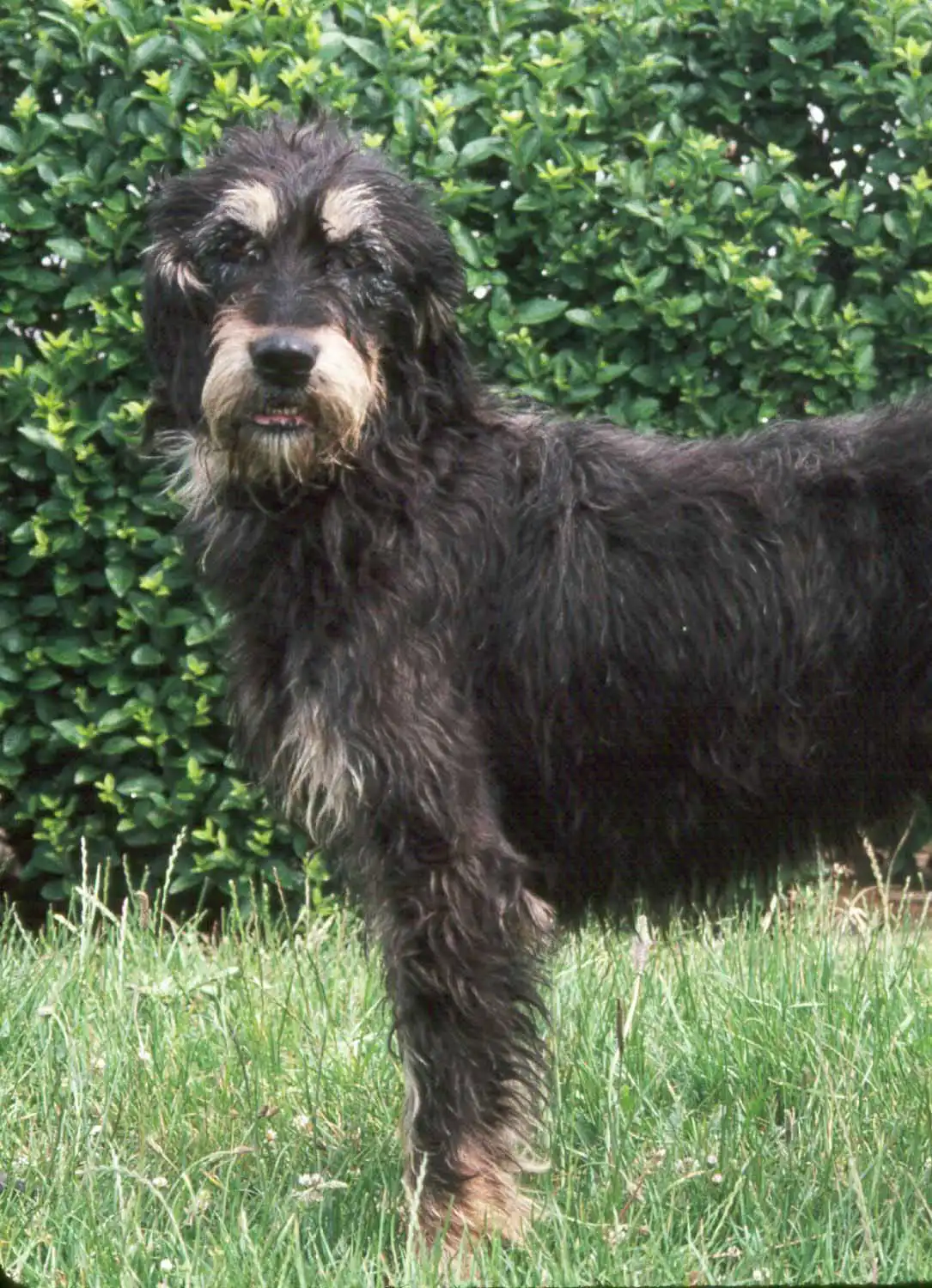
The Griffon Nivernais is easily recognized by its long, shaggy coat, which has a rough texture. It is crucial that the coat does not have a woolly or curly appearance. This breed is distinguished by its prominent bushy eyebrows and a subtle moustache, which together lend it a somewhat sorrowful look. The skin is thick and closely fitted to the body. Its coat is adorned with distinctive black spots, and the lips are dark and well-defined. With its untidy appearance, the Griffon Nivernais often seems a bit disheveled. In terms of coloration, this breed is predominantly gray, with the most sought-after shades being wolf gray, blue gray, and wild boar gray. It may also exhibit tan or fawn markings on its legs or head. A fawn Griffon Nivernais is acceptable as long as its coat is interspersed with white and black hairs, giving it a darker look. Typically, fawn individuals feature tan points. However, this breed should never be black, wheaten, or orange, and it is essential that it does not have white feet.
Care Routine
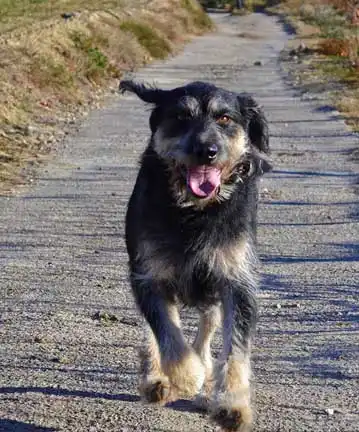
The Griffon Nivernais often has a somewhat unkempt appearance, even post-grooming. However, maintaining his coat requires consistent weekly care. Its coarse texture is beneficial in preventing the accumulation of dirt. For optimal grooming, it's advisable to use a stiff bristle brush along with a metal comb. Due to the rugged quality of his fur, tangles and mats are rare. It's also important to regularly comb his eyebrows and moustache. He doesn't require frequent baths, as regular brushing keeps his coat in good condition. Ideally, he should be bathed two to three times a year with a mild shampoo, or whenever he becomes dirty or develops an unpleasant smell. Overbathing can irritate the skin by removing essential natural oils. Furthermore, his coat should be stripped once a year to promote new growth. Nail trimming should occur as needed, generally every two to three weeks, and his ears should be inspected weekly to ensure they stay clean and free from infection.
Behavior & Temperament
The Griffon Nivernais is celebrated not only for its brave hunting skills but also for being a friendly and sociable companion. This breed flourishes in homes with older children, unless it has been brought up with a child from an early age. Typically, the Griffon Nivernais is not overly cautious around strangers, often welcoming them with a friendly demeanor. It generally gets along well with other dogs and does not exhibit aggression in a pack environment. Crucially, this breed should never show hostility over its food. As an independent thinker, the Griffon Nivernais can encounter difficulties if left alone for long periods, as it will look for ways to entertain itself. Its strong-willed personality necessitates a confident owner who can handle its stubbornness. Being a scent hound, this breed has a tendency to bark, which can become bothersome if it is left outside unsupervised for extended durations. When raised alongside cats, the Griffon Nivernais can live harmoniously with them. However, due to its strong prey drive, it should never be left unsupervised with small animals such as ferrets, rabbits, or guinea pigs.
Play & Exercise
Things to Know
Cups Per Day
0.0 Cups
Daily Activity
0 Minutes
Average Lifespan
13 Years
Origin
1200s
Type
Pure Breeds
Size
Medium
Origin Country
France
Brush Frequency
Weekly
Coat Texture
Straight
Register
Your kids have been begging for a pet forever, and you've recently decided that it's time for your family to get a new addition -- a dog! While everyone is excited for the new arrival, you're wondering if you need to have a dog license. How much does it cost? Is it required? Where do you get one?
Member Clubs
PETINNATE
Scenthound

UKC
Scenthound
Height & Weight
Weight
49 lbs (22 kg)Male: 49 lbs (22 kg) , Female: 49 lbs (22 kg)
Height
22 inches (56 sm)Male: 23 inches (58 sm) , Female: 22 inches (56 sm)
Eye Colors
Brown
Nose Colors
Black
Coat Colors
Gray
Blue
Fawn