Hamiltonstovare
Hamilton Hound, Swedish Foxhound
The Hamiltonstovare, a breed that hails from Sweden, is particularly noted for its distinct stubbornness. Originally bred for hunting foxes and hares, this breed is energetic and thrives on running and playing. Typically, the Hamiltonstovare exhibits a relaxed personality and develops strong attachments to its family, adapting well to different living environments. However, it is vital for this dog to have a strong and consistent leader to clarify its role within the home. While the Hamiltonstovare can be great with children, it is important for the dog to understand that it does not have a dominant role over them. Therefore, certain games, such as tug-of-war, should be avoided to ensure appropriate boundaries are maintained.
Breed Origin
The Hamiltonstovare, a breed that originated in Sweden, was specifically bred for hunting purposes. Count Adolf Hamilton, the founder of the Swedish Kennel Club, was instrumental in its development. This breed is the result of crossbreeding German hounds, English foxhounds, and Harriers, all aimed at effectively hunting foxes and hares in diverse weather and terrain conditions. However, it is not designed for tracking larger game like deer. Originally known as the Swedish Hound, the breed was renamed in 1921 to pay tribute to Count Hamilton. While the Hamiltonstovare remains relatively uncommon outside of Sweden, it is slowly gaining popularity in the United States and Canada, largely due to its unique tri-color coat and hound-like personality. The exact timeline of the breed's introduction to the U.S. is still uncertain. In terms of physical characteristics, the Hamiltonstovare bears a resemblance to the English Foxhound but is lighter and shorter at the shoulder. A distinctive feature of this breed is its white blaze, which starts at the muzzle and runs over the head and down the neck. When the Hamiltonstovare first participated in dog shows, its traits had not yet been standardized. However, with the establishment of an official breed standard in the 1930s, the breed's appearance became more uniform, with its tri-color coat and unique blaze emerging as key identifiers. The breed has gained official recognition from the United Kennel Club, the Kennel Club, and the Fédération Cynologique Internationale, and the American Kennel Club has begun to include the Hamiltonstovare in its Foundation Stock Service.
Breed Appearance
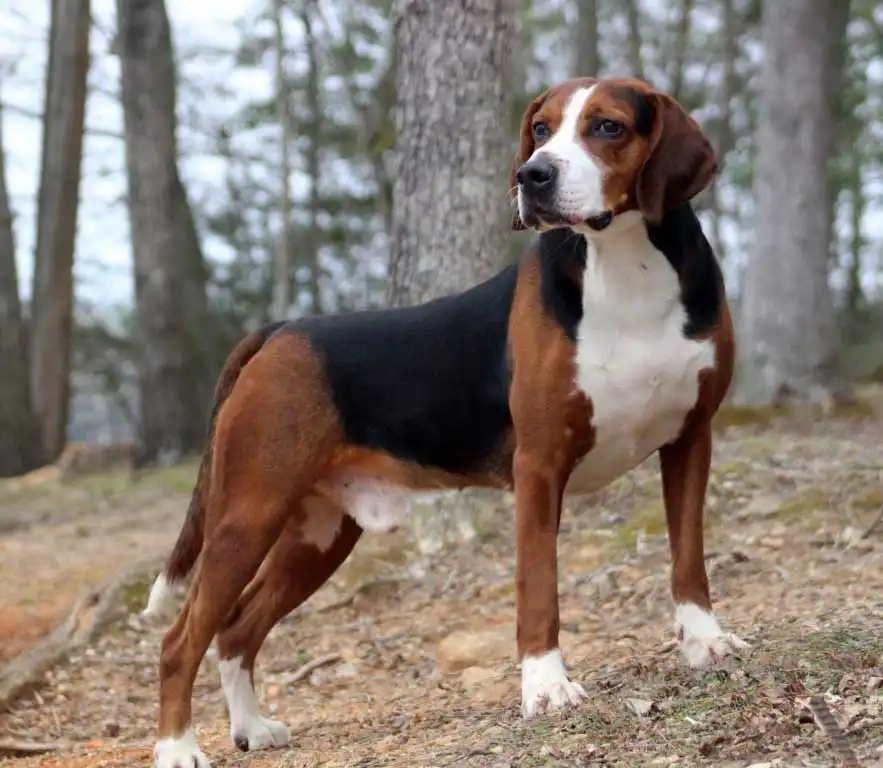
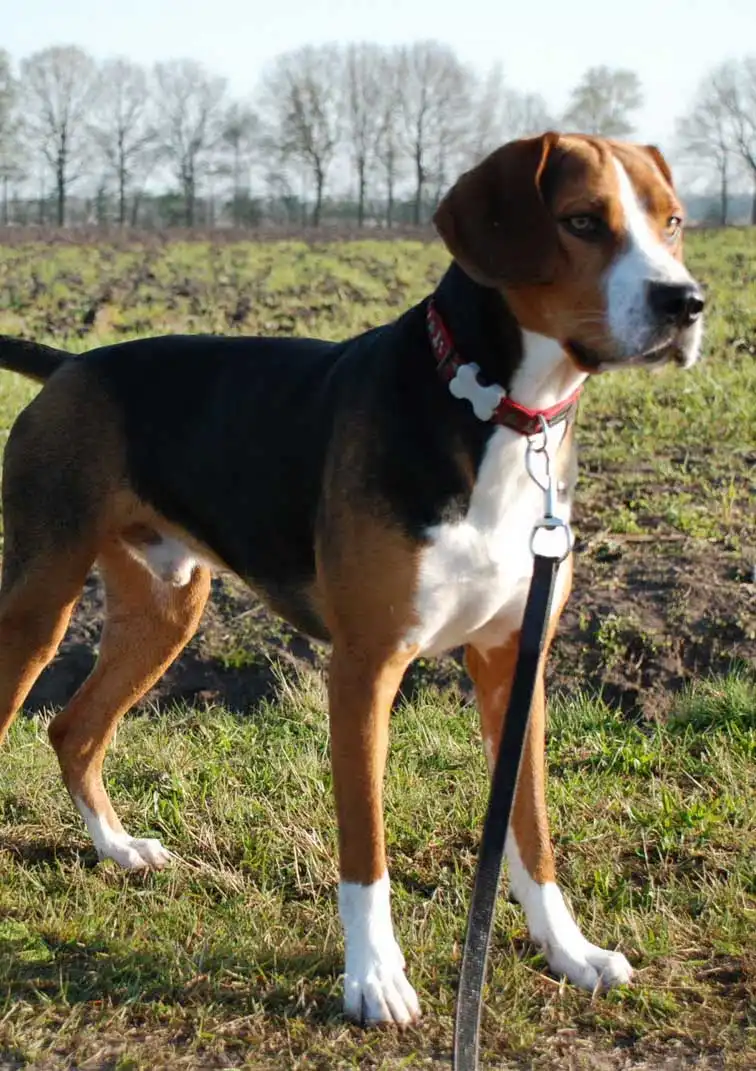
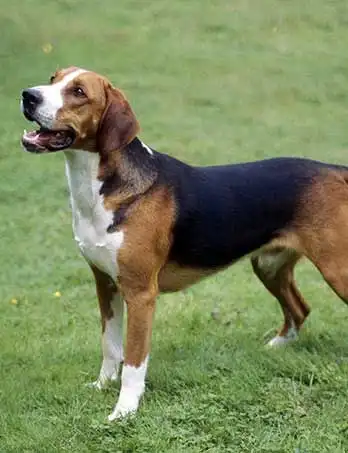
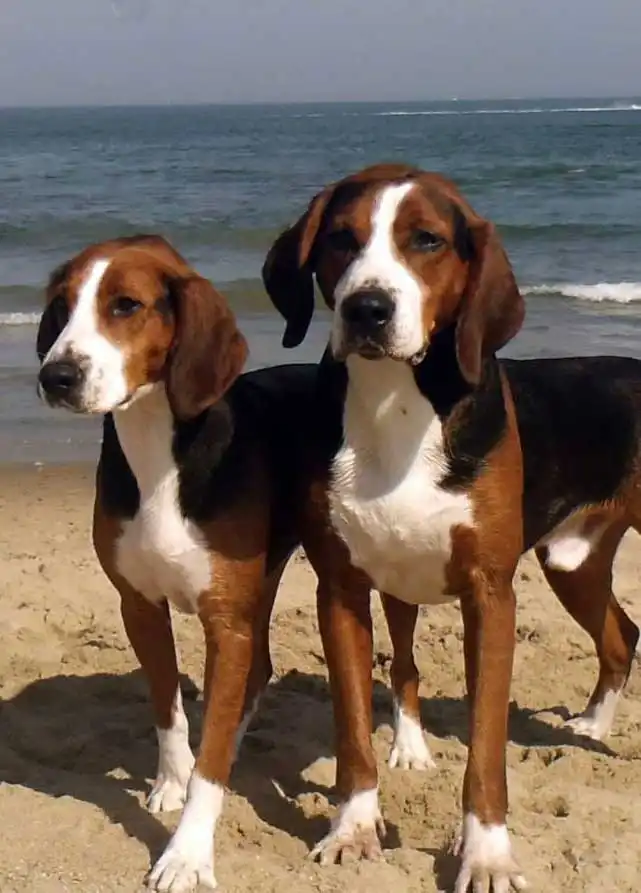
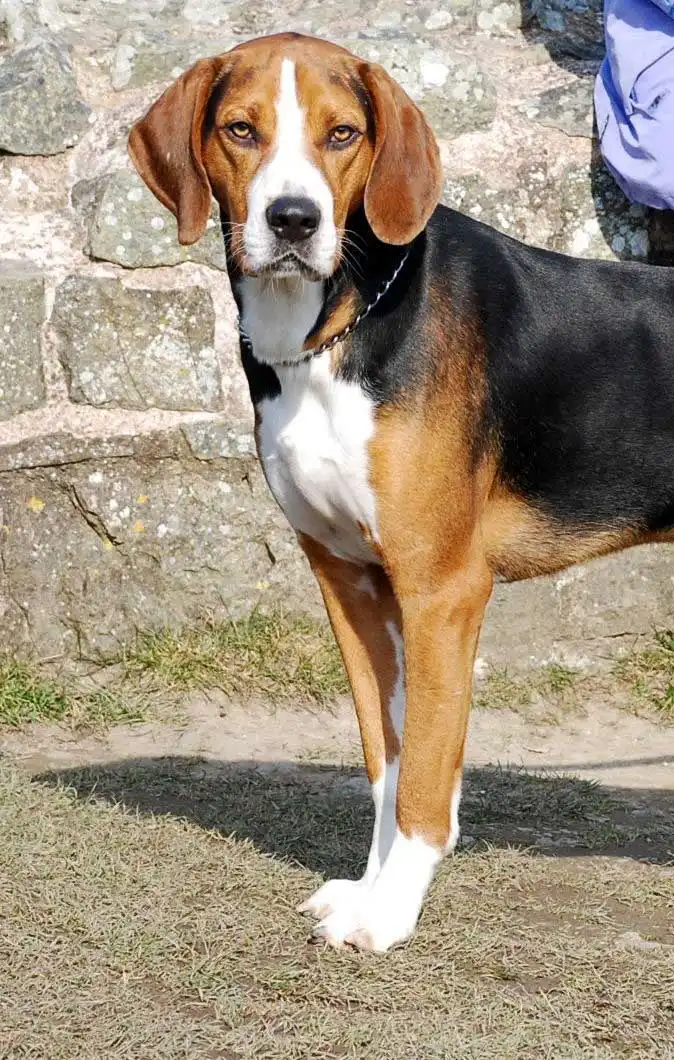
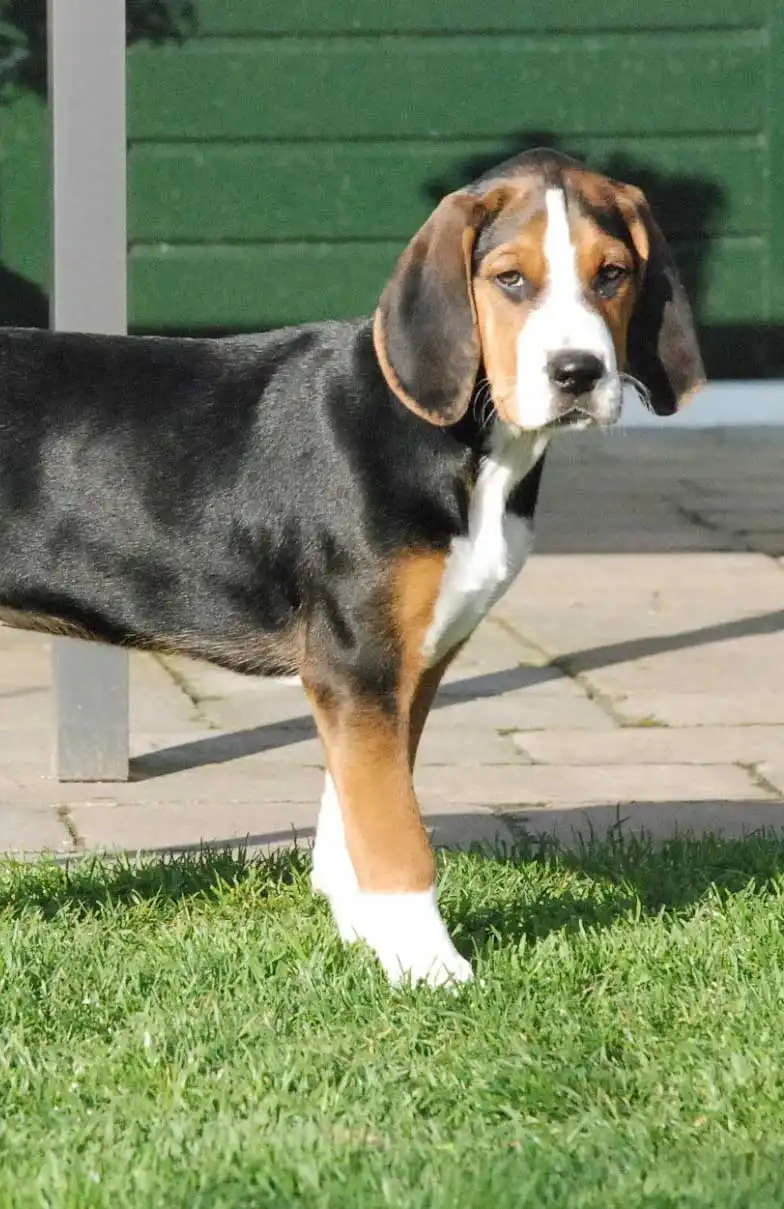
The Hamiltonstovare is characterized by its deep brown eyes and black nose, which together convey a serene presence. Its ears, positioned high and drooping alongside the jaw, are typical of hound breeds. This dog has a short, double-layered coat; the undercoat is soft and snug, becoming denser in winter, while the outer layer is straight, coarse, and closely fitted to the body, providing protection against the elements. In terms of color, the Hamiltonstovare showcases a tri-color pattern of black, brown, and white. The black fur creates a saddle-like design across its back, extending along the upper side of the tail and up the neck. Brown markings are found on the legs, neck, and hindquarters, complemented by four white paws and a white tip on the tail. A prominent white blaze runs along the upper part of its muzzle and over the head, with additional white fur marking the underside of the neck.
Care Routine
The Hamiltonstovare is quite easy to care for in terms of grooming. To maintain a healthy coat, it’s recommended to brush him at least once a week with either a slicker brush or a natural bristle brush; a hound mitt can also work well. Regular brushing is beneficial in minimizing the amount of loose hair that ends up on carpets, furniture, and clothing. Since the Hamiltonstovare loves to play outdoors, he might develop a doggy smell. However, bathing him too often can cause dry skin, so it’s best to limit baths to once a month using a mild dog shampoo. Nail trimming should be done every two to three weeks. Many hounds tend to prefer a nail grinder over clippers, as the sound of the clippers can startle them. Additionally, it’s crucial to inspect his ears weekly for any dirt or moisture to help prevent infections. Establishing a dental care routine is also vital; his teeth should be brushed weekly with dog-specific toothpaste, and an annual professional cleaning is recommended.
Behavior & Temperament
The Hamiltonstovare is a lively breed that was originally bred for endurance hunting. To keep him content, he needs plenty of exercise each day. Like many hounds, he can be quite headstrong, which means he requires a trainer who is both assertive and consistent to effectively guide his behavior. This breed is especially great for families with children, as he loves to engage in play with them for long stretches. Moreover, he is quite clever and excels in activities that involve problem-solving. Given his strong instinct to chase, it’s important to never leave him unsupervised around smaller pets like rabbits, guinea pigs, or ferrets. A sturdy fence is necessary to keep him from pursuing potential prey in the area. He is generally cautious around strangers and will notify his family if an unfamiliar person approaches their home.
Play & Exercise
Things to Know
Cups Per Day
0.0 Cups
Daily Activity
0 Minutes
Average Lifespan
13 Years
Origin
19th century
Type
Pure Breeds
Size
Medium
Origin Country
Sweden
Brush Frequency
Weekly
Coat Texture
Straight
Register
Your kids have been begging for a pet forever, and you've recently decided that it's time for your family to get a new addition -- a dog! While everyone is excited for the new arrival, you're wondering if you need to have a dog license. How much does it cost? Is it required? Where do you get one?
Member Clubs

PETINNATE
Scenthound

AKC
Foundation Stock Service

UKC
Scenthound
Height & Weight
Weight
55 lbs (25 kg)Male: 55 lbs (25 kg) , Female: 55 lbs (25 kg)
Height
22 inches (56 sm)Male: 23 inches (58 sm) , Female: 21 inches (53 sm)
Eye Colors
Brown

Nose Colors
Black
Coat Colors
Black
Brown
White