Havallon
The Havallon is a delightful mix that brings together the appealing characteristics of two toy breeds: the Havanese and the Papillon. Although the Papillon is typically smaller than the Havanese, both breeds share a strong aversion to being left alone. They can adjust to different temperatures, but they flourish in warmer climates. A key difference between the two parent breeds lies in their barking habits; the Havanese is quite talkative, while the Papillon is generally more subdued. Consequently, a Havallon may exhibit vocal traits from either breed, often striking a balanced blend of the two.

Breed Origin
The Havallon is a hybrid dog breed that emerges from the crossbreeding of the Havanese and the Papillon. As a relatively new breed, it does not have established formal standards, yet it is recognized by various organizations such as the American Canine Hybrid Club, the Designer Dog Kennel Club, the Dog Registry of America, and the International Designer Canine Registry. Despite these acknowledgments, the Havallon remains somewhat under the radar. To better understand this breed, prospective owners can explore the traits and characteristics of its parent breeds. The Havanese, which hails from Cuba, is categorized as a rare Bichon-type dog. Its lineage can be traced back to the 15th century when Spanish settlers brought the ancestors of this breed to the island, where they remained isolated. The Havanese became a beloved companion among Cuban aristocrats before the Cuban Revolution. Although many wealthy families left Cuba during this upheaval, the Havanese remained, and by the 1970s, only 11 of these dogs were known to exist outside of Cuba. Thankfully, passionate breeders worked tirelessly to prevent the breed from disappearing, and all Havanese dogs found outside Cuba today can trace their ancestry back to those original 11. The American Kennel Club granted official recognition to the Havanese in 1996, and while it has gained some popularity, it is still regarded as a rare breed. In contrast, the Papillon has its roots in early toy Spaniels from the 16th century. This breed was a popular companion in the royal courts of France, Spain, and Italy, quickly becoming well-known across Europe. The name "Papillon," which translates to "butterfly" in French, reflects the breed's unique feathery, upright ears that resemble butterfly wings. There is also a less common variety with drooping ears known as the Phalene. The American Kennel Club recognized the Papillon in 1935, and today, this small breed enjoys a moderate level of popularity.
Breed Appearance
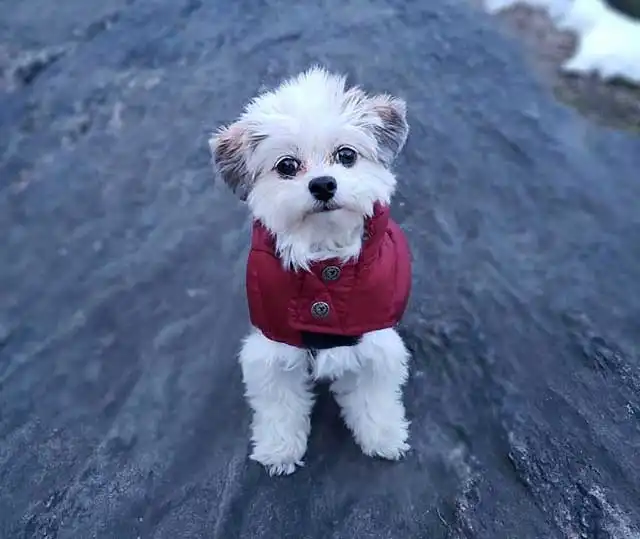
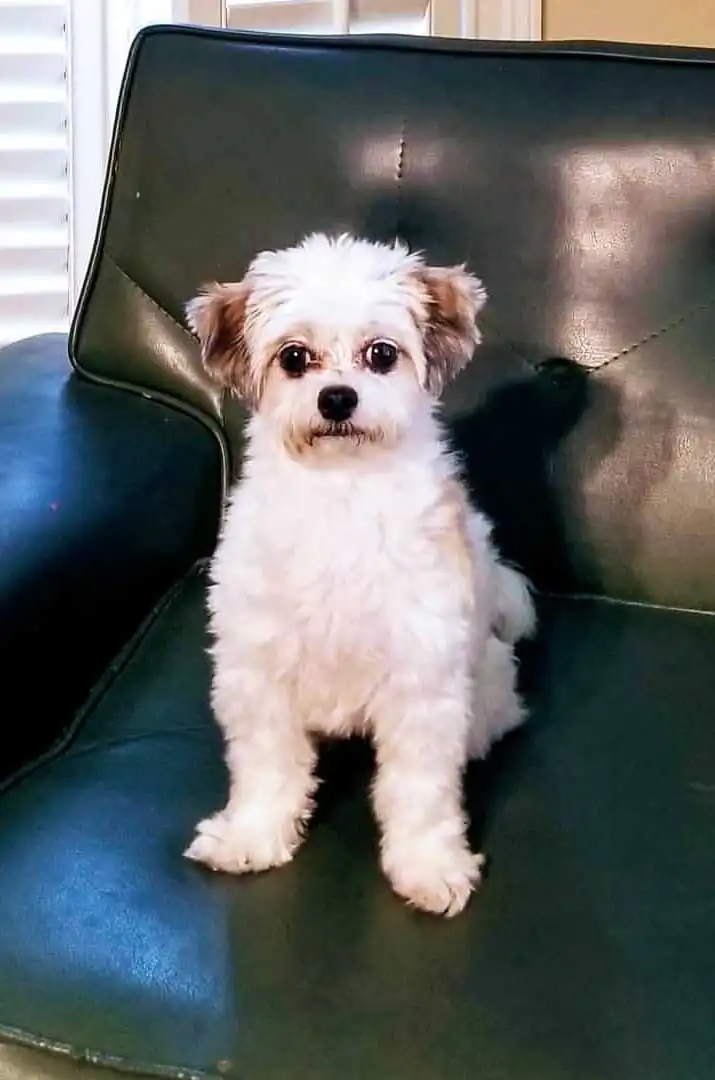
The Havallon is a small hybrid dog breed created by crossing a Havanese with a Papillon. Generally, these compact canines stand between 8.5 and 11.5 inches tall and weigh up to 11 pounds. They have a softly rounded head topped with upright ears, which are luxuriously adorned with long, silky fur reminiscent of the Papillon's coat. Their slender muzzle narrows down to a small nose, which may be slightly larger if they inherit traits from the Havanese. The Havallon's body is longer than it is tall, showcasing a more delicate bone structure and a bit more height than the Havanese. Their coat often resembles that of the Papillon, and they have a tail that arches over their back, complete with a full plume. Havallons are always multicolored, typically displaying two or three color combinations along with unique white markings.

Care Routine
The Havallon is not officially recognized as a hypoallergenic breed, but it generally sheds less hair, depending on its parental lineage. Its long coat requires daily grooming to prevent tangles and mats. The fur around the ears is especially lengthy, so it’s important to clean this area regularly with a veterinarian-recommended solution to avoid ear infections. Being a small breed, Havallons are prone to dental problems, making daily dental hygiene essential. Additionally, trimming their nails twice a month is necessary for their health. With a moderate energy level, Havallons need a fair amount of exercise each day. They are smart and attentive, which makes training relatively straightforward. However, their high intelligence, inherited from both parent breeds, means they also require mental engagement to avoid developing bad habits. Moreover, this hybrid breed does not cope well with being left alone for extended periods, as it thrives on companionship and needs social interaction to maintain its mental and emotional health.
Behavior & Temperament
The Havallon is an exceptionally sensitive companion dog that flourishes in a family environment. This hybrid breed is known for its affectionate and loyal nature towards its family members, including children. However, due to its gentle disposition, it may not be the ideal choice for homes with very young children or those that engage in roughhousing. While generally sociable, the Havallon might initially show signs of shyness or timidity when encountering strangers. Drawing from its Havanese heritage, this breed possesses heightened watchdog instincts, which often results in barking at unfamiliar individuals. The Havallon usually gets along well with other dogs and pets. Its energy levels are typically moderate, though they can differ from one dog to another. Regular exercise is crucial for the Havallon's physical and mental health, as this breed enjoys playful activities and requires moderate-intensity workouts. Training is relatively easy for this intelligent hybrid, as it has a strong inclination to please its family. In terms of vocalization, the Havallon finds a middle ground between its Havanese and Papillon parents, tending to bark like the former while being quieter than the latter.


Play & Exercise
The Havallon is a moderately active breed that needs daily exercise. This small hybrid can meet many of its activity requirements indoors, but it also benefits from regular outdoor walks. Although lively and energetic, the Havallon is somewhat delicate, so it's advisable to avoid high jumps. With adequate physical activity, this breed can comfortably live in an apartment. Furthermore, the Havallon is adaptable and can do well in different climates, though it generally prefers warmer conditions.
Things to Know
Cups Per Day
1.0 Cups
Daily Activity
45 Minutes
Average Lifespan
14 Years
Origin
Unknown
Type
Crossbreeds
Size
Small
Origin Country
United States
Brush Frequency
Daily
Coat Texture
Straight
Register
Your kids have been begging for a pet forever, and you've recently decided that it's time for your family to get a new addition -- a dog! While everyone is excited for the new arrival, you're wondering if you need to have a dog license. How much does it cost? Is it required? Where do you get one?
Member Clubs
PETINNATE
Other
Height & Weight
Weight
8 lbs (4 kg)Male: 8 lbs (4 kg) , Female: 8 lbs (4 kg)
Height
10 inches (25 sm)Male: 10 inches (25 sm) , Female: 10 inches (25 sm)
Eye Colors
Brown
Amber
Nose Colors
Black
Coat Colors
Black
Red
Fawn
White