Highland Maltie
Maltese Westie
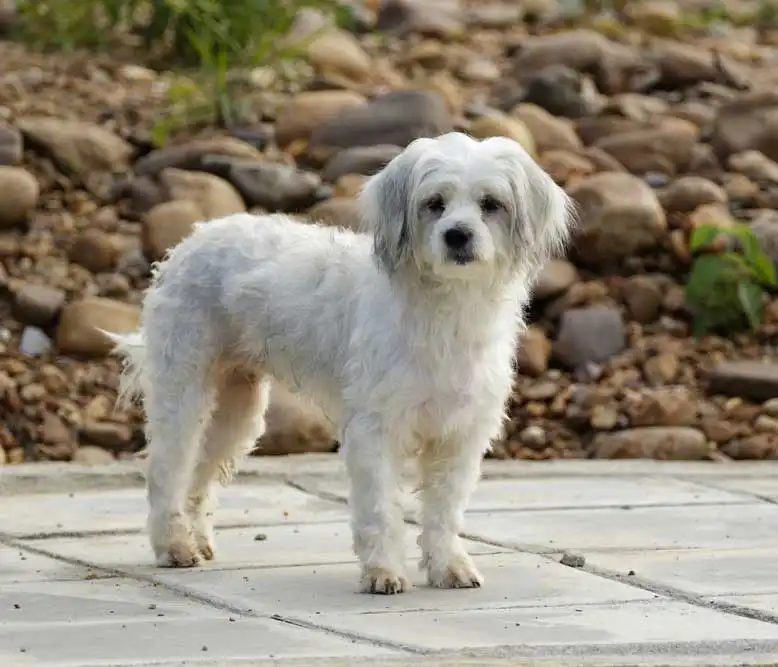
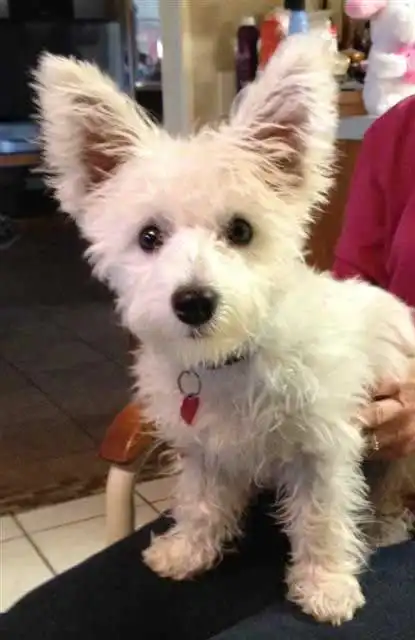
The Highland Maltie is a charming mix of two popular small breeds: the West Highland White Terrier and the Maltese. This lively and observant little dog is celebrated for its gentle disposition and keen intelligence. As a devoted companion, the Highland Maltie interacts well with young children and other animals. To foster their best qualities, it’s important to socialize them early on. These nimble dogs excel in activities such as agility competitions and obedience training, which offer vital mental engagement. Although they tend to be less energetic than many other breeds, they are satisfied with a short daily walk or a few fun games; their ultimate joy, however, lies in snuggling up in your lap. Their luxurious, non-shedding coat makes them an excellent option for those with allergies. With their delightful white fluffy fur, expressive dark eyes, and perky ears, Highland Malties radiate a captivating mix of playfulness and loyalty.
Breed Origin
Exploring the ancestry of parent breeds can provide insights into the traits your Highland Maltie may inherit. The Maltese has a fascinating history that dates back over two millennia. This breed is mentioned in the ancient civilizations of the Greeks, Romans, and Egyptians, where they were cherished as valued companions. While the exact origins of the Maltese are debated—some attribute it to the Isle of Malta, others to Italy, and some even to Asia—one thing is clear: this delightful little dog flourished and gained widespread admiration. In the 16th century, the Maltese arrived in England, winning the hearts of notable figures such as Queen Elizabeth I, Mary, Queen of Scots, and Queen Victoria. Unfortunately, during the 17th and 18th centuries, misguided breeding attempts aimed to shrink their size to that of a squirrel, nearly leading to the breed's extinction. Thankfully, committed breeders stepped in, helping to shape the Maltese into the beloved breed we know today. The Maltese made its debut in the United States in the late 1800s and has since won over many admirers. Conversely, the West Highland White Terrier, commonly known as the Westie, originates from Scotland and was primarily bred for hunting foxes, badgers, and controlling vermin like rats. Although comprehensive historical records are limited, the Westie's ancestry can be traced back to the 17th century. A local legend tells the story of how the West Highland White Terrier acquired its signature white coat. According to this tale, Colonel Malcolm of Poltalloch was hunting foxes with his beloved wheaten-colored Cairn dogs when he accidentally shot one of them, mistaking it for a fox. Devastated by this incident, he pledged to prevent such a tragedy from recurring and began breeding only white dogs, which ultimately led to the creation of the Westie. For a period, these charming dogs were referred to as the Poltalloch Terrier, but in 1906, they were officially recognized by the Kennel Club of England as the West Highland White Terrier.
Breed Appearance
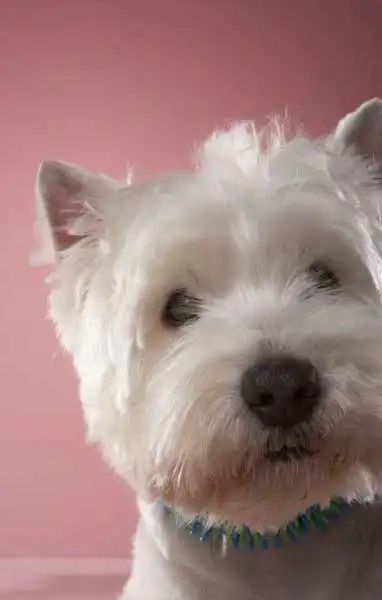
The Highland Maltie is frequently characterized as graceful, dignified, and refined. Its immaculate white coat and compact build, marked by short legs and an upright posture, contribute to a captivating allure that easily captures affection. Slightly longer than they are tall, their heads are well-proportioned to their bodies, resulting in a balanced appearance. Their faces are highlighted by dark, expressive eyes, fluffy eyebrows, and often feature soft feathering around the muzzle. The nose is black, and the ears stand erect, occasionally tipping at the top, which adds a playful element to their expression. Their tails are of moderate length, slightly fluffy, and typically curl upwards. The coat is long and silky, yet it remains above the ground. Their small, often fluffy paws are equipped with sturdy, rounded black pads.

Care Routine
The Highland Maltie boasts a low-shedding coat that is often regarded as hypoallergenic; however, it necessitates regular brushing to avoid matting of its lovely white fur. Daily brushing with a robust bristle brush is recommended. This practice not only helps maintain the coat but also allows you to check for any injuries or sores on your pet’s body and paws, inspect their ears for potential infections, and ensure that their long eyebrows aren’t irritating their eyes. Bathing should be done as needed, using a gentle dog shampoo that helps maintain the coat's natural oils, facilitating easier grooming. If your Highland Maltie has access to a yard, they may need more frequent baths than an indoor dog due to their love for digging and exploring. Furthermore, it’s advantageous to train your puppy to accept tooth brushing, as many dogs enjoy the gentle care during grooming.
Behavior & Temperament
The Highland Maltie draws its vibrant personality from its parent breeds, the West Highland White Terrier and the Maltese, resulting in a dog full of charm and character. These dogs are both bold and self-assured, often exuding a sense of importance, yet they remain delightful and entertaining companions. While they generally do not seek out conflict, they will stand their ground if challenged. Proper socialization is crucial, particularly in households with other pets, as their instinct is to chase smaller animals. When interacting with young children, it’s vital to supervise playtime, as Highland Malties may nip if they feel threatened or if their tails are pulled. Teaching children to engage gently and kindly with these spirited dogs is essential. Highland Malties can sometimes display a stubborn nature, stemming from their independent mindset. Effective training hinges on convincing them that obeying your commands is in their best interest, which can lead to a more harmonious experience. Being sensitive animals, they respond best to gentle training techniques, ample praise, and small rewards, all delivered in a warm tone. Highly intelligent, these dogs are quick learners and enjoy being the focus of attention. While they are not excessively hyper, they do require regular exercise, including daily walks. They may bark frequently, but with appropriate training, they can learn to alert you with a single bark and then stop. Additionally, to prevent boredom-induced digging, it’s important to keep them mentally stimulated and engaged for their overall well-being.


Play & Exercise
The Highland Maltie is not overly hyperactive, but it certainly possesses a lively spirit. These dogs have a tendency to stay close to their owners, showing a keen interest in what they are doing. While having a yard can be advantageous, it is not a necessity for their happiness. What truly counts is providing them with a daily walk or playtime at a dog park, where they can burn off energy and interact with other dogs. A casual walk around the neighborhood is perfectly adequate, and as your hybrid grows older, it will enjoy participating in family games, often displaying a competitive edge! These dogs adapt well to apartment living, as long as they are trained to keep barking to a minimum. As loving companions, they thrive on being part of family activities and will be loyal and devoted friends.
Things to Know
Cups Per Day
1.0 Cups
Daily Activity
60 Minutes
Average Lifespan
13 Years
Origin
Unknown
Type
Crossbreeds
Size
Small
Origin Country
Unknown
Brush Frequency
Daily
Coat Texture
Wavy
Register
Your kids have been begging for a pet forever, and you've recently decided that it's time for your family to get a new addition -- a dog! While everyone is excited for the new arrival, you're wondering if you need to have a dog license. How much does it cost? Is it required? Where do you get one?
Member Clubs

PETINNATE
Other
Height & Weight
Weight
13 lbs (6 kg)Male: 14 lbs (6 kg) , Female: 13 lbs (6 kg)
Height
11 inches (28 sm)Male: 11 inches (28 sm) , Female: 11 inches (28 sm)
6 Months
3 lbs ( m 3 lbs, f 3 lbs )
4 inches ( m 4 inches, f 4 inches )
12 Months
12 lbs ( m 12 lbs, f 12 lbs )
10 inches ( m 10 inches, f 10 inches )
18 Months
12 lbs ( m 12 lbs, f 12 lbs )
10 inches ( m 10 inches, f 10 inches )
Eye Colors
Brown

Nose Colors
Black
Coat Colors
White