Irish Wolf Schnauzer
The Irish Wolf Schnauzer is a mixed breed that merges the characteristics of the Irish Wolfhound and the Giant Schnauzer, and it is commonly referred to as the Giant Irish Wolf Schnauzer. The color palette of this hybrid typically reflects that of its parent breeds, showcasing shades such as black, salt and pepper, grey, brindle, red, white, and fawn. The Giant Schnauzer is known for its thick, wiry coat, whereas the Irish Wolfhound possesses a rough, coarse fur texture. When it comes to grooming, you can anticipate a moderate level of maintenance, as both breeds share similar grooming needs; however, the Irish Wolfhound generally sheds more than its Schnauzer counterpart. In terms of temperament, the Irish Wolfhound is recognized for its calm, dignified, and brave nature, displaying little to no aggression. On the other hand, the Giant Schnauzer may show some aggressive tendencies towards other dogs, which could make it less ideal for families with young children. Both breeds excel as companion animals and working dogs; the Giant Schnauzer is often utilized in police and military capacities, while the Irish Wolfhound frequently serves as a therapy dog.
Breed Origin
The Irish Wolf Schnauzer is a mixed breed created by crossing a Giant Schnauzer with an Irish Wolfhound. The Giant Schnauzer, which hails from Germany, is one of three recognized varieties of Schnauzers: Miniature, Standard, and Giant. It is thought that the Giant Schnauzer was developed by combining the Standard Schnauzer with the black Great Dane and possibly the Bouvier des Flandres. Originally bred for farm work, these dogs later became known as guard dogs, especially in breweries. Throughout history, they have served in law enforcement and as military dogs during both World Wars, and they remain valued as working dogs today. The breed was introduced to the United States in the 1930s and gained official recognition from the American Kennel Club in 1930. The Giant Schnauzer Club of America was founded in 1962. Conversely, the Irish Wolfhound is considered an ancient breed, with historical documentation indicating its existence as far back as 391 AD. These impressive hunters of large game nearly faced extinction in the 1800s, but their population was restored through the dedicated efforts of Captain George Augustus Graham, a British army officer. The breed has been recognized by the American Kennel Club since 1897 and has a lineage that includes the distinguished Great Dane and the Scottish Deerhound.
Breed Appearance
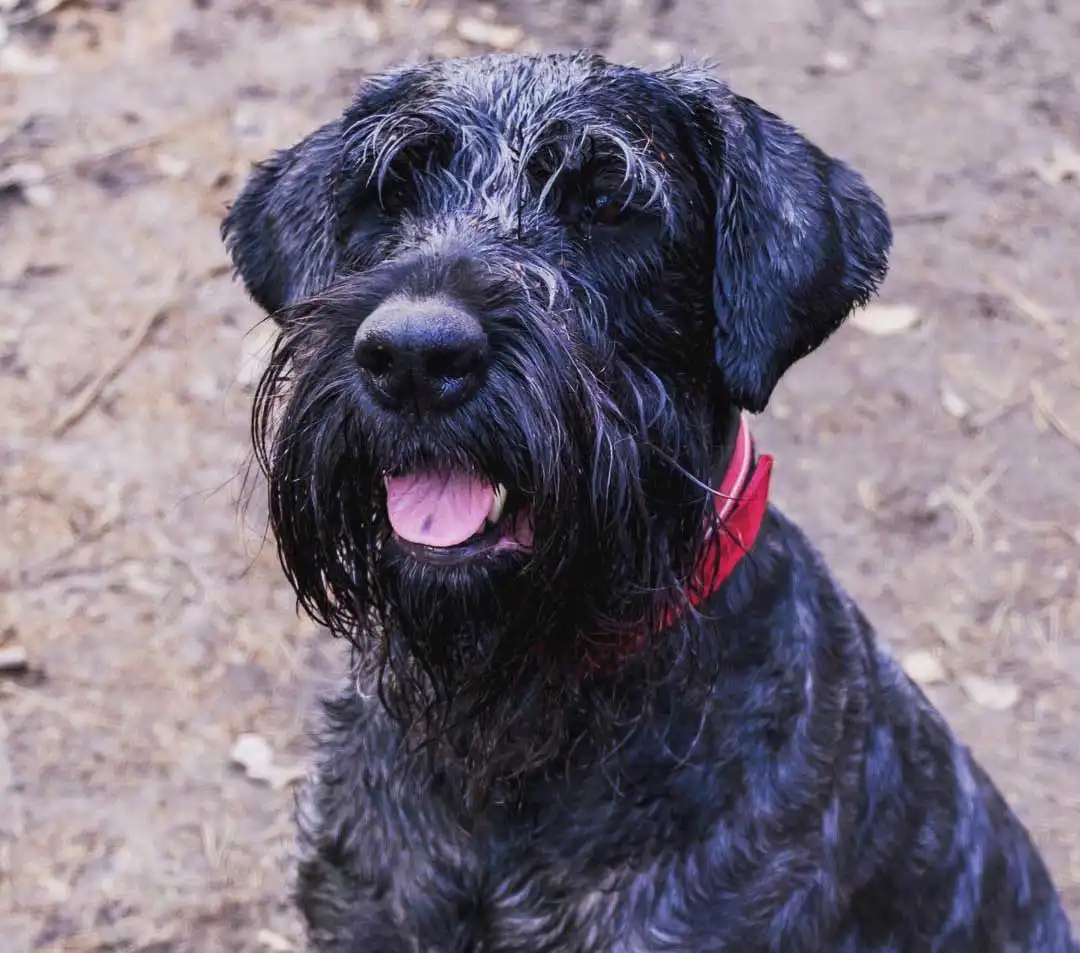
The Irish Wolf Schnauzer is a mixed breed that emerges from the crossbreeding of an Irish Wolfhound and a Giant Schnauzer. The color palette of this hybrid reflects that of its parent breeds, which includes shades such as black, salt and pepper, grey, brindle, red, white, and fawn. Typically, the coat of an Irish Wolf Schnauzer is expected to be wiry, rough, dense, and resilient. Both parent breeds are known for their large, muscular physiques, with the Irish Wolfhound holding the title of the tallest dog breed, distinguished by its graceful stature. They feature dark eyes, often partially hidden by fur, and small ears that resemble those of a Greyhound. The Irish Wolf Schnauzer has a long, slightly curved tail, while the Giant Schnauzer usually has a docked tail. The Giant Schnauzer is also robust, characterized by a prominent beard, bushy eyebrows, and deep-set, oval dark brown eyes. An Irish Wolf Schnauzer is likely to inherit a captivating mix of these features, displaying a long muzzle that can be either pointed or square, depending on its ancestry. This breed is known for its strength, confident gait, and friendly demeanor.


Care Routine
The Irish Wolf Schnauzer typically needs moderate grooming and does not shed excessively. In contrast, the Irish Wolfhound sheds more than the Giant Schnauzer, which is hypoallergenic, making it a better option for those with allergies. Consequently, the shedding behavior of your pet will largely depend on which parent breed's characteristics are more dominant. It is advisable to brush your dog at least once a week and give occasional baths. If your dog takes after the Schnauzer, you may need to trim the hair around the eyebrows, beard, and body. On the other hand, if it resembles the Wolfhound, you might need to trim the mane, while the body hair can be stripped by hand or with a stripping knife. Additionally, daily tooth brushing is recommended for dental health, and you should regularly check their ears for dirt, cleaning them gently with damp cotton wool as necessary. Lastly, be sure to inspect their nails to see if they need clipping.
Behavior & Temperament
The Irish Wolf Schnauzer is anticipated to be an intelligent and loyal companion, drawing characteristics from both of its parent breeds, which are typically trainable yet can show a degree of stubbornness. Consequently, it is crucial to prioritize early socialization and training, emphasizing positive reinforcement due to their sensitive disposition. Often referred to as a gentle giant, the Irish Wolfhound is recognized for its friendly nature towards children, other dogs, and even cats, unlike the Giant Schnauzer, which may exhibit aggression towards other animals. While historically acknowledged as a formidable war dog, the modern Irish Wolfhound is gentle and is not usually regarded as an effective watchdog, as it seldom barks at strangers. Nevertheless, it demonstrates bravery when confronted with real threats. This breed thrives on companionship and does not enjoy being left alone for long periods. The Irish Wolf Schnauzer is not only protective of its family but also embodies a playful and energetic personality.


Play & Exercise
The Irish Wolf Schnauzer needs a daily exercise routine of 60 to 90 minutes. This energetic breed flourishes with physical activity, so engaging in a brisk walk or taking them to a dog park is ideal. Additionally, it's crucial to incorporate obedience training and socialization into their routine. Make sure your Irish Wolf Schnauzer has access to a secure yard for running and playing, and dedicate time to outdoor activities with them to minimize the chance of any troublesome behavior.
Things to Know
Cups Per Day
4.0 Cups
Daily Activity
90 Minutes
Average Lifespan
0 Years
Origin
Unknown
Type
Crossbreeds
Size
Giant
Origin Country
Unknown
Brush Frequency
Weekly
Coat Texture
Wiry
Register
Your kids have been begging for a pet forever, and you've recently decided that it's time for your family to get a new addition -- a dog! While everyone is excited for the new arrival, you're wondering if you need to have a dog license. How much does it cost? Is it required? Where do you get one?
Member Clubs

PETINNATE
Other
Height & Weight
Weight
108 lbs (49 kg)Male: 110 lbs (50 kg) , Female: 105 lbs (48 kg)
Height
28 inches (71 sm)Male: 29 inches (74 sm) , Female: 28 inches (71 sm)
Eye Colors
Brown

Nose Colors
Black
Coat Colors
White
Silver
Red
Gray
Cream
Brindle
Blue
Black