Jagdterrier
Deutscher Jagdterrier, German Jagterrier, German Hunting Terrier, German Hunt Terrier
The Jagdterrier, pronounced YAHK-terrier, is a devoted hunting and sporting dog that approaches its duties with great seriousness. While it serves primarily as a hunting partner in Germany, this breed is relatively rare outside its homeland. Renowned for its sharp intelligence, the Jagdterrier keeps its owner both engaged and alert. To maintain its well-being, this breed needs plenty of daily exercise. Families interested in adopting a Jagdterrier should be quite active or willing to participate in dog sports such as agility, barn hunts, or rally training. This dog typically forms a strong bond with a specific person or family, which can complicate the process of rehoming as it grows older.
Breed Origin
The Jagdterrier is a relatively new breed that originated in Germany, with its beginnings dating back to the 1920s. After World War I, a group of dedicated game managers and hunters broke away from the Fox Terrier Club to create a breed celebrated for its exceptional hunting prowess. This innovative team included prominent individuals like Carl Erich Grunewald, Rudolf Frieb, and Walter Zangenberg. They started the breeding initiative by crossing the Old English Fox Terrier with the Black and Tan Hunting Terrier. Walter Zangenberg received four hunting dogs, all descendants of Fox Terriers, from Lutz Hagenberg, which became the cornerstone of the modern Jagdterrier lineage, establishing black and tan as the breed's primary color. Once the breed's overall appearance was defined, Herbert Lackner joined the group and began to selectively introduce the English Wirehaired Terrier and the Welsh Terrier into the breeding mix. This careful selection enhanced the Jagdterrier's unique characteristics. Despite its small stature, the Jagdterrier is a powerful hunter, adept at pursuing large game such as bobcats, wild boar, and cougars, in addition to hunting foxes and badgers. The breed is well-known for its courage and adaptability in hunting a wide variety of prey. The Jagdterrier found its way to the United States and Canada through hunting enthusiasts, where it is utilized for hunting wild boar and foxes, as well as serving as tree dogs for squirrels and raccoons. However, the population of Jagdterriers in North America remains relatively limited. The breed was recognized by the United Kennel Club (UKC) in 1993, but it wasn't until 2014 that the American Kennel Club allowed its registration in the Foundation Stock Service.
Breed Appearance
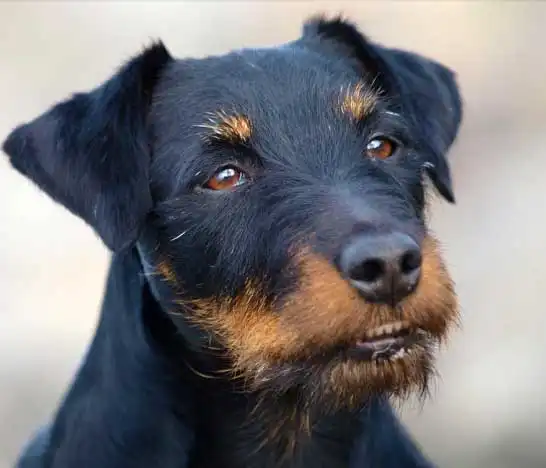
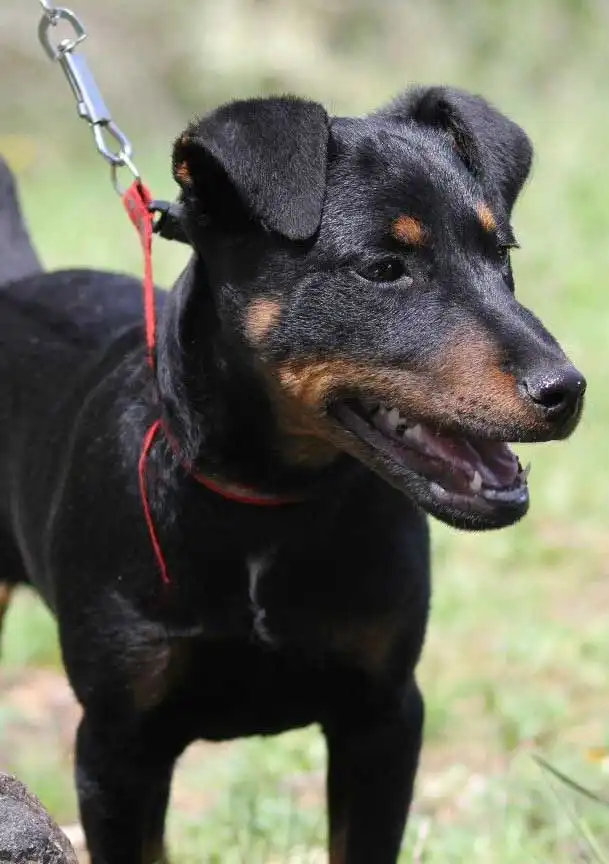
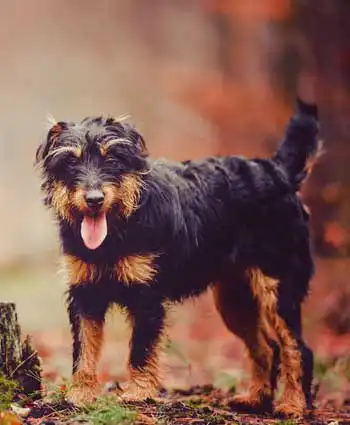
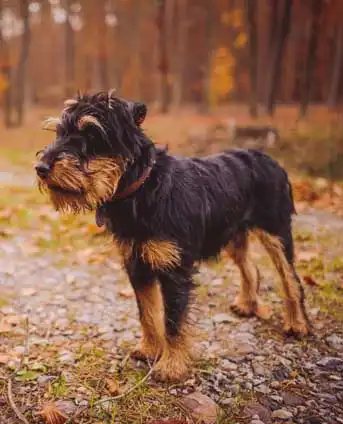
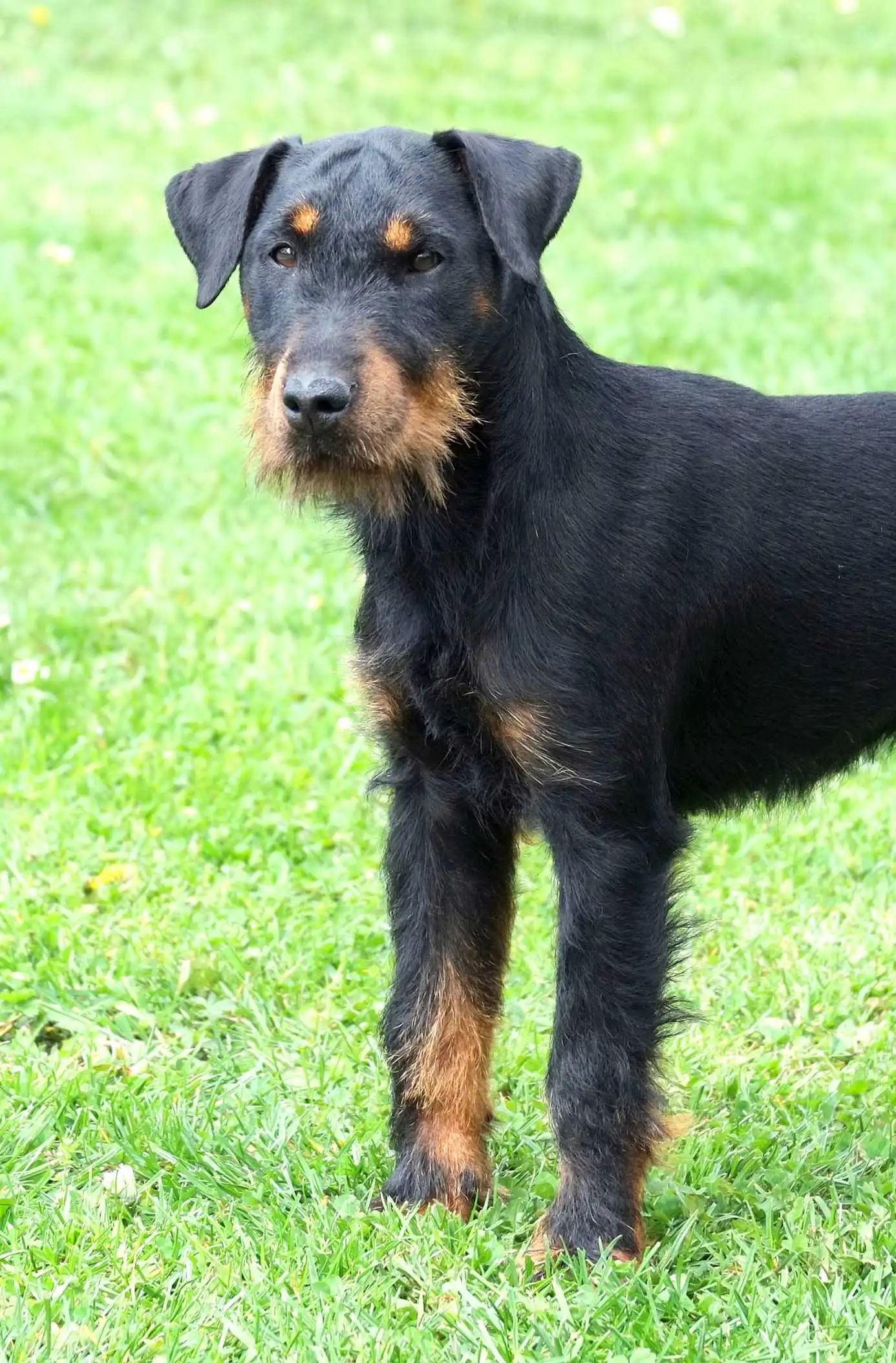
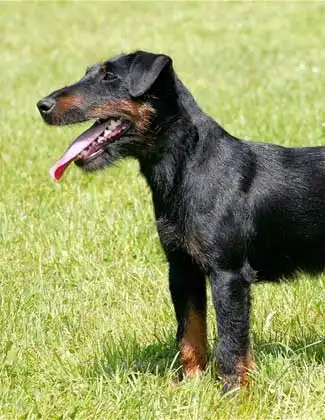
The Jagdterrier is a compact and lively breed, easily recognized by its unique black and tan coloration. While all Jagdterriers exhibit this color pattern, the shade of tan can vary from a deep rust to a lighter cream. Typically, these dogs have a black coat adorned with tan accents on their muzzle, paws, eyebrows, and belly. Although some may have dark brown or chocolate fur, these variations are generally viewed as less favorable. The breed's eyes, eye rims, nose, and lips are all black, and it is crucial that there are no white markings or brown noses. The Jagdterrier features a thick, wiry coat that strikes a balance between smoothness and glossiness, offering vital protection while hunting in thick underbrush or burrows. In terms of physique, this breed is well-muscled and elegant, though it does not exhibit certain typical terrier characteristics, such as a high, straight tail or perfectly straight legs.
Care Routine
The Jagdterrier is generally considered a breed that requires minimal upkeep. To maintain the health of his coat, weekly grooming with a comb and occasional use of a slicker brush is recommended. As a terrier, he will experience shedding that necessitates hand plucking, typically occurring once or twice a year. Many owners prefer to hire professionals for this task, as it can be quite labor-intensive. It’s also worth mentioning that the Jagdterrier is not hypoallergenic and may have a slight odor. Regular baths are only necessary if he becomes particularly dirty; otherwise, a quick wipe with a damp cloth after a hunting session is usually sufficient to clean off any dirt or debris. His ears should be inspected weekly and cleaned when needed, while nail trimming should be done every few weeks. Furthermore, establishing a routine for dental care is crucial for his overall oral health.
Behavior & Temperament
The Jagdterrier captures the true spirit of a terrier in a compact size. This breed is both bold and confident, unafraid to take on wild boar and bobcats. Typically, Jagdterriers are not very sociable with other dogs, which means they require careful monitoring during interactions with canines of any breed. They possess a high energy level and thrive on being active, preferring to engage in tasks rather than lounging at home. Because of their energetic disposition and strong prey drive, they may not be the ideal choice for a family pet. Nevertheless, they do enjoy the company of children, whom they see as great playmates. To keep a Jagdterrier happy, it is vital to provide plenty of exercise and social interaction with people, aiming for at least an hour of vigorous activity each day. It is also important to ensure they are securely fenced in, as they have a tendency to wander and create mischief in the neighborhood. Furthermore, Jagdterriers excel in various dog sports, such as barn hunts, lure coursing, agility, and rally competitions.
Play & Exercise
Things to Know
Cups Per Day
0.8 Cups
Daily Activity
60 Minutes
Average Lifespan
11 Years
Origin
20th Century
Type
Pure Breeds
Size
Small
Origin Country
Germany
Brush Frequency
Weekly
Coat Texture
Wiry
Register
Your kids have been begging for a pet forever, and you've recently decided that it's time for your family to get a new addition -- a dog! While everyone is excited for the new arrival, you're wondering if you need to have a dog license. How much does it cost? Is it required? Where do you get one?
Member Clubs

PETINNATE
Terrier

AKC
Foundation Stock Service

UKC
Terrier
Height & Weight
Weight
20 lbs (9 kg)Male: 21 lbs (10 kg) , Female: 18 lbs (8 kg)
Height
15 inches (38 sm)Male: 15 inches (38 sm) , Female: 15 inches (38 sm)
6 Months
9 lbs ( m 9 lbs, f 9 lbs )
9 inches ( m 9 inches, f 9 inches )
12 Months
16 lbs ( m 16 lbs, f 16 lbs )
12 inches ( m 12 inches, f 12 inches )
18 Months
18 lbs ( m 18 lbs, f 18 lbs )
14 inches ( m 14 inches, f 14 inches )
Eye Colors
Brown

Nose Colors
Black
Brown
Coat Colors
Black
Brown