Japeke
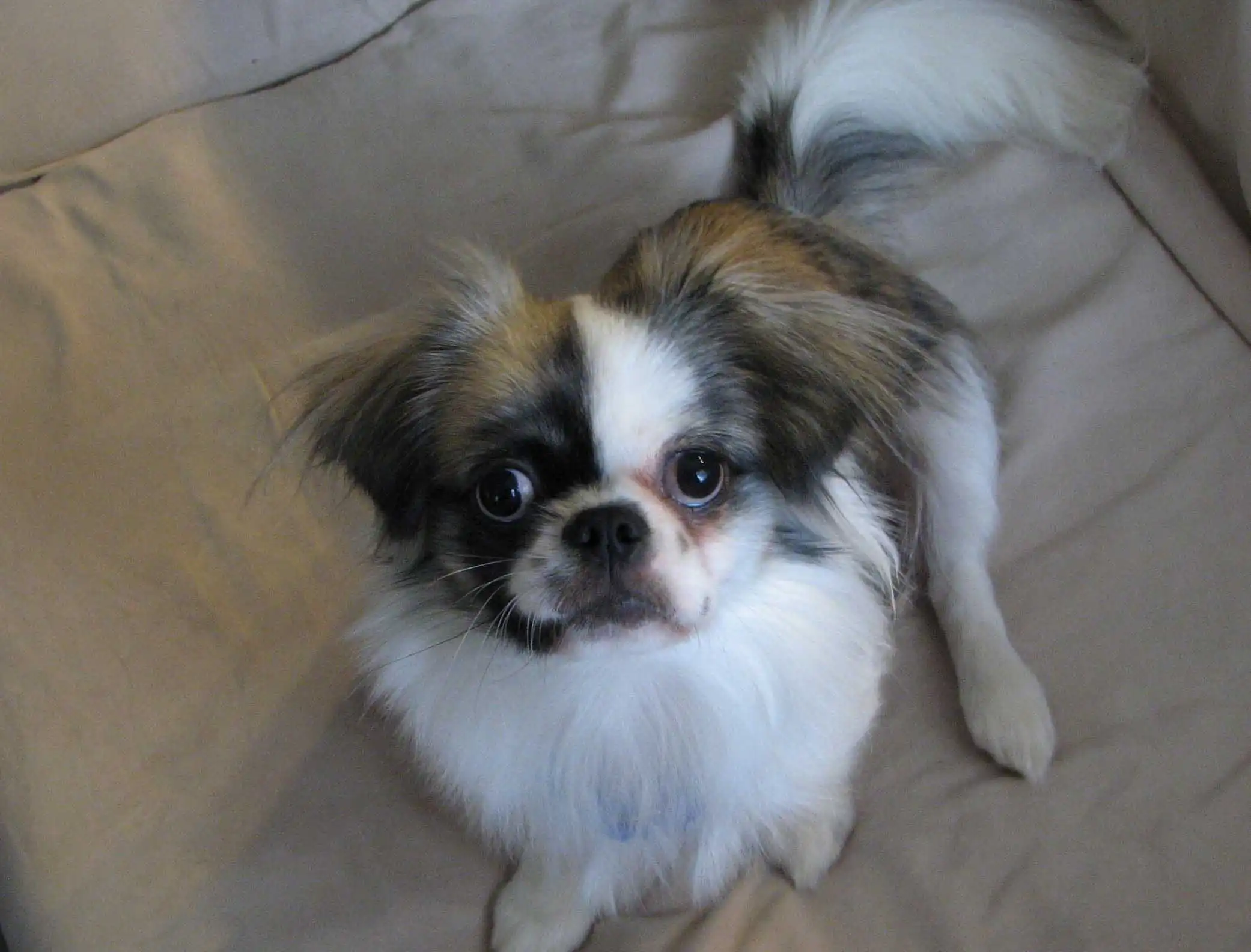
The Japeke is an affectionate and spirited hybrid, resulting from the combination of two Chinese breeds: the Japanese Chin and the Pekingese. This small companion exudes a dignified charm and possesses a courageous nature. Although the Japeke is recognized for its vigilance and can act as a reliable watchdog, many owners discover that their pet enjoys a more relaxed way of life, frequently curling up and napping contentedly in their laps.

Breed Origin
The Japeke is a compact hybrid that merges two beloved ancient Chinese breeds: the Japanese Chin and the Pekingese. As a designer dog, its narrative is still developing, yet both parent breeds have illustrious royal backgrounds. Interestingly, despite its name implying a Japanese heritage, the Japanese Chin actually hails from China. Like many breeds from this region, it was highly valued by the Imperial elite, who practiced secretive breeding methods. The Chinese court often gifted the Japanese Chin to foreign dignitaries, which ultimately facilitated its introduction to Japan. There, it was recognized as a distinct breed, separate from other dogs (inu), and earned the name "chin." The breed made its way to Europe and the United States through 19th-century trade with the West, maintaining a rare status for many years, even after being recognized by the American Kennel Club in 1888. The Pekingese, another distinguished breed from China, takes its name from the Imperial capital, Peking (now Beijing), and has a long, somewhat enigmatic history as a cherished companion of the Imperial family. This breed was closely protected within the Imperial Palace, enhancing its mystique. The West first encountered the Pekingese during the Opium War in 1860, when British soldiers found five of these dogs guarding the body of their deceased mistress, who had taken her own life to evade capture. These dogs were subsequently brought to England and presented to the nobility, including a gift to Queen Victoria. Despite its secretive origins in China and its later introduction to the West, the Pekingese quickly rose in popularity, officially joining the American Kennel Club in 1906 and maintaining a steady following ever since.
Breed Appearance
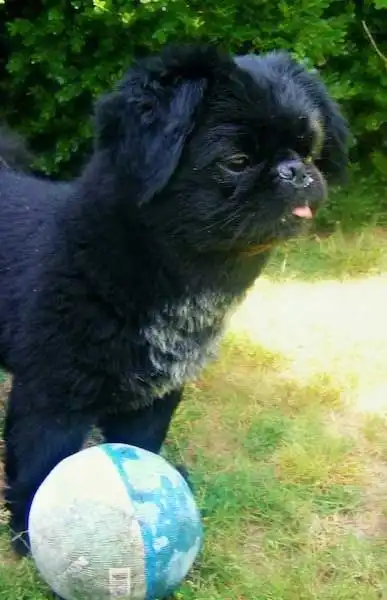
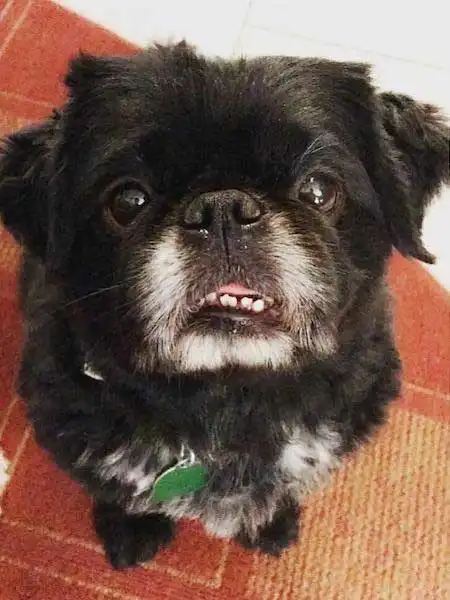
The Japeke is a hybrid dog breed that emerges from the crossbreeding of two Chinese breeds, and it may display characteristics that lean more towards one parent than the other. This small dog is known for its long, luxurious fur. The influence of the Japanese Chin adds height and a more refined look, which contrasts with the Pekingese's stocky, low-set frame. However, the Japeke is generally more robust than the Japanese Chin. Both parent breeds have brachycephalic skulls, leading to a nose that aligns with the forehead in the Japeke. Its eyes are relatively large, typically dark brown to black, while the nose is usually black, though it can appear brown in dogs with brown coats. The coat of a Japeke can differ; it may have an undercoat or not, depending on which parent it takes after more closely. The Japanese Chin boasts a soft, silky outer coat, while the Pekingese features a thick, double-layered coat. Regardless of the specific type, the Japeke's fur is long and soft, highlighted by a distinctive plume on the tail that often curls over its back.
Care Routine
Neither of the parent breeds is recognized as hypoallergenic, which means that the Japeke cannot be labeled as a hypoallergenic hybrid. This breed sheds moderately and features a thick, dense coat. To keep the coat in good condition, it is advisable to brush it weekly with a small bristle brush; lightly misting the coat with water beforehand can help minimize breakage. Although the Japeke typically drools only a little, its flat face may cause it to pant more often due to breathing difficulties. To promote fresh breath, brushing the dog's teeth twice a week is recommended, though daily brushing is preferable. Owners should avoid frequent bathing and instead concentrate on grooming methods to maintain a clean coat free of debris. Particular care should be taken with the long hair on the hind legs and rear, as well as the ears, which are often hidden beneath thick, long fur.
Behavior & Temperament
The Japeke is an energetic and observant hybrid, making it an excellent companion for families. While this toy-sized dog is ideally suited for homes with older children, it is affectionate towards kids of all ages. Despite its small stature, the Japeke is a vigilant watchdog, ready to alert its family to unfamiliar faces or potential threats. This breed often flourishes as the only pet in the household and may not readily accept other animals. However, with early and consistent socialization, the Japeke can adapt to living with multiple pets. Training can be somewhat challenging due to the breed's stubborn tendencies, but employing a calm, consistent, and gentle approach can enhance the learning experience. The Japeke generally prefers a relaxed lifestyle, exhibiting low energy levels and can meet its exercise needs with brief indoor activities.


Play & Exercise
The Japeke is generally quite sedentary and exhibits low energy levels. However, it is crucial to provide them with daily exercise, as this hybrid has a tendency to gain weight moderately. Given their low energy, Japekes do not need high-intensity workouts and should not be subjected to strenuous or extended exercise sessions. This is primarily due to their size, but more importantly, it is linked to the breathing challenges posed by their brachycephalic anatomy. Their short facial structure can limit airflow compared to other breeds, making vigorous physical activity potentially hazardous, as it could lead to respiratory issues or overheating.
Things to Know
Cups Per Day
0.5 Cups
Daily Activity
30 Minutes
Average Lifespan
13 Years
Origin
Unknown
Type
Crossbreeds
Size
Small
Origin Country
United States
Brush Frequency
Weekly
Coat Texture
Straight
Register
Your kids have been begging for a pet forever, and you've recently decided that it's time for your family to get a new addition -- a dog! While everyone is excited for the new arrival, you're wondering if you need to have a dog license. How much does it cost? Is it required? Where do you get one?
Member Clubs

PETINNATE
Other
Height & Weight
Weight
9 lbs (4 kg)Male: 9 lbs (4 kg) , Female: 9 lbs (4 kg)
Height
9 inches (23 sm)Male: 9 inches (23 sm) , Female: 9 inches (23 sm)
6 Months
7 lbs ( m 7 lbs, f 7 lbs )
7 inches ( m 7 inches, f 7 inches )
12 Months
8 lbs ( m 8 lbs, f 8 lbs )
8 inches ( m 8 inches, f 8 inches )
18 Months
10 lbs ( m 10 lbs, f 10 lbs )
9 inches ( m 9 inches, f 9 inches )
Eye Colors
Brown

Nose Colors
Black
Brown
Coat Colors
Black
White
Brown
Red