Kimola
Kimoloa
The Kimola is a hybrid breed that merges the fox-like characteristics of the American Eskimo with the unique beard of the Lhasa Apso. This fascinating combination creates an intelligent dog known for its bravery and protective nature towards its family, while also being cheerful, playful, and sociable. As an engaging companion, the Kimola flourishes through interaction with other pets, children, and new acquaintances, contributing to its development as a well-rounded dog. Expect a grooming routine that can be moderate to high; starting this early in your puppy's life will aid in their adjustment. Building a connection with your Kimola is a breeze, as they are affectionate and eager to please.

Breed Origin
The Kimola hybrid is a relatively recent addition to the dog world, and as such, detailed information about it is somewhat scarce. To appreciate the qualities that make this hybrid a cherished family pet, it’s essential to delve into its parent breeds. The American Eskimo Dog, which has roots in both the United States and Germany, is believed to have developed from various European Spitz breeds, such as the Keeshond from Holland, the white German Spitz, the white Pomeranian from Germany, and the Volpino Italiano, also known as the white Italian Spitz. In the mid-1800s, small, energetic white Nordic dogs became popular among German immigrant communities in America, initially known as the American Spitz. The name was later altered to the American Eskimo Dog, although the reason for this change is not entirely clear. This breed was primarily bred for companionship and as a watchdog. Known for their intelligence, American Eskimo Dogs are quick learners, often showcasing their skills in circus performances, which helped boost their popularity. The American Eskimo Dog Club of America was founded in 1985, and the breed gained recognition from this organization shortly thereafter. The American Kennel Club officially acknowledged the breed in 1995. Today, American Eskimo Dogs excel in various activities, including agility, obedience, rally, and conformation events, and they are also utilized in narcotics detection and as guard dogs. While they enjoy considerable popularity in the United States, they are less recognized in other regions. Conversely, the Lhasa Apso is a small, sturdy breed originating from the Himalayan mountains of China. Its precise ancestry is somewhat ambiguous, but it is thought to have descended from the larger Tibetan Terrier sheepdog. According to legend, dogs deemed unsuitable for herding due to their short legs were given to Buddhist monks, who kept them in monasteries. These dogs eventually became the foundation for the smaller, more desirable Lhasa Apso we know today. Originally, this breed was meant to safeguard Buddhist monasteries and the residences of Tibetan nobility. Due to historical mix-ups with the larger Tibetan Terrier, the Lhasa Apso was officially recognized by the American Kennel Club in 1935 and later by The Kennel Club in England in 1965. The Kimola hybrid is recognized by several organizations, including the American Canine Hybrid Club, Designer Dogs Kennel Club, Dog Registry of America, Inc., International Designer Canine Registry, and the United Kennel Club.
Breed Appearance
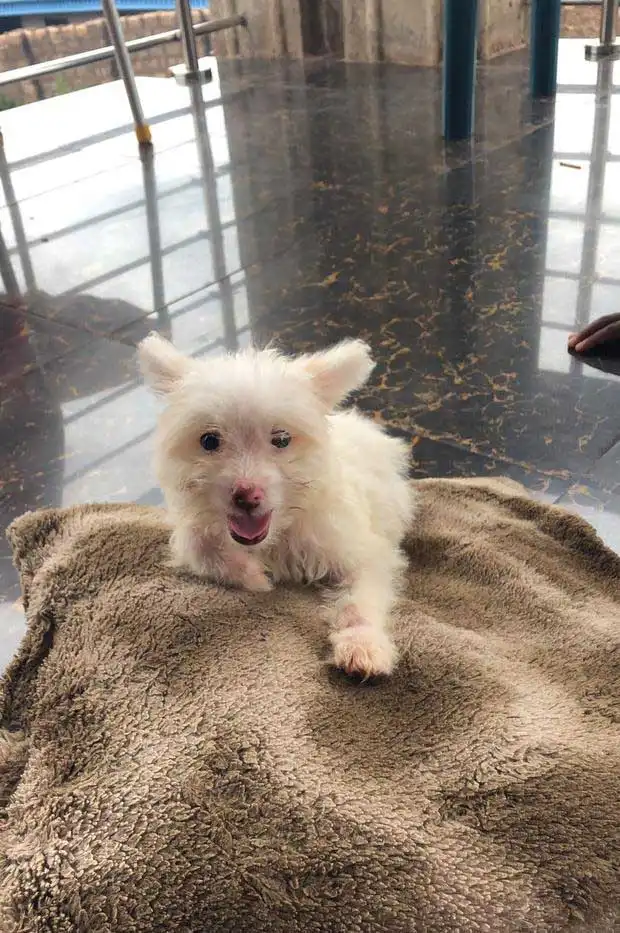
The Kimola hybrid is the result of breeding an American Eskimo Dog (Eskie) with a Lhasa Apso. As a result, these dogs may inherit physical characteristics from either or both parent breeds. On average, Kimolas live between 10 to 15 years and are classified as small to medium-sized dogs, typically weighing between 16 and 40 pounds and standing 12 to 19 inches tall. They are known for their thick, dense coats, which are medium in length and have a silky feel. Generally, they take after their Lhasa Apso parent, often showcasing colors like grey, cream, white, or a mix of these hues. The Kimola has a medium-sized head with floppy ears that are adorned with feather-like fur. Its eyes are almost almond-shaped, and the muzzle is well-proportioned to the head, making it resemble the Lhasa Apso more closely than the Eskie.

Care Routine
The Kimola hybrid is created by crossing an American Eskimo (Eskie) with a Lhasa Apso. Although neither of these parent breeds is considered hypoallergenic, they do shed a moderate amount and require regular grooming. The hybrid inherits a long, thick coat from both breeds, which demands daily brushing and occasional baths using dog shampoo. It's also essential to inspect and clean your Kimola's ears on a weekly basis, brush their teeth at least twice a week, and trim their nails as necessary. Thankfully, both parent breeds and the hybrid itself are recognized for their minimal drooling and lack of odor.
Behavior & Temperament
The Kimola hybrid, resulting from the combination of the American Eskimo Dog and the Lhasa Apso, can inherit personality traits from either or both parent breeds. This hybrid is often described as intelligent, affectionate, and loving, making it an excellent companion for children and other pets, especially if it has been socialized properly from an early age. Generally, Kimolas tend to be wary of strangers in their home, barking to alert their family until they feel confident that the newcomer is not a threat. They develop strong attachments to their human families and have a keen interest in participating in all activities. Even when they are in a different room, they stay alert, watching over the children while Mom is occupied in the kitchen.


Play & Exercise
The Kimola hybrid is a dog that needs a moderate level of exercise. Although he doesn't require as much physical activity as larger, more active breeds, he still thrives on daily walks and playful excursions in the park or backyard. His size and energy make him a perfect fit for apartments, condos, or family homes, regardless of whether there’s a fenced yard. He loves to join you on walks, shadow you throughout your daily activities, and is likely to want to participate in all family events.
Things to Know
Cups Per Day
2.0 Cups
Daily Activity
40 Minutes
Average Lifespan
13 Years
Origin
Unknown
Type
Crossbreeds
Size
Medium
Origin Country
Unknown
Brush Frequency
Daily
Coat Texture
Straight
Register
Your kids have been begging for a pet forever, and you've recently decided that it's time for your family to get a new addition -- a dog! While everyone is excited for the new arrival, you're wondering if you need to have a dog license. How much does it cost? Is it required? Where do you get one?
Member Clubs

PETINNATE
Other
Height & Weight
Weight
28 lbs (13 kg)Male: 28 lbs (13 kg) , Female: 28 lbs (13 kg)
Height
16 inches (41 sm)Male: 16 inches (41 sm) , Female: 16 inches (41 sm)
6 Months
21 lbs ( m 21 lbs, f 21 lbs )
11 inches ( m 11 inches, f 11 inches )
12 Months
23 lbs ( m 23 lbs, f 23 lbs )
15 inches ( m 15 inches, f 15 inches )
18 Months
28 lbs ( m 28 lbs, f 28 lbs )
15 inches ( m 15 inches, f 15 inches )
Eye Colors
Brown

Nose Colors
Black
Coat Colors
Cream
White
Gray