Large Munsterlander
Grosser Munsterlander Vorstehhund, Kleiner Munsterlander
The Munsterlander is a dynamic sporting breed that comes in two sizes: small and large. Although it is relatively new to the United States, it has long been favored for hunting in Europe. Both size variations require considerable attention and training to develop into well-adjusted family companions. With a strong hunting drive, the Munsterlander thrives when involved in meaningful activities. It is crucial for this breed to reside indoors, allowing for plenty of interaction with family members. If left unsupervised in the backyard, a Munsterlander may engage in mischief and potentially cause damage to your landscaping, as they are adept at finding ways to entertain themselves.
Breed Origin
The Small and Large Munsterlander breeds share a unified historical lineage. Although both varieties are relatively new to the United States and Canada, they have been part of European canine history since the 13th or 14th century. In Europe, the Small Munsterlander is known as the Kleiner Munsterlander, while the Large Munsterlander is referred to as the Grosser Munsterlander. The formal distinction between the two sizes emerged in the mid-19th century. Hailing from the Munsterland region of Germany, the Munsterlander is categorized as a German Spaniel. While the earliest official records of these dogs date back to 1870, it is widely accepted that they have existed since the 13th or 14th century, with medieval artwork showcasing dogs that bear a striking resemblance to the Munsterlander. The formal classification of size was not established until the early 20th century, when breed standards were created. The Small Munsterlander is defined as standing between 19 and 23 inches at the shoulder, while the Large Munsterlander is specified to be 23 to 25 inches tall. The Large Munsterlander received its official breed recognition in 1919. Experts believe that the Munsterlander was developed by crossing longhaired Pointers with various Spaniel breeds. In the early 20th century, breeders began to refine each size by selectively mating dogs with desired traits to ensure the inheritance of those characteristics. The first recorded Munsterlander arrived in the United States in 1966, igniting a passion among dog enthusiasts that led to the establishment of the Large Munsterlander Club of America and the Small Munsterlander Club of America. In 2006, both breeds gained recognition from the United Kennel Club, allowing them to compete in all UKC-sanctioned events.
Breed Appearance
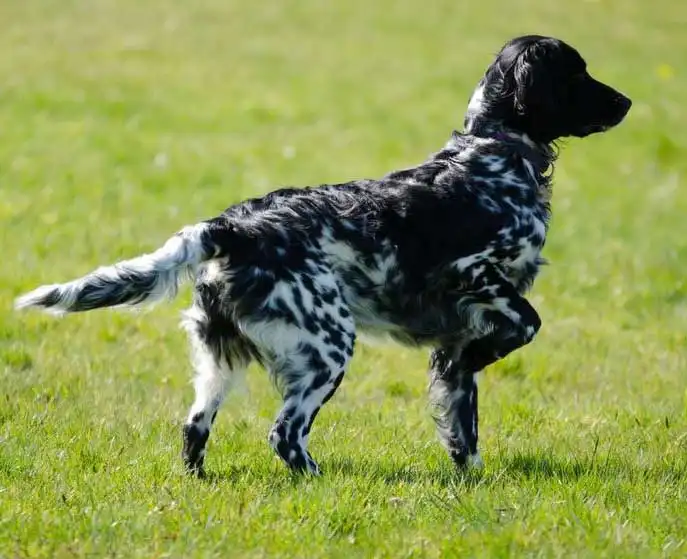
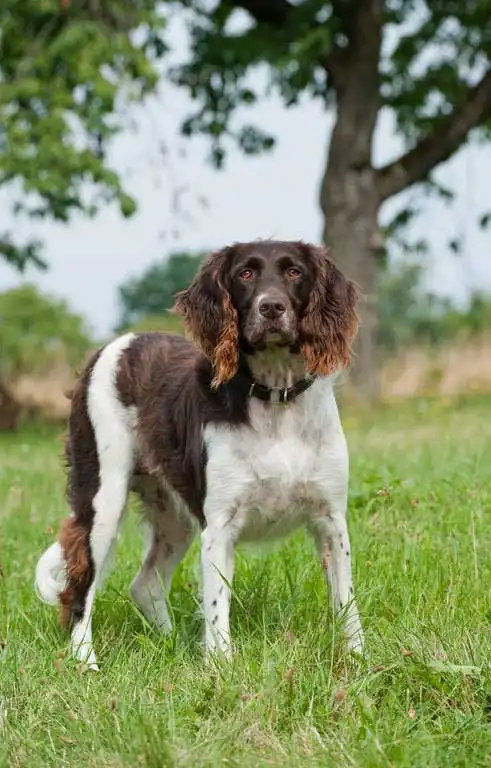
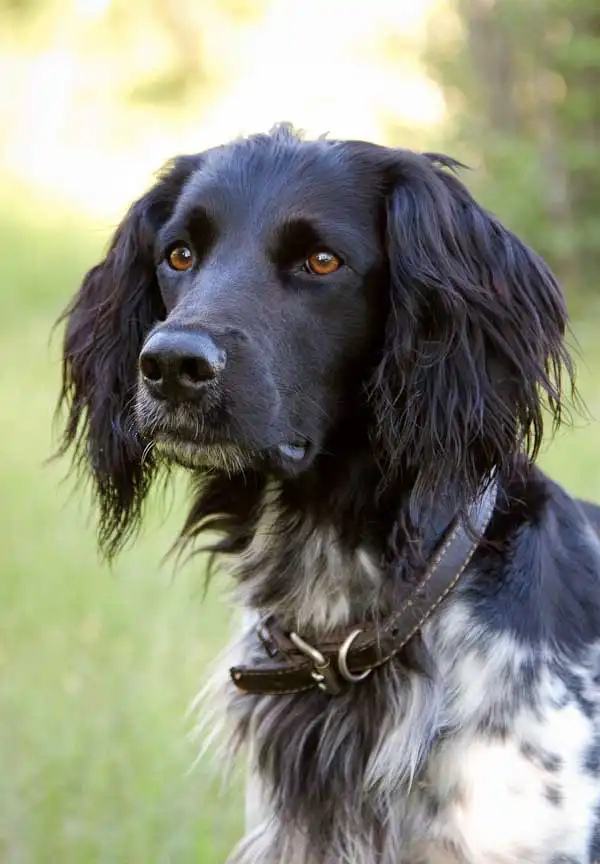
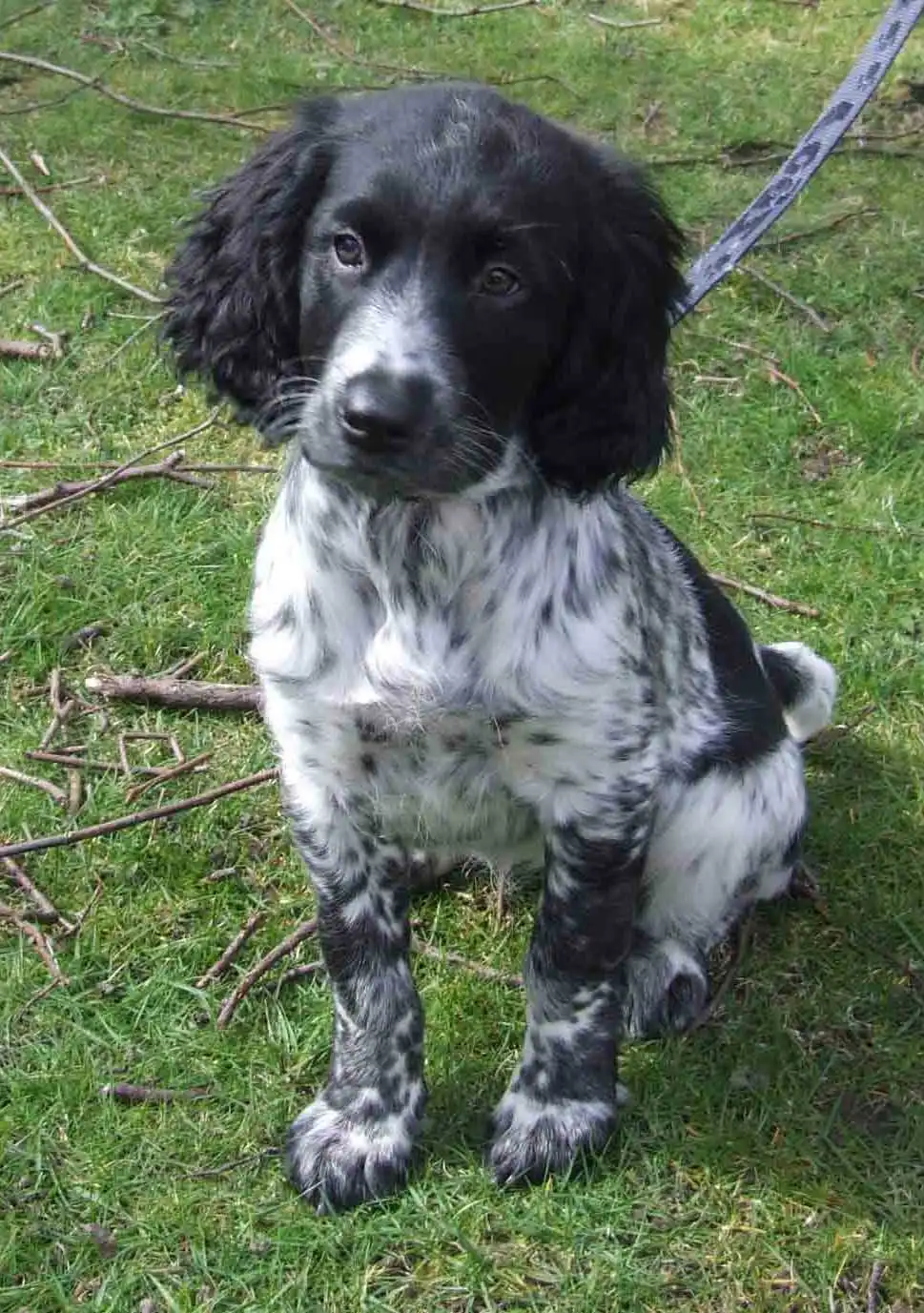
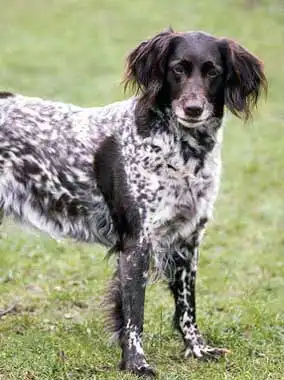
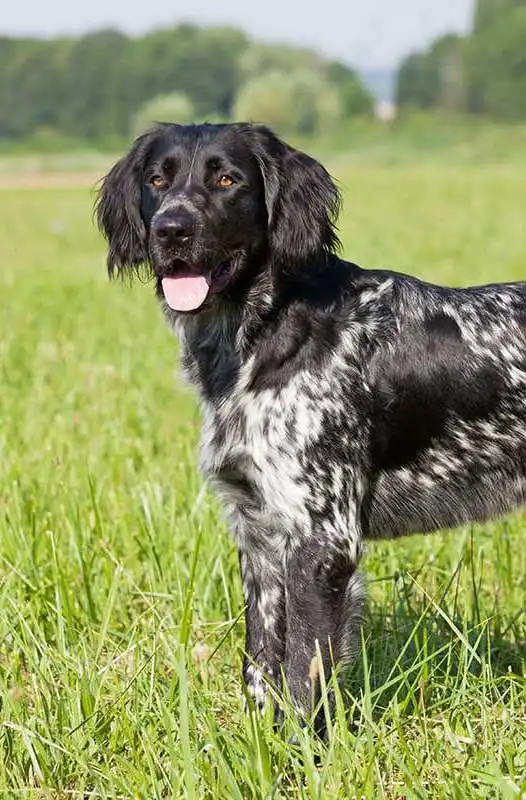
The Large Munsterlander is distinguished by its long, thick coat, except for the head, which is covered in short, smooth hair. The coat should lie flat against the body without any curls. Notably, there should be prominent feathering on the ears, tail, and the back of the legs, with some feathering on the chest being acceptable and even preferred in conformation events. The skin of the Large Munsterlander should be loose. In terms of color, this breed typically has a white base with black patches, which may appear roaned or ticked. The head is mainly black, often featuring a white blaze or spot on the forehead. In a similar vein, the Small Munsterlander also has a long, dense coat that is built to endure various weather conditions. This coat can be straight or have a slight wave or curl. It should display attractive feathering on the ears, tail, and back of the legs, but unlike the Large Munsterlander, it should not have excessive feathering on the chest. The skin of the Small Munsterlander should fit snugly against the body. Its coloration is akin to that of the Large Munsterlander, showcasing a white background with brown patches, along with potential roaning and ticking. A blaze on the head is permissible, as are tan markings on the cheeks, above the eyes, and around the anus.
Care Routine
The Munsterlander demands considerable grooming care. Although his coat is ideal for hunting in diverse environments, its length and feathering are prone to tangling. To keep it manageable, he should be brushed weekly using a natural bristle brush and a steel comb. Incorporating a de-tangler and a leave-in conditioner can further reduce knots. After a hunting outing, it’s best to brush him right away to eliminate any tangles that may have formed. This breed experiences seasonal shedding, losing its undercoat in the spring, and unspayed females will shed after each heat cycle. Consistent brushing is crucial to prevent loose hairs from accumulating on furniture and clothing. If he begins to develop an odor, a bath can be administered approximately once a month; however, frequent bathing is not recommended as it may irritate his skin.
Behavior & Temperament
The Large Munsterlander is an enthusiastic learner with a strong aptitude for training. This breed is sensitive and flourishes under gentle guidance combined with plenty of positive reinforcement. As a sporting dog, he requires substantial physical activity, including stimulating games that engage his intellect to keep him mentally alert. Although he has a certain level of independence, consistent training is crucial. If left alone for too long, he may develop destructive habits, which could become bothersome to neighbors. Conversely, the Small Munsterlander is a adaptable and self-assured dog, perfectly suited for a working role that allows him to showcase his hunting skills. He is loving and enjoys being the focal point of attention, making him a wonderful companion for families. However, like all sporting breeds, he has a high energy level and requires ample exercise to stave off boredom. If left outside without adequate stimulation, he may exhibit destructive behaviors. With the endurance to run for hours, it’s vital to provide him with plenty of exercise opportunities. Many Small Munsterlander owners have even purchased treadmills for those days when outdoor activities are hindered by inclement weather.
Play & Exercise
Things to Know
Cups Per Day
0.0 Cups
Daily Activity
0 Minutes
Average Lifespan
12 Years
Origin
1300s
Type
Pure Breeds
Size
Medium
Origin Country
Munster, Germany
Brush Frequency
Daily
Coat Texture
Straight
Register
Your kids have been begging for a pet forever, and you've recently decided that it's time for your family to get a new addition -- a dog! While everyone is excited for the new arrival, you're wondering if you need to have a dog license. How much does it cost? Is it required? Where do you get one?
Member Clubs

PETINNATE
Gun Dog

UKC
Gun Dog
Height & Weight
Weight
56 lbs (25 kg)Male: 58 lbs (26 kg) , Female: 55 lbs (25 kg)
Height
22 inches (56 sm)Male: 23 inches (58 sm) , Female: 22 inches (56 sm)
Eye Colors
Brown
Nose Colors
Black
Coat Colors
Brown
White
Gray