
Malti-Pin
Malti Pin, Maltipin, Maltese Pin
The Malti-Pin is a designer dog that emerges from the crossbreeding of a Maltese and a Miniature Pinscher. Being a relatively new player in the world of hybrid breeds, there is not much detailed information available about its origins or the motivations behind its creation. Nonetheless, it is known that this breed generally weighs between 8 and 10 pounds, requires minimal grooming to keep its coat in good condition, and is known for its lively, intelligent, friendly, and sociable demeanor, making it a wonderful companion and family pet. To better understand the Malti-Pin, it is beneficial to examine the distinct traits of its parent breeds to uncover any potential inherited qualities.

Breed Origin
The Malti-Pin is a hybrid dog breed created by crossing the Maltese with the Miniature Pinscher. As a relatively recent addition to the canine world, there is limited information regarding its background and intended purpose. To gain a clearer understanding of the Malti-Pin, it is beneficial to delve into the histories of its parent breeds. The Maltese has its origins in Malta, situated off the southern coast of Italy, with a lineage that may date back to around 3500 B.C. This breed is considered one of the earliest lapdogs and possibly the oldest among European toy breeds. Initially bred for companionship, the Maltese continues to thrive in this role today. It gained significant popularity in Britain, where it became a beloved lapdog among the affluent, often described as being "no larger than common ferrets" or "about the size of squirrels." These dogs were treasured as "jewels of women," frequently carried in the bosoms and sleeves of fashionable ladies. The breed's rich history led it to the show ring in England in 1859 and in America in 1877, with the American Kennel Club officially recognizing the Maltese in 1963. In contrast, the Miniature Pinscher originates from Germany, where it was initially bred for rat-catching, a task well-suited to its compact size. For many years, these dogs also served as watchdogs and companions. Although the exact origins of the Miniature Pinscher are somewhat unclear, it is generally believed to have descended from the German Pinscher, along with various terriers, the Dachshund, and the Italian Greyhound. Contrary to popular belief, the Miniature Pinscher does not share ancestry with the Doberman; any similarities are due to the influence of the German Pinscher on both breeds' development. The breed was formally recognized in 1895 with the founding of the German Pinscher-Schnauzer Klub. The Miniature Pinscher made its show debut in Germany in 1900, remaining relatively unknown outside of Germany and Scandinavia until it arrived in America, where it was recognized by the American Kennel Club in 1925 as the "Min Pin." In 1972, the breed officially adopted the name Miniature Pinscher. The Malti-Pin hybrid is recognized by various organizations, including the American Canine Hybrid Club, Designer Breed Registry, Designer Dog Kennel Club, Dog Registry of America, and the International Designer Canine Registry.
Breed Appearance
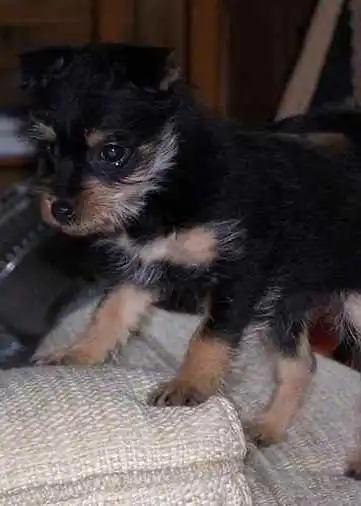
The Malti-Pin is a charming hybrid breed that emerges from the union of the Maltese and the Miniature Pinscher. This breed can display a variety of physical characteristics inherited from one or both of its parent breeds. Typically, a Malti-Pin measures between 9 and 13 inches in height and weighs approximately 8 to 10 pounds. Its coat can differ significantly, ranging from long, silky strands to a short, sleek finish. The body structure may be either sturdy with delicate bones or lean and athletic. The eyes are often round or oval, dark-hued, and exude a vibrant, energetic demeanor. It features a black nose, a well-defined muzzle, and a scissors bite. The ears may either hang down or be cropped, while the tail can either curl over the back or stand erect. The paws are small and bear a resemblance to those of a cat. In terms of coloration, Malti-Pins can appear in various shades, including white, red, black and tan, or chocolate. Their coat is typically smooth and straight, and due to their Maltese heritage, they may be hypoallergenic, resulting in minimal shedding, drooling, and odor.

Care Routine
The Malti-Pin hybrid is generally easy to care for, requiring brushing about once a week, unless it has inherited a longer, thicker coat from its Maltese ancestry. Thanks to its Maltese parent, this breed possesses hypoallergenic traits, and the shedding patterns of the parent breeds range from minimal to moderate, making the Malti-Pin a suitable option for those with respiratory conditions or asthma. To keep your Malti-Pin healthy, it’s important to check and clean their ears weekly to avoid infections. Ideally, their teeth should be brushed several times a week, with daily brushing being the most effective way to prevent periodontal disease and tooth loss. Nail trimming should be performed as needed to keep them at a manageable length. Regular veterinary visits are crucial for monitoring eye, ear, and dental health, ensuring your hybrid stays in optimal condition. Bathing should be limited to when absolutely necessary, as these dogs typically have low drooling and odor levels.
Behavior & Temperament
The Malti-Pin, a charming mix of the Maltese and Miniature Pinscher, is known for its lively, loving, loyal, intelligent, and friendly nature. These dogs generally get along well with children and even the family cat, but early socialization is crucial for fostering positive interactions. While they can be welcoming to newcomers, they might initially exhibit some wariness until they feel comfortable with the stranger. If you live in an apartment or a quiet neighborhood, be aware that barking could be an issue, as it is common in both parent breeds. The Malti-Pin has a strong desire to please, but training can be somewhat challenging. It’s vital to approach training with a balance of firmness and gentleness, providing ample positive reinforcement and encouragement. Patience is key, as it may take time for your dog to reach its full potential, but the effort will be worthwhile. Ultimately, you’ll gain a delightful furry friend who spreads joy and warmth to everyone around them.


Play & Exercise
Considering that both parent breeds are known for their love of lap-sitting, you might find your hybrid companion comfortably settled in your lap even before you sit down. These pets are affectionate and eager to bond with their human families, often showing a reluctance to be separated from them. However, their talent for lounging doesn’t equate to laziness! They are energetic and will take every opportunity to run and play. Whether it’s joining you for walks or jogs, engaging in a game of fetch or Frisbee in the yard, or having fun at the dog park, they are always ready for action. Given their high intelligence, it’s crucial to provide them with mental stimulation through agility training, obedience drills, and possibly some earth dog activities. This mental engagement is key to preventing the destructive behaviors that can stem from boredom. Your Malti-Pin will likely require about an hour of physical exercise each day, along with mental challenges. Their compact size makes them well-suited for apartment or condo living, as well as homes with or without fenced yards. However, it’s important to keep noise restrictions in mind, as barking can be a concern. The Malti-Pin adapts easily to both urban and rural settings and thrives in warmer climates, needing extra protection in colder regions.
Things to Know
Cups Per Day
1.0 Cups
Daily Activity
60 Minutes
Average Lifespan
14 Years
Origin
Unknown
Type
Crossbreeds
Size
Small
Origin Country
Unknown
Brush Frequency
Daily
Coat Texture
Straight
Register
Your kids have been begging for a pet forever, and you've recently decided that it's time for your family to get a new addition -- a dog! While everyone is excited for the new arrival, you're wondering if you need to have a dog license. How much does it cost? Is it required? Where do you get one?
Member Clubs

PETINNATE
Other
Height & Weight
Weight
9 lbs (4 kg)Male: 9 lbs (4 kg) , Female: 9 lbs (4 kg)
Height
11 inches (28 sm)Male: 11 inches (28 sm) , Female: 11 inches (28 sm)
6 Months
7 lbs ( m 7 lbs, f 7 lbs )
8 inches ( m 8 inches, f 8 inches )
12 Months
9 lbs ( m 9 lbs, f 9 lbs )
11 inches ( m 11 inches, f 11 inches )
18 Months
9 lbs ( m 9 lbs, f 9 lbs )
11 inches ( m 11 inches, f 11 inches )
Eye Colors
Brown

Nose Colors
Black
Coat Colors
White
Red

Black

Fawn