Markiesje
Dutch Tulip Dog, Hollandse Tulphond
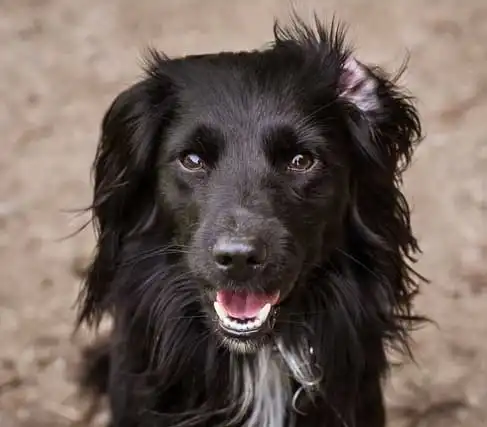
The Markiesje is a compact black dog whose origins enthusiasts can trace back to the 1600s. However, the breed has undergone considerable changes over the years, particularly influenced by the introduction of other breeds. Some experts suggest that its contemporary development truly began in the late 1970s with the establishment of a dedicated breed club. Renowned for its amiable temperament, the Markiesje is known to get along well with a variety of animals and people of all ages. Despite its friendly nature, this breed is quite active and needs plenty of exercise each day, making it less ideal for apartment living; it flourishes in a larger home with a secure yard.
Breed Origin
The origins of the Markisesje, commonly known as the Dutch Tulip Hound or Hollandse Tulphond, are a topic of some contention. Some breed enthusiasts assert that this dog has ancient roots, citing artwork from the 1600s that features canines resembling this small black companion. Conversely, others dispute this claim, noting that the Markisesje closely resembles various spaniel breeds, suggesting a possible shared lineage. Many supporters of the breed contend that the Markisesje has likely played a role in the development of several other Dutch breeds, such as the Wetterhoun, Stabyhoun, and Kooikerhondje, a perspective endorsed by the official breed club. Unfortunately, the lack of historical documentation regarding the breeding of these delightful dogs complicates efforts to trace their ancestry accurately. It is generally believed that the contemporary Markisesje represents a revival of the original breed, which began with the establishment of the first breed club by Mrs. van Ederen and Mrs. Westenbrink-Koning in 1979. This revival also involved the introduction of breeds like the Chinese Crested to diversify the gene pool. While these elegant companion animals have not yet received recognition from major kennel clubs, they were officially acknowledged by the Dutch Kennel Club in the Netherlands on May 1, 1999.
Breed Appearance
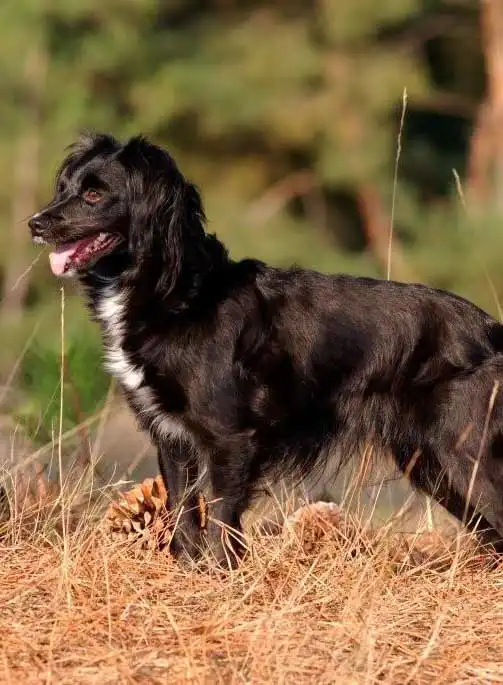
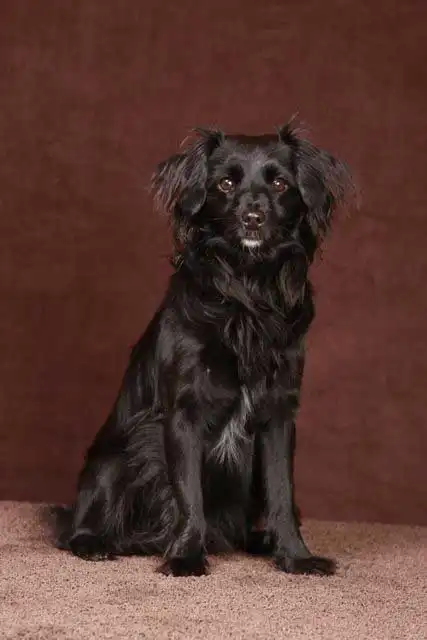
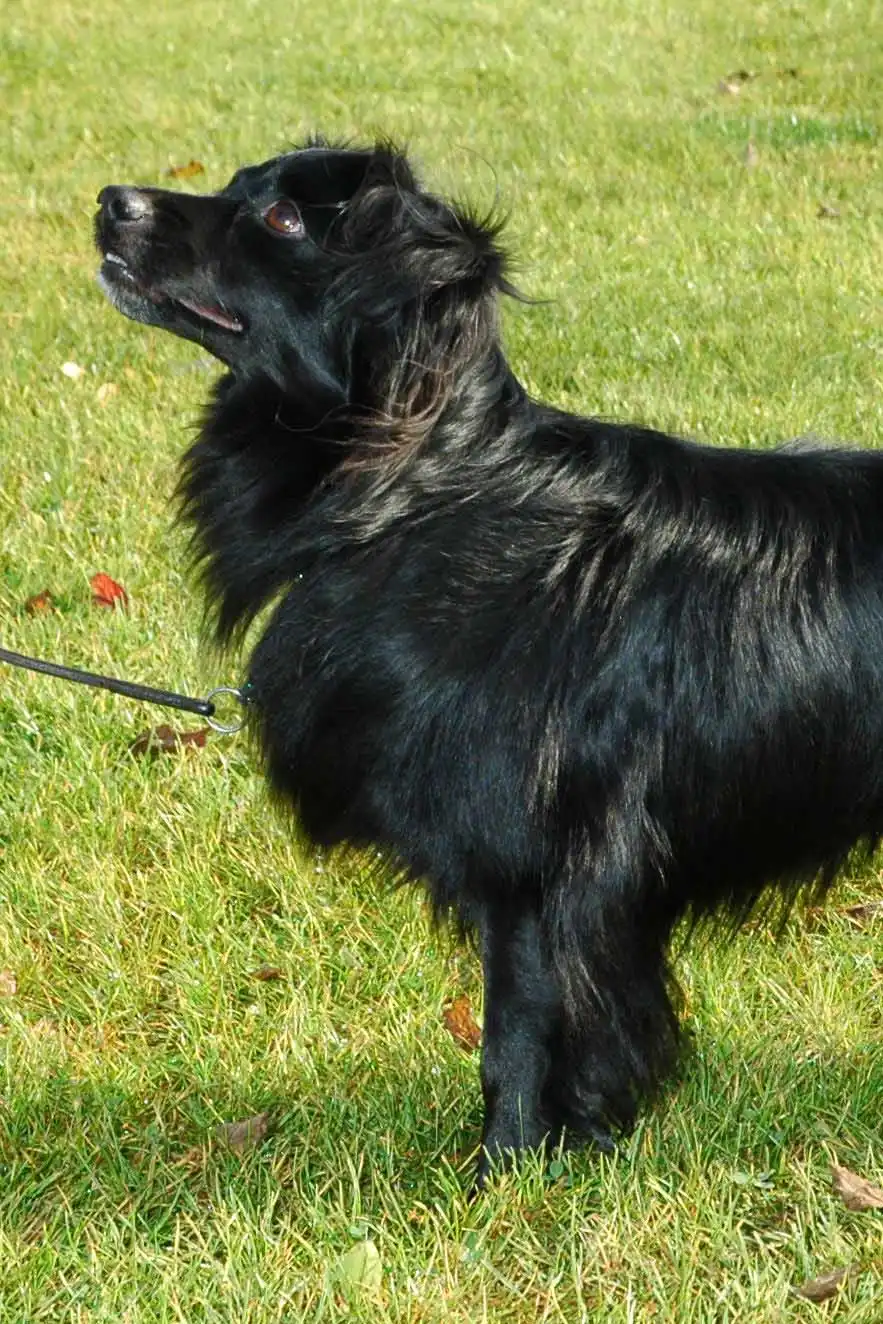
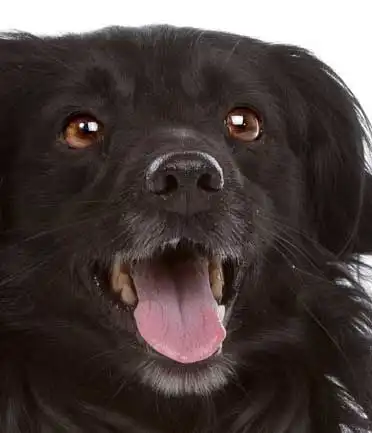
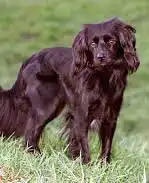
The Markiesje is a small, elegantly designed dog, distinguished by a body that is slightly longer than it is tall and a feathered tail that aligns smoothly with its back. Its head is subtly elongated, featuring a nearly flat skull and a well-defined muzzle that tapers gently toward the nose. This breed is known for its large, almond-shaped eyes that express a gentle demeanor, available in a variety of brown shades. The medium-sized, triangular ears are richly feathered and set high on the sides of the head, gracefully falling forward to frame the dog's face. The coat of the Dutch Tulip Hound is medium in length, consisting of a single layer of sleek black fur that can be straight or slightly wavy, often accented with white markings. Feathering is typically present not only on the ears and tail but also along the hind legs of this breed.
Care Routine
This breed has a simple, single-layer coat that doesn't need frequent baths. However, it's important to brush them regularly—preferably daily or every other day—to remove loose hair and avoid tangles or mats. A robust bristle brush is usually the best choice for maintaining this dog's smooth coat. Moreover, it's vital to regularly check the dog's ears to ensure they stay clean and dry, and to trim any excess hair from the inner ear as needed, which can help prevent ear infections.
Behavior & Temperament
These delightful little animals are celebrated for their friendly nature and love for human companionship, enjoying attention without being overly needy. The Markiseje is both gentle and playful, easily getting along with other dogs and children of all ages. While it's important to supervise interactions between young children and dogs, this breed is generally trustworthy around little ones. They usually do not experience separation anxiety when left alone at home and tend to behave well in public environments. Despite their small size and charming looks, which make them a popular choice for families, they are also skilled at performing the tasks of a gun dog, proficiently retrieving small game or birds. Although these sociable dogs may not be ideal for guarding, their keen awareness makes them effective watchdogs, as they are quick to alert their families to any potential dangers.
Play & Exercise
The Markiseje is a breed that thrives on a moderate amount of physical activity, requiring approximately an hour of vigorous exercise each day to remain happy and healthy. These dogs can easily keep up during walks and jogs, and they often enjoy or excel in a variety of activities such as swimming, agility training, or canine freestyle dance. Despite their relatively small size, they are not ideally suited for confined living environments like apartments, as they tend to be more energetic and vocal compared to some other breeds. They are likely to thrive in a spacious home with a fenced yard.
Things to Know
Cups Per Day
1.0 Cups
Daily Activity
45 Minutes
Average Lifespan
13 Years
Origin
Ancient Times
Type
Pure Breeds
Size
Small
Origin Country
Netherlands
Brush Frequency
Weekly
Coat Texture
Straight
Register
Your kids have been begging for a pet forever, and you've recently decided that it's time for your family to get a new addition -- a dog! While everyone is excited for the new arrival, you're wondering if you need to have a dog license. How much does it cost? Is it required? Where do you get one?
Member Clubs

PETINNATE
Other
Height & Weight
Weight
13 lbs (6 kg)Male: 13 lbs (6 kg) , Female: 12 lbs (5 kg)
Height
14 inches (36 sm)Male: 14 inches (36 sm) , Female: 13 inches (33 sm)
6 Months
9 lbs ( m 9 lbs, f 9 lbs )
12 inches ( m 12 inches, f 12 inches )
12 Months
12 lbs ( m 12 lbs, f 12 lbs )
13 inches ( m 13 inches, f 13 inches )
18 Months
12 lbs ( m 12 lbs, f 12 lbs )
13 inches ( m 13 inches, f 13 inches )
Eye Colors
Brown

Nose Colors
Black
Coat Colors
Black