Miniature Boxer
Mini Boxer
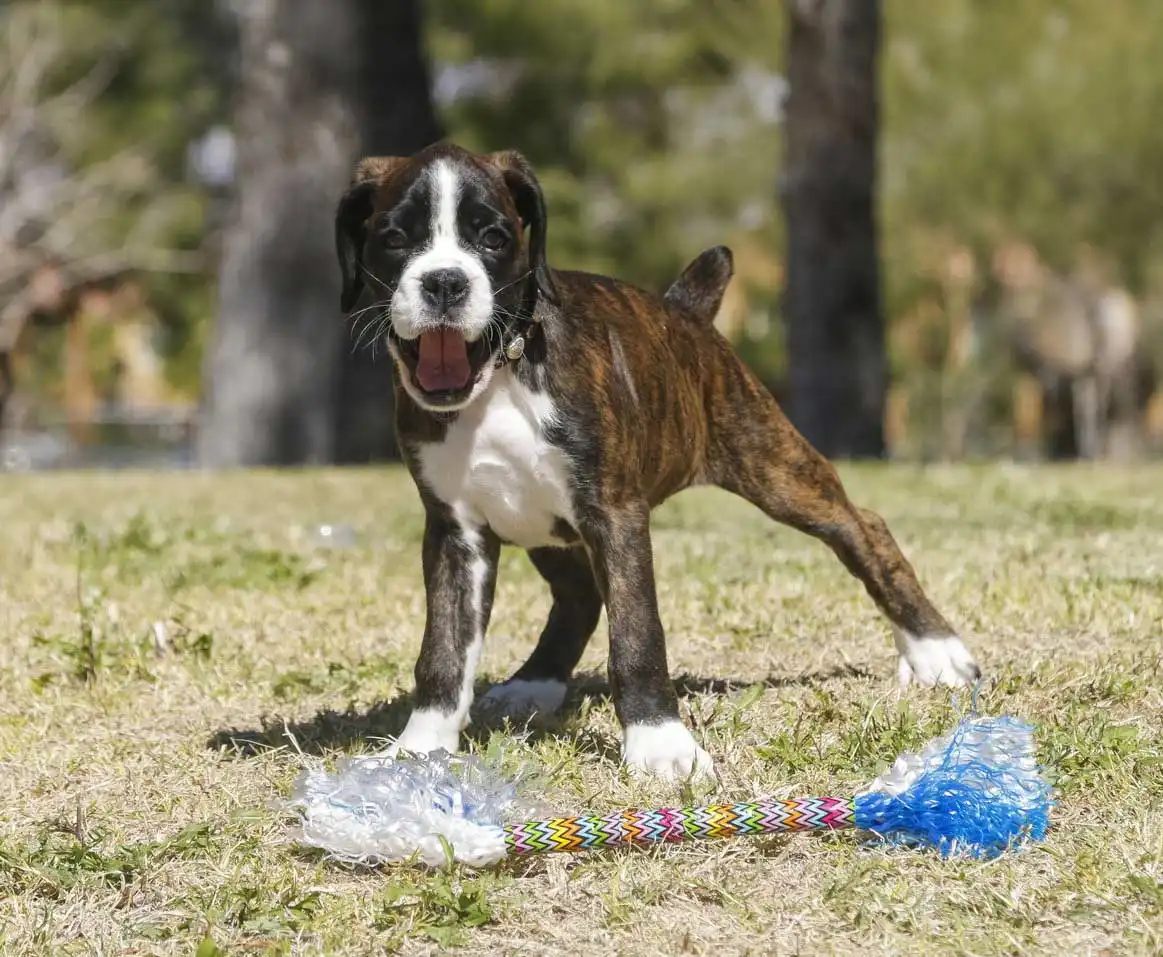
The Miniature Boxer is a hybrid breed that merges the characteristics of the Boston Terrier and the Boxer. This crossbreed is celebrated for its friendly and affectionate disposition, easily forming deep connections with its human companions. Typically, they are good-natured with children, cats, and other animals, though they may find it challenging to cope with being left alone for long stretches. While they possess a gentle temperament, Miniature Boxers are also alert watchdogs, always ready to safeguard their families, much like they would protect their own young. To raise a well-adjusted Miniature Boxer, it is essential to provide early socialization and establish firm leadership, as this breed can exhibit a strong-willed nature.
Breed Origin
The Miniature Boxer is a relatively new hybrid breed, created by crossing the Boston Terrier with the Boxer. While it is still emerging in the world of hybrid dogs, some information about it is already available. The precise time and location of its inception are not well-documented, but its popularity is steadily increasing in North America. It's worth noting that other breed combinations also referred to as "Miniature Boxer" include mixes with Pugs, Fox Terriers, and Rat Terriers. However, the most prevalent version of the Miniature Boxer is the one that results from the Boston Terrier and Boxer pairing. This summary provides an overview of what we currently know about the hybrid's background. To better understand the Miniature Boxer’s heritage, we should examine its parent breeds. The Boston Terrier, often called the American Gentleman, Boston Bull, or simply Boston, originates from the United States. This breed was developed from a cross between the English Bulldog and a white English Terrier, making it a true American creation. It has gained significant popularity in the U.S. and is even designated as the state dog of Massachusetts—an intriguing detail given its name! Some enthusiasts also suggest that the Boston Terrier may have French Bulldog ancestry, which could explain its smaller stature. The breed's history dates back to the late 19th century in Boston, Massachusetts, when Robert C. Hooper acquired a dog named "Judge." This dog was a mix of the English Bulldog and white English Terrier, closely resembling the bulldog lineage. Judge was subsequently bred with a white female, and their offspring marked the inception of the Boston Terrier breed. At that time, bulldogs were commonly utilized in both Britain and the U.S. for blood sports like bull-baiting and pit fighting, practices that were later outlawed. The Boston Terrier returned to Europe in the 1920s and by the 1950s had become the most popular purebred dog in North America. Today, it remains a cherished breed, celebrated for its loyalty and companionship. The American Kennel Club officially recognized the Boston Terrier in 1893. Conversely, the Boxer, known in Germany as the Deutscher Boxer, German Bulldog, or German Boxer, was developed in Germany during the late 19th and early 20th centuries. It is thought to share a distant ancestry with the English Bulldog. The Boxer’s lineage may also include fighting dogs from Tibet, and it was originally bred for various purposes, including work, guarding, and hunting. Its ancestor, the "bullenbeisser mastiff" (meaning "bull-biter"), was a sturdy German breed used to pursue and capture large game such as boar, bison, and bears. During both World Wars, Boxers served as messengers and supply carriers, and soldiers returning from the wars brought these dogs back to the U.S., where their worth was quickly recognized, leading to a rise in their popularity. The American Kennel Club first recognized the Boxer breed in 1904.
Breed Appearance
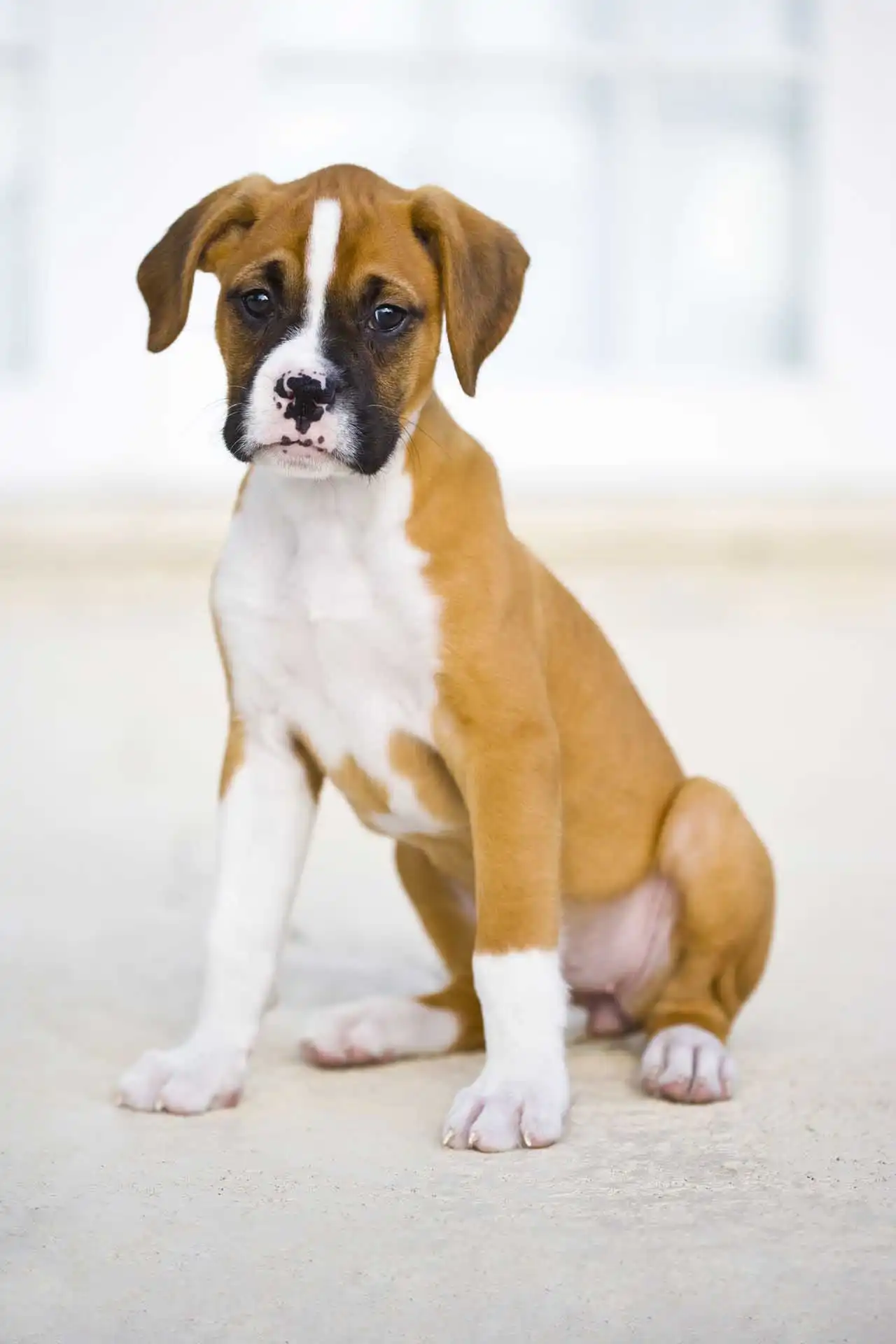
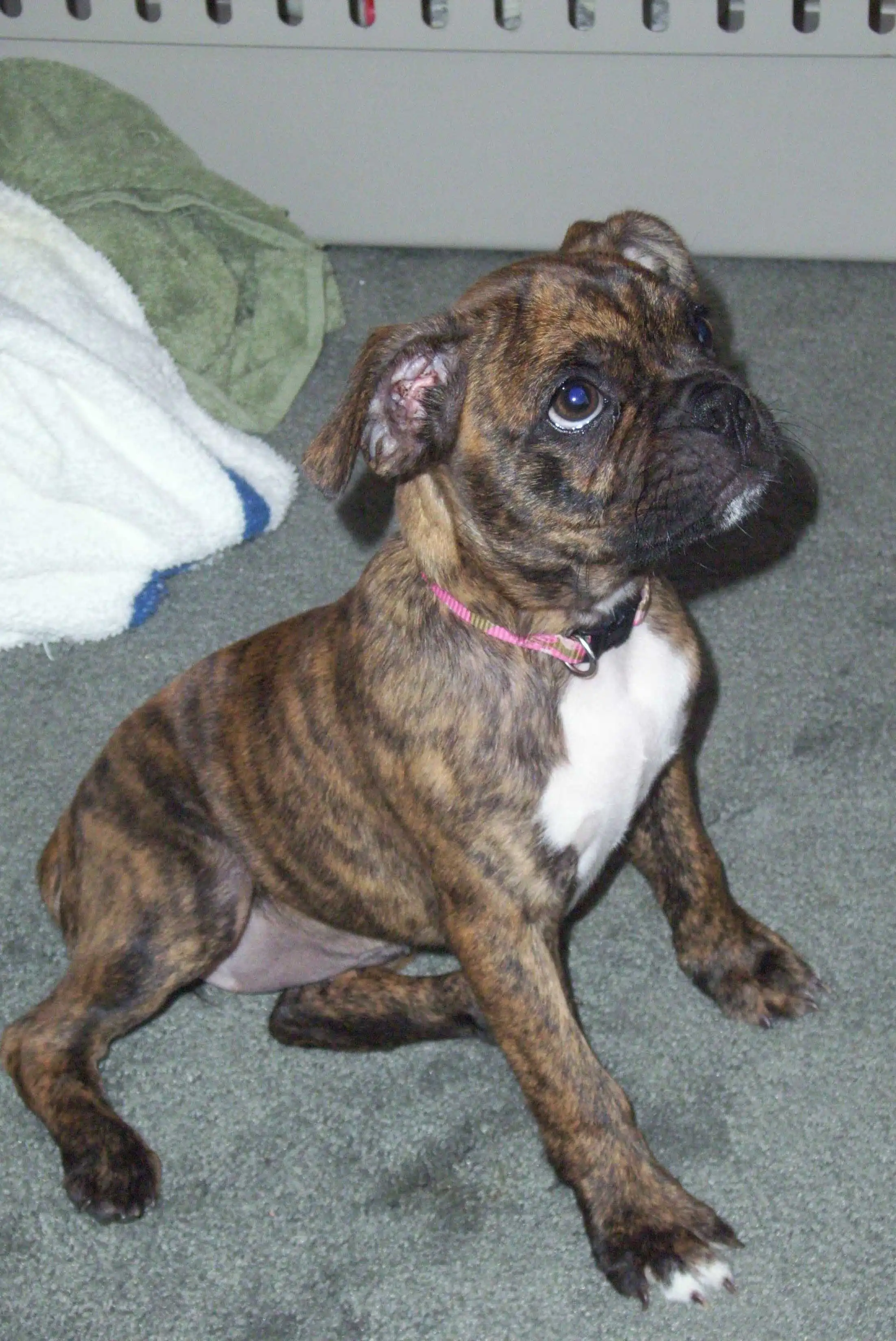
The Miniature Boxer is a hybrid breed that arises from the crossbreeding of the Boston Terrier and the Boxer, which allows it to display characteristics from one or both of its parent breeds. Adult Miniature Boxers usually reach a height of 15 to 22 inches and weigh between 25 and 55 pounds. Their physique can range from small and compact to medium and muscular. This breed often showcases a broad head or an arched skull, along with a square face, a short muzzle, and brown eyes that may be slightly protruding, paired with a black nose. Ear shapes can differ, appearing either small and upright or longer and droopy. The tail is typically set lower on the body, tapering to a straight or curly form, or it may be longer and held upright if docked, reflecting the traits of its parent breeds. Miniature Boxers generally have round, compact feet with arched toes and a coat that is short, fine, hard, and smooth. Their color variations include brindle, seal, black with white markings, or fawn, and they often exhibit an undershot bite.

Care Routine
The Miniature Boxer, a crossbreed between the Boston Terrier and the Boxer, is typically regarded as having low to moderate grooming needs. Both of its parent breeds shed hair to varying degrees, which means that brushing should be done daily or every other day to remove loose fur and debris. This hybrid is not hypoallergenic, so consistent grooming is essential to manage shedding, making it easier for those with respiratory conditions or asthma. It is recommended to inspect and clean the ears on a weekly basis, taking care not to insert anything into the ear canal to reduce the risk of infections. Additionally, checking the feet and toenails weekly is advisable, trimming them as needed unless the dog naturally wears them down through regular activity. Routine dental care is crucial, with daily brushing being ideal, or at least two to three times a week, to minimize the chances of periodontal disease and tooth loss. Regular eye exams, physical check-ups, and blood tests are vital for ensuring your pet's overall health and well-being. Due to the high energy levels inherited from both parent breeds, daily exercise is essential to prevent obesity and support a healthy lifestyle for your Miniature Boxer.
Behavior & Temperament
The Miniature Boxer hybrid, a charming blend of the Boston Terrier and the Boxer, can inherit various temperament and personality traits from one or both of its parent breeds. This hybrid is characterized by its friendly, affectionate, alert, loving, intelligent, gentle, loyal, protective, social, and playful nature. While they typically manage alone time reasonably well, they excel as family pets. To foster positive interactions with children, family cats, and other animals, early socialization is strongly advised. Your Miniature Boxer is highly sociable and thrives in the company of people, yet he also exhibits a strong protective instinct towards his family. It’s common for him to be wary of strangers, whether at home or on walks. In these instances, you may observe your usually calm companion becoming more vocal and assertive until he feels confident that his family is secure. Training him is generally uncomplicated, but it’s important to remember that he requires plenty of exercise, particularly during his first six years.


Play & Exercise
Your Miniature Boxer hybrid requires ample physical activity to stay healthy and happy. Inheriting energy from both parent breeds, this dog is likely to maintain a playful, youthful demeanor throughout its life. Be prepared to take your furry companion on long daily walks and offer plenty of chances for safe play and exploration. Dog parks and a secure backyard are ideal for this purpose. This hybrid often has a tendency to roam, so it’s advisable to keep him on a leash when outside your home or any enclosed area. Additionally, thanks to its Boxer heritage, this breed has a low tolerance for heat and is at risk for heat stroke, while it has a moderate tolerance for cold weather. He can thrive in an apartment, provided the owner is committed to meeting his exercise needs. Whether in urban or rural settings, he can adapt well to apartments, condos, or family homes, regardless of whether there’s a fenced yard, as long as he receives sufficient exercise.
Things to Know
Cups Per Day
2.0 Cups
Daily Activity
60 Minutes
Average Lifespan
14 Years
Origin
Unknown
Type
Crossbreeds
Size
Medium
Origin Country
Unknown
Brush Frequency
Daily
Coat Texture
Straight
Register
Your kids have been begging for a pet forever, and you've recently decided that it's time for your family to get a new addition -- a dog! While everyone is excited for the new arrival, you're wondering if you need to have a dog license. How much does it cost? Is it required? Where do you get one?
Member Clubs

PETINNATE
Other
Height & Weight
Weight
40 lbs (18 kg)Male: 40 lbs (18 kg) , Female: 40 lbs (18 kg)
Height
19 inches (48 sm)Male: 19 inches (48 sm) , Female: 19 inches (48 sm)
6 Months
30 lbs ( m 30 lbs, f 30 lbs )
14 inches ( m 14 inches, f 14 inches )
12 Months
40 lbs ( m 40 lbs, f 40 lbs )
18 inches ( m 18 inches, f 18 inches )
18 Months
40 lbs ( m 40 lbs, f 40 lbs )
18 inches ( m 18 inches, f 18 inches )
Eye Colors
Brown

Nose Colors
Black
Coat Colors
Brindle
Black

Fawn
White