Miniature Bull Terrier
Mini Bull
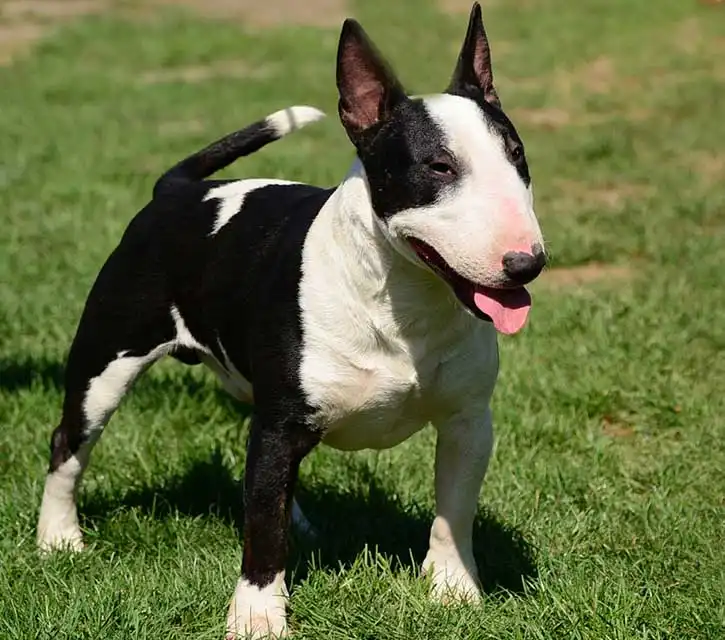
The Miniature Bull Terrier is a smaller version of the modern Bull Terrier, with its origins linked to a mix of the Bull-and-Terrier and Spanish Pointers. This breed actually predates its larger relative, having been developed from the Old English Bulldog and the now-extinct White English Terrier to create the Bull-and-Terrier. Originally bred for rat-catching and pit-fighting, the Miniature Bull Terrier has evolved into a cherished companion, excelling as a family pet and a skilled earth dog. Renowned for its lively and friendly disposition, this breed is often likened to a playful clown. One of its charming yet sometimes troublesome habits is its tendency to chase its own tail, a behavior that can be challenging to manage.
Breed Origin
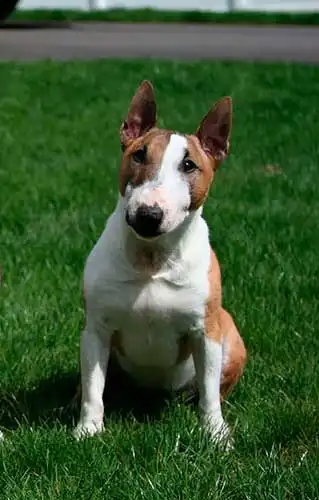
The Miniature Bull Terrier is often confused with its larger counterpart, the Bull Terrier. Historically, both breeds were grouped together under the name Bull Terriers until the American Kennel Club officially designated the Miniature Bull Terrier as a separate breed in 1991. Interestingly, the Miniature Bull Terrier actually predates the Bull Terrier, having originated from the crossbreeding of the Old English Bulldog and the now-extinct White English Terrier. In contrast, the Bull Terrier was developed by integrating larger Spanish Pointers and possibly Dalmatians to achieve a taller stature. As a smaller version of the Bull Terrier, the Mini Bull has become quite popular. This breed, which hails from England, is firmly rooted in both the Molosser and Terrier lineages. The Old English Bulldog, which looks quite different from its modern relatives, shared a close resemblance with the Mini Bull. Initially, this breed was created by mixing with the White English Terrier to produce a lively and energetic ratting dog, as well as a fierce competitor in pit fights. After pit fighting was banned, the Miniature Bull Terrier evolved into a valuable earth dog and a cherished companion. Many people describe the Mini Bull as "so ugly he's cute," and both this breed and the Bull Terrier have gained recognition through various advertising campaigns, including Bud Light's Spuds Mackenzie and Target's Bullseye. The differentiation between the two breeds began to take shape in the mid-20th century when the Miniature Bull Terrier was featured in a miscellaneous breed category, but it wasn't until 1991 that the American Kennel Club officially acknowledged it as a distinct breed from the Bull Terrier.
Breed Appearance
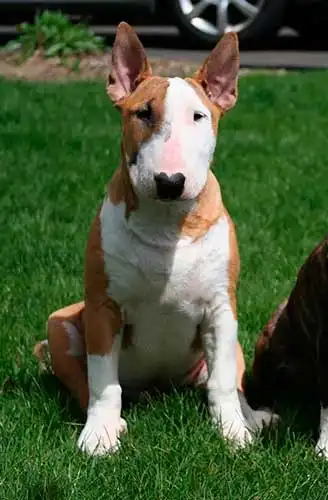
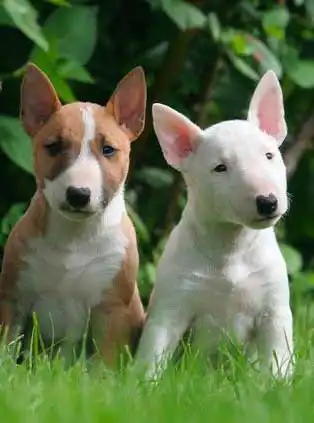
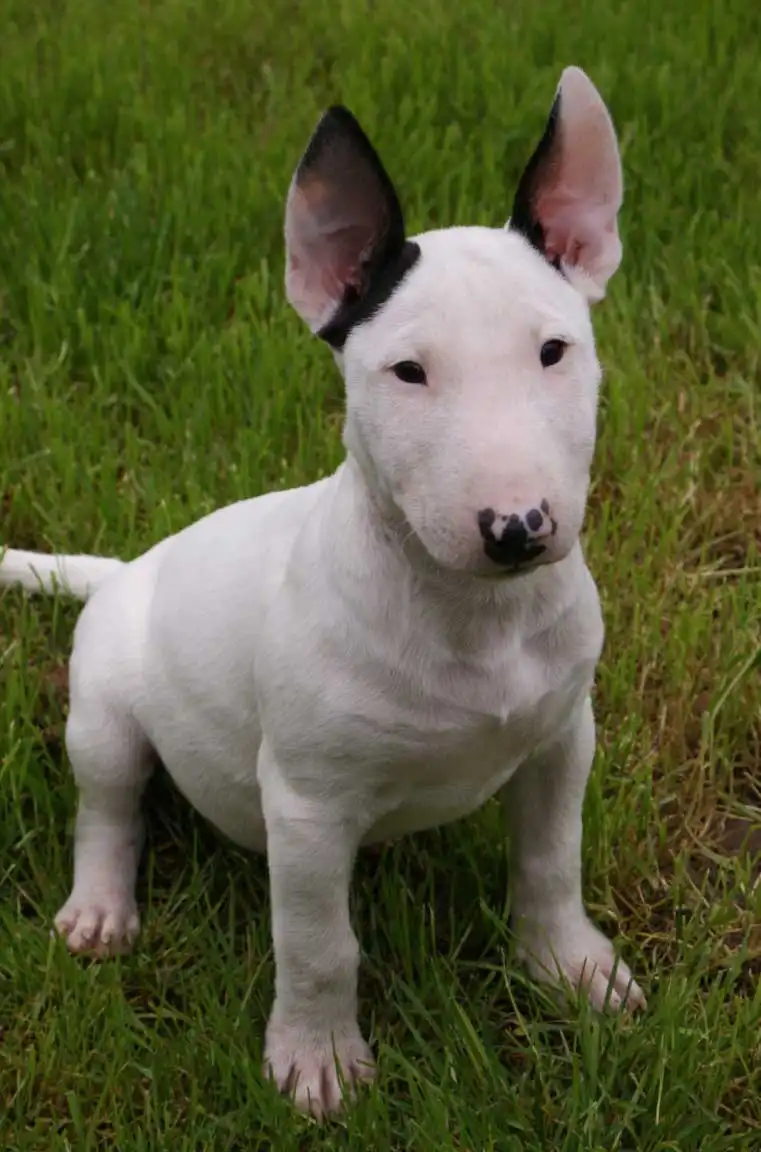
The Miniature Bull Terrier is characterized by its sturdy and square build. This breed is easily identifiable by its long, oval-shaped head, often likened to an egg due to its fullness. A gentle curve runs from the forehead to the nose, which has a flat section between the ears. Its eyes are small, triangular, and positioned low on the head, closely spaced and set high. The ears are also small and closely placed. The lips are tight and well-defined, with the teeth meeting in either a level or scissor bite. The breed features a thick neck and broad shoulders, while the forelegs are straight, moderately long, and robust. When viewed from behind, the hind legs are parallel and possess well-developed thighs. The feet are round, with compact toes that arch similarly to those of a cat.
Care Routine
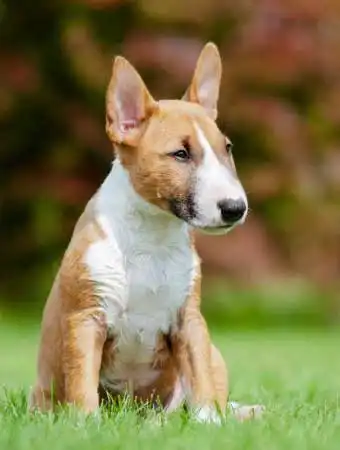
Despite having short fur, the Miniature Bull Terrier sheds moderately, and without consistent brushing, you may notice loose, coarse hair accumulating in your home. Thankfully, caring for their coat is quite simple; a weekly brushing with a rubber mitt typically does the trick. This breed goes through two shedding seasons each year, and daily brushing can significantly ease this process. Generally, Miniature Bull Terriers do not require baths unless absolutely necessary. In addition to coat care, it’s crucial to brush your Mini Bull’s teeth at least three times a week to help prevent dental problems. Regularly checking their ears for dirt and debris is also important. To help your Mini Bull become accustomed to grooming, it’s best to start these routines early in their life. The Miniature Bull Terrier is an active breed that needs plenty of exercise. However, with appropriate outlets for their energy, they can adjust well to living in apartments and urban settings. They prefer warm climates and do not fare well in cold weather. When it comes to feeding your Mini Bull, it’s essential to consider their age, activity level, and metabolism, as recommended food portions can vary significantly. Typically, they need between 1.5 and 4.25 cups of food each day, split into two meals. If you’re unsure about the right portion sizes, consult your veterinarian and monitor your dog’s weight and dietary responses. Additionally, it’s wise to avoid giving your Mini Bull rawhide toys, as they can lead to serious blockages. Always check with your veterinarian before introducing any new food products.
Behavior & Temperament
The Miniature Bull Terrier is characterized by its playful, lively, and sometimes mischievous demeanor, often bringing a sense of humor to its interactions. These dogs are known for their loyalty and affection, making them excellent companions for families. However, they are best suited for households with older children who can appreciate and respect their personal space, as they may be shy and reserved around unfamiliar faces. While Mini Bulls typically get along well with dogs of similar or larger sizes, they might view smaller animals, like cats, as potential prey, so it’s wise to keep them apart. This breed is quite intelligent and generally easy to train, but they thrive on regular interaction. If they don’t receive enough attention from their owners, their playful instincts can lead to destructive behaviors, such as chewing on household items. To manage their energy levels and prevent boredom or anxiety, Miniature Bull Terriers often engage in tail-chasing. To mitigate this behavior, it’s crucial to provide them with plenty of exercise and social opportunities.
Play & Exercise
Things to Know
Cups Per Day
1.0 Cups
Daily Activity
60 Minutes
Average Lifespan
13 Years
Origin
1800s
Type
Pure Breeds
Size
Medium
Origin Country
England
Brush Frequency
Weekly
Coat Texture
Straight
Register
Your kids have been begging for a pet forever, and you've recently decided that it's time for your family to get a new addition -- a dog! While everyone is excited for the new arrival, you're wondering if you need to have a dog license. How much does it cost? Is it required? Where do you get one?
Member Clubs

PETINNATE
Terrier

AKC
Terrier Group

UKC
Terrier
Height & Weight
Weight
29 lbs (13 kg)Male: 29 lbs (13 kg) , Female: 29 lbs (13 kg)
Height
12 inches (30 sm)Male: 12 inches (30 sm) , Female: 12 inches (30 sm)
6 Months
18 lbs ( m 18 lbs, f 18 lbs )
9 inches ( m 9 inches, f 9 inches )
12 Months
23 lbs ( m 23 lbs, f 23 lbs )
10 inches ( m 10 inches, f 10 inches )
18 Months
28 lbs ( m 28 lbs, f 28 lbs )
12 inches ( m 12 inches, f 12 inches )
Eye Colors
Brown

Nose Colors
Black
Coat Colors
Black
Red
Cream
Fawn
White
Pied
Sable
Brindle