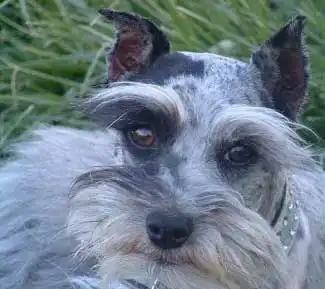
Miniature Schnauzzie
The Miniature Schnauzzie is renowned for its lively, playful, and energetic nature, making it a perfect fit for family life. This small breed, brimming with affection, easily wins over children and maintains a youthful exuberance throughout its life. They are known for their loyalty and warmth, thriving on attention and eager to make their owners happy. However, they can become anxious if left alone for long periods, so it’s crucial to provide them with regular exercise and mental stimulation to help them thrive. Despite their petite size, they exhibit a bold character and often show fearlessness, even when around larger dogs, seemingly oblivious to their own small stature. While they appreciate having a yard for play and exploration, their greatest wish is to be near you, often seeking comfort by snuggling in your lap. These intelligent and quick-learning dogs make for truly devoted companions in any household.
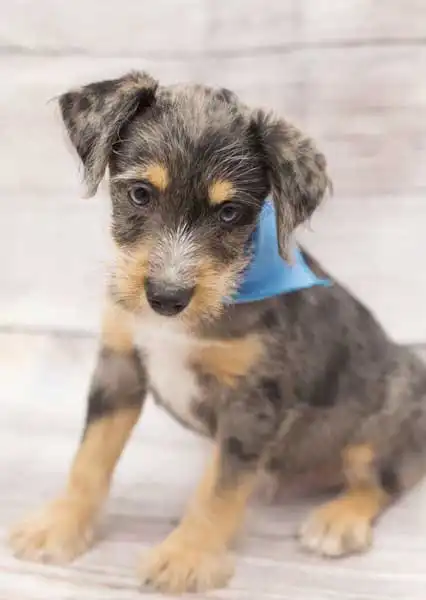
Breed Origin
The Miniature Schnauzzie is a distinctive hybrid breed with limited historical and characteristic information available. To gain a clearer understanding of this breed, it is important to explore its parent breeds. Notably, the Miniature Australian Shepherd does not have direct connections to Australia; instead, its origins can be traced back to the Basque region of Spain. The breed was named after the local shepherds, many of whom had Australian ancestry. In the late 1960s, North American breeders aimed to develop a smaller variant of the Australian Shepherd by selectively breeding the smaller members of the breed. This initiative led to the creation of a compact dog that preserved the original's keen instincts and reliable temperament. By the 1990s, this breed had become quite popular, a trend that continues to this day. Conversely, the Miniature Schnauzer is a lively little dog that was originally bred for hunting pests and guarding farms. It is thought to have originated in mid-19th century Germany through the crossbreeding of the Standard Schnauzer with smaller breeds such as the Affenpinscher, Pomeranian, and possibly the Poodle. The first documented Miniature Schnauzer was a black female named Findel, born in October 1888, and the first breed club was founded in Cologne, Germany. Despite the difficulties many dog breeds faced during World War I, the Miniature Schnauzer not only survived but also flourished in the subsequent years. While the coat colors have transitioned from red, black and tan, and yellow to the more commonly recognized shades of silver and black seen today, their popularity remains steadfast.
Breed Appearance
Puppies from the same litter can display a variety of physical traits. Some may inherit the unique moustache and eyebrows typical of the Miniature Schnauzer, while others might showcase the silky feathering around the neck and chest characteristic of the Miniature Australian Shepherd. Regardless of these coat differences, their bodies tend to be well-balanced, featuring strong, agile legs and a slightly flattened skull adorned with widely spaced, pricked ears. Muzzle shapes can vary from blocky to pointed, yet their teeth align perfectly in a proper bite. Their bright, round eyes are keenly observant, and their alert posture suggests they are always prepared for action. Generally, their tails are long and fluffy. Although the colors and textures of their coats may vary, one thing remains consistent: their delightful personalities and lively spirit.
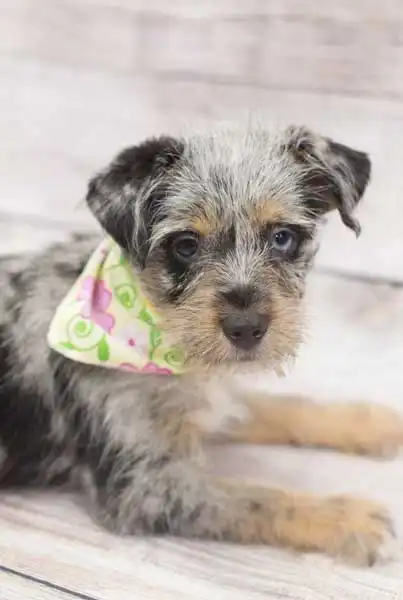

Care Routine
The Miniature Schnauzzie is typically easy to care for, although the required maintenance can vary depending on the type of coat it inherits. Generally, a daily brushing and an occasional bath with a mild dog shampoo are adequate. However, if it resembles the Mini Schnauzer's coat, regular grooming may be necessary. It's crucial to check the ears for dirt and foreign objects, as these curious dogs tend to explore different environments, leading to debris buildup. Use a damp cloth to gently clean the inner ear, ensuring it is completely dry afterward. Additionally, prioritize dental care by brushing their teeth and looking for any signs of decay or damage. Lastly, a quick nail trim and some loving cuddles will reward them for their good behavior.
Behavior & Temperament
The Miniature Schnauzzie is known for its playful and loving disposition, coupled with a touch of stubbornness. With roots in the Terrier family, these dogs can sometimes exhibit assertive or demanding behavior if given the opportunity. They make excellent companions for energetic families, as they flourish with interaction from children and require significant attention. Well-suited for apartment living, they thrive best when engaged with plenty of mental challenges and at least one or two walks each day. Naturally sociable, these dogs prefer to be part of family activities and are not fond of being left alone; extended solitude can lead to destructive behaviors and the development of bad habits. Highly intelligent and quick to learn, Miniature Schnauzzies respond positively to training that is enjoyable and rewarding, utilizing treats and praise as motivation. They have a strong desire to please and often seem to anticipate their owners' commands. Agile and clever, they relish challenges such as problem-solving, searching for hidden items, or navigating agility courses. These dogs flourish in an active environment with a confident and respectful leader. With their striking appearance, charming personality, and distinctive traits, Miniature Schnauzzies infuse joy and excitement into everyday life, turning each day into a new adventure.


Play & Exercise
The Miniature Schnauzzie is an energetic little companion that revels in the present and possesses a strong desire to explore. If you happen to overlook their need for a walk, they will certainly remind you, as they prefer to enjoy multiple walks throughout the day rather than just one. When you’re outside, it’s advisable to keep them on a leash, as their instinct to chase small, moving objects can easily distract them from your calls. They can become so engrossed in the excitement of the chase that they may lose their way. These dogs are also exceptionally playful, particularly with children, often outlasting them in their games. With seemingly endless energy, they resemble a perpetual motion machine. Yet, when it’s time to relax, they love to curl up in your lap, eagerly seeking your affection and warmth.
Things to Know
Cups Per Day
1.5 Cups
Daily Activity
70 Minutes
Average Lifespan
13 Years
Origin
1990s
Type
Crossbreeds
Size
Small
Origin Country
North America
Brush Frequency
Daily
Coat Texture
Straight
Ancestors
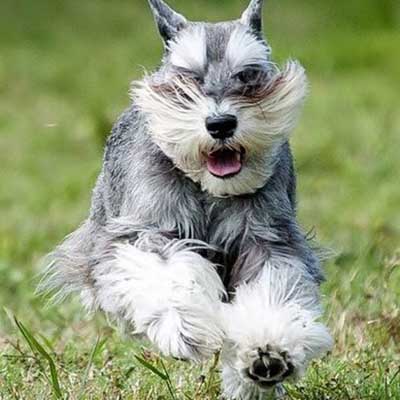
Miniature Schnauzer
The Miniature Schnauzer is recognized as the smallest and most cherished member of the Schnauzer breed. Originating in Germany in the 1800s, this breed was initially developed for catching rats and serving as a small farm dog. Over the years, the Miniature Schnauzer has evolved into a popular companion for many families. It is thought that this breed resulted from the crossbreeding of smaller Standard Schnauzers with Affenpinschers and Poodles, creating a more compact Schnauzer variant. Renowned for their affectionate and vocal personalities, Miniature Schnauzers flourish in lively households. They need regular exercise to maintain their happiness and health, along with adequate socialization. It's also crucial to keep smaller animals away from them due to their inherent hunting instincts. With their inquisitive and energetic nature, Miniature Schnauzers are always eager for new adventures.
Read more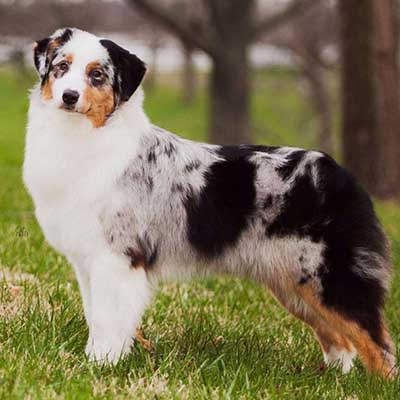
Miniature American Shepherd
The Miniature American Shepherd was developed in California as a smaller counterpart to the Australian Shepherd. This breed was created to serve as a perfect companion, suitable for both rural and suburban environments. With its compact stature, the Mini American Shepherd is well-suited for homes with limited outdoor areas, yet it retains the drive and energy necessary for farm work. As a herding dog, it needs plenty of exercise, though in a more manageable form than its larger relatives. This breed excels in various canine sports, including obedience, rally, agility, and herding. Furthermore, it is known for its affectionate nature towards children and generally gets along well with other dogs.
Read moreRegister
Your kids have been begging for a pet forever, and you've recently decided that it's time for your family to get a new addition -- a dog! While everyone is excited for the new arrival, you're wondering if you need to have a dog license. How much does it cost? Is it required? Where do you get one?
Member Clubs

PETINNATE
Other
Height & Weight
Weight
18 lbs (8 kg)Male: 19 lbs (9 kg) , Female: 18 lbs (8 kg)
Height
14 inches (36 sm)Male: 15 inches (38 sm) , Female: 14 inches (36 sm)
6 Months
4 lbs ( m 4 lbs, f 4 lbs )
6 inches ( m 6 inches, f 6 inches )
12 Months
10 lbs ( m 10 lbs, f 10 lbs )
10 inches ( m 10 inches, f 10 inches )
18 Months
17 lbs ( m 17 lbs, f 17 lbs )
13 inches ( m 13 inches, f 13 inches )
Eye Colors
Brown
Amber
Nose Colors
Black